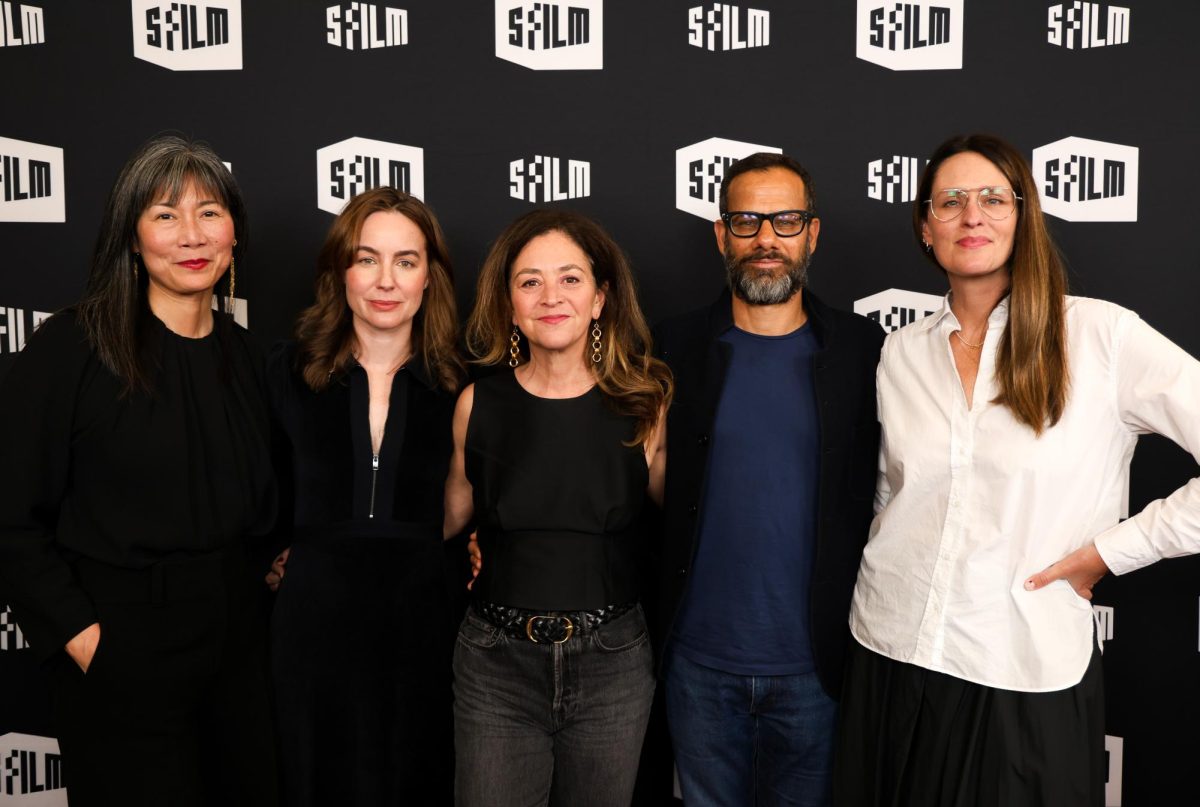


The de Young museum welcomed its new exhibit “Art of Manga” this weekend, ushering in the exhibition’s residency through January 2026.
Thomas Campbell, the director and CEO of the Fine Arts Museums of San Francisco, enthusiastically welcomed visitors to the first major exhibition of the contemporary Japanese art form, manga, in North America. Manga is the Japanese art form of comic production and illustrative storytelling. “Art of Manga” features ten mangakas, or manga artists, including Hirohiko Araki and Eiichiro Oda, the creators of “JoJo’s Bizarre Adventure” and “One Piece” respectively.
“‘Art of Manga’ is an exhibition that will immerse visitors, longtime fans and newcomers alike in the manga universe,” Campbell said.
The exhibition is the brainchild of Nicole Coolidge Rousmaniere, a curator at de Young. Campbell attributed the exhibition’s 2025 opening to Rousmaniere’s careful curation process over the last five years. The exhibition follows Rousmaniere’s 2019 curation of a smaller manga gallery based in The British Museum.
Rousmaniere’s background in Japanese arts and culture mixes with Americans’ growing appetite for the Japanese comic form. From 2019 to 2022, manga sales in the U.S. have quadrupled, with 49% of graphic novel sales attributed to manga.
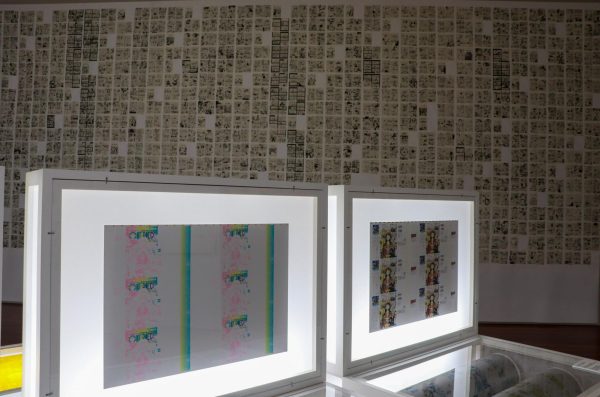
Each room in the exhibition is carefully curated to fully immerse viewers in the world of graphic storytelling. In the first room, all of the pieces were set on the same grid used by mangakas to draw panels, with an accompanying slew of manga terms and definitions lining the upper echelon of the walls.
“By the end, you will become fluent in manga,” Rousmaniere said. “You will actually learn a skill. It’s like learning a language, you’re learning a visual language.”
“Art of Manga” not only offers viewers an interactive study of manga but also displays both legendary works of the medium and unreleased work. Over 600 pieces on display made the journey from Japan to San Francisco.
An unreleased panel from Junji Itō’s upcoming manga, “The Monstrous Ocean: The Curious Travels of Ahab” acted as an interlude in the exhibition’s breakdown of the medium. Itō’s signature intensive dark called the reader’s eye to focus on how mangakas use their distinctive illustrative styles to draw readers’ attention deeper into written plots.
De Young Museum managed the task of sourcing unreleased works and original hand-drawn panels from many of the featured artists, showcasing not only the finished product but also their individual artistic processes.
Mari Yamazaki, the mangaka behind “Thermae Romae,” dug into how her work has come to shape the broader manga scene in Japan. However, Yamazaki described how her revolutionary work did not come without a slew of questions from her editor.
Despite the questions, Yamazaki broke ground in the publication of the first volume of “Thermae Romae” in 2009.
While working with the wide range of artists showcased in the exhibition, Rousmaniere herself added to manga history. Manga exhibitions have been consistently popular in Japan, but putting the work of competing publishing houses on the same wall has been frowned upon.
The walk-through of the exhibition echoed this air of competition, with the emotionally complex works of Gengoroh Tagame from the publishing house Futabasha, followed by the tender, wholesome works of Fumi Yoshinaga from Kodansha in the next room.
Many of the artists featured in the exhibit died prior to its unveiling. De Young had the privilege of showing some of these artists’ last works, including those of the late Keiichi Tanaami.
Tanaami was the last master of the now-defunct method “gravure,” a printing process that involves engraving the desired image onto a large cylinder and using the cylinder to transfer precise ink images onto paper.
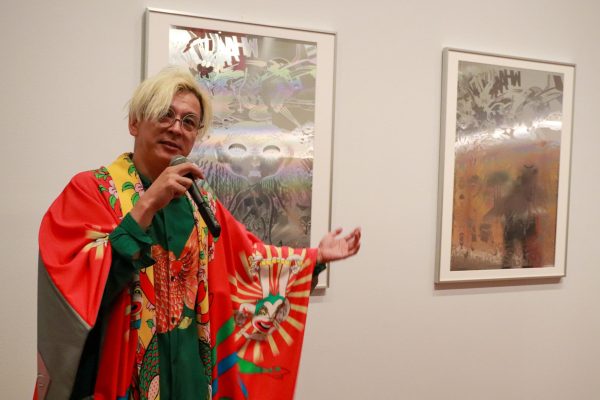
Prior to Tanaami’s death, he was a mentor to Masashi “Kinpachi” Okamoto, who described the difficulty of printing gravure. Okamoto assisted Tanaami with the last recorded printing of gravure in 2021.
“We produced only one piece and it’s one you can be sure about,” Okamoto said. “You can see how manga is made, the production is a big production, and it’s how the comics and magazines are made.”
Tanaami and Okamoto’s large-scale productions on irregular objects, such as folding screens and kimonos, reflected different challenges than those of the traditional manga novel. The punchy half-tones of bubblegum pink and technicolor cartoonish works transitioned visitors smoothly into one of many gift shops.
“Art of Manga” is a revolutionary exhibit in Japanese craftsmanship, finding a perfect home at de Young to help the community explore the long-storied comic form. “Art of Manga” is open to the public from Sept. 27, 2025, to January 25, 2026.
“Manga is really what you hold in your hands,” Rousmaniere said. “Whether it’s in a book form, mobile form in your cell phone or in a tablet, it’s held in your hands.”