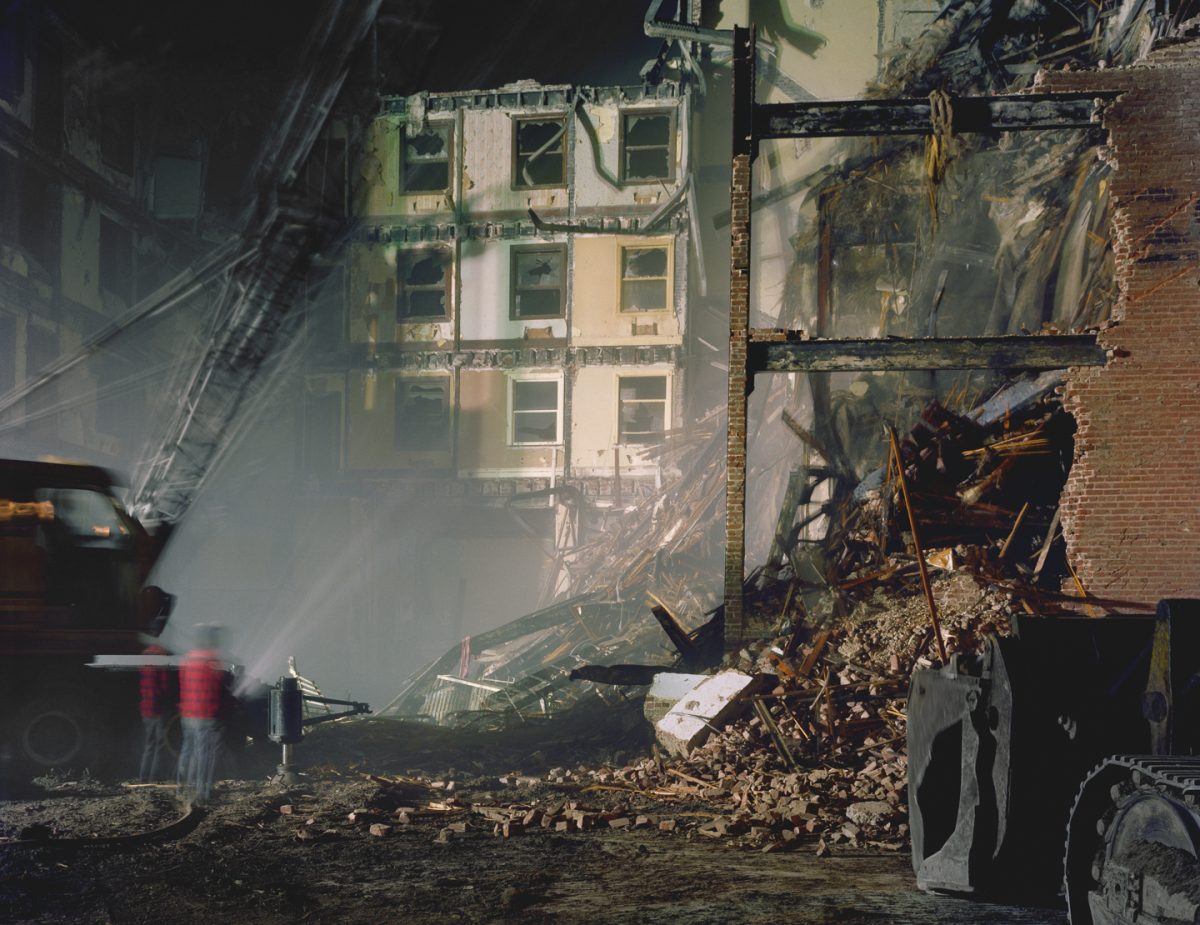

As the construction of the Moscone Center changed the landscape of San Francisco’s South of Market neighborhood during the late 1970s and early 80s, photographer Janet Delaney captured this period of urban renewal in the city.
Originally from Southern California, Delaney moved to the Bay Area to attend San Francisco State University and graduated with a Bachelor of Fine Arts in photography. While pursuing her master’s degree at the now-defunct San Francisco Art Institute, she lived in the SoMa area and began to take note of the neighborhood’s changing character.
During an intense moment near the Bay Bridge in 1979, Delaney had an epiphany about the neighborhood in which she lived.
“I decided to photograph because I was held up at knife point and I realized I really needed to know more about where I was living and who I was living near, so that I could meet my friends and feel like I was surrounded by familiar faces,” Delaney said. “I started introducing myself to my neighbors and taking pictures.”
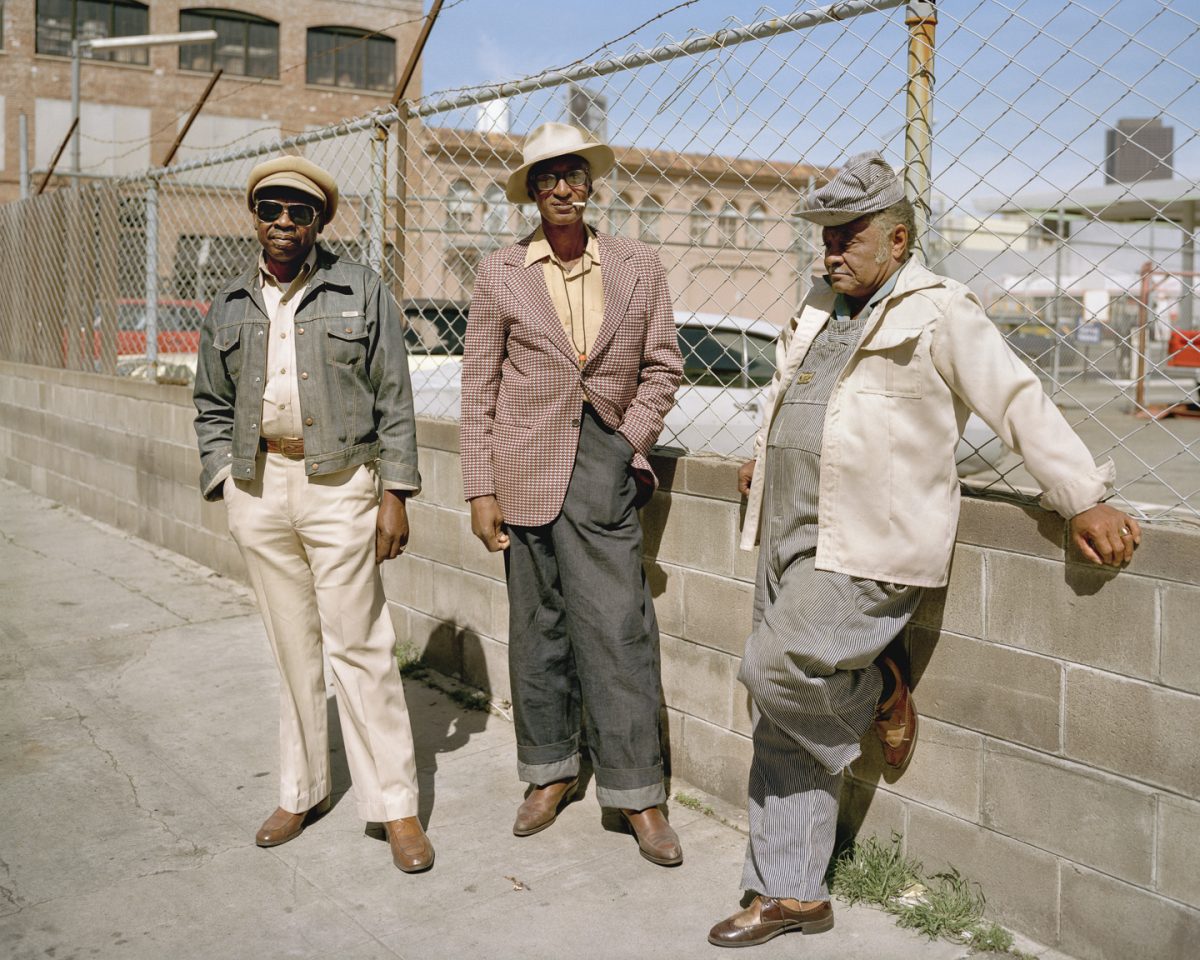
SoMa’s working-class demographic and the construction sites of the Moscone Center were the main subjects in Delaney’s photos.
Many businesses were torn down to make way for redevelopment projects, and Delaney became fascinated by a population that was being slowly displaced.
“I had a premise that the arrival of the Moscone Center was going to gentrify the neighborhood. And it was,” Delaney said. “The rents were going up. But there wasn’t very much visual manifestation of this.”
She often started her day documenting the scenes right outside her apartment on Langton Street.
“I would walk out with my view camera, often taking pictures of the community that was on the corner of Langton and Folsom [streets], who had hung out there since the ‘40s,” Delaney said. “When I look back through my work, a lot of times, I have a lot of photographs of them because that would be my first picture of the day.”
The use of a large-format view camera was a deliberate choice. Although the big negative creates stunning pictures, large-format cameras are infamous for their cumbersome bodies and obstructive bellows. But the format’s clunky design was not seen as a limitation.
Instead, Delaney said it gave her a sense of presence and preferred how the large negative would allow her the opportunity to make prints that would project a much more honorific kind of presentation.
After documenting SoMa for four years from 1978 to 1982, Delaney moved after effectively being priced out of the neighborhood.
The photographs lay dormant until 2012 when San Francisco Museum of Modern Art Curator Erin O’Toole encouraged Delaney to compile a book of her SoMa work.
In 2013, Delaney’s project, “South of Market,” was released and solidified Delaney’s reputation as SoMa’s unofficial visual historian.
Since then, Delaney’s work in San Francisco has served as an inspiration to the city’s thriving street photography community.
Her work has been exhibited in museums across the world, such as the Aperture Gallery in New York and the Museum of Modern Art of Rio de Janeiro.
Recently, some of the photographs from the “South of Market” project were displayed as part of the DeYoung’s “Boom and Bust” photography exhibit, which chronicles the growth of urban life in Northern California.
After leaving SoMa in the early 1980s, Delaney continued to pursue photographic projects such as “Red Eye to New York” which includes photographs from her many trips to New York as a film lab courier.
Her newest book, “Too Many Products Too Much Pressure,” was released in September and calls back to her days as a graduate student at the San Francisco Art Institute. The book features photos of her father when she returned to Los Angeles during her first semester at the institute.
Whether it’s in Los Angeles or New York, Delaney’s photographs continue to capture places in a state of transition.
“Change is an inevitability in cities,” Delaney said.