

A man living at the peak of musical stardom, touring the world and being chased by hordes of delirious fans and cameras transitioned to become a sheep-herder, living in an isolated farm house with just his wife and children. Through it all, one thing never changed: He was Paul McCartney.
Morgan Neville’s “Man on the Run” documents McCartney’s life through the 70s, using archival footage, interviews and candid narration from McCartney himself. It’s an intriguing exploration capable of making any Beatles fan fall into a trance.
The documentary follows McCartney’s life from the end of the Beatles in 1969, through his focus on his independent projects and ultimately leading to the creation and devolution of his second band, Wings.
The first section of the film covers McCartney’s isolation from the public after John Lennon, McCartney’s songwriting partner, left the band, effectively ending the Beatles.
‘Paul is dead’ rumors, which claimed McCartney died years ago and was replaced by a double, began to circulate due to his sudden absence. In reality, McCartney was struggling to cope with the end of the Beatles, binge-drinking and throwing buckets at uninvited reporters visiting his High Park Farm house in the green, desolate rolling fields of Mull of Kintyre, Scotland.
Despite McCartney’s step out of the spotlight, he never stopped writing music — a medium he describes as “the ultimate therapy” — and with a 4-track tape recorder, he produced his debut solo album “McCartney” at his home in 1970, playing every instrument himself.
McCartney doesn’t mince words. You can feel some resentment in his voice when he speaks about announcing to the world, just a few days before his debut album, that the Beatles were over. When he recalls somebody labeling him a has-been, he tells them “fuck you” in his narration.
The film allows McCartney to tell his side of the story about Beatle-on-Beatle lawsuits. He explains his concerns over the group hiring Allen Klein, a businessman notorious for pocketing money, as their new manager.
The four members were still under a partnership agreement contract, which placed the Beatles’ financial affairs under Klein’s control. McCartney sued to officially end all agreements between the Beatles so he could escape Klein’s grasp and preserve his and his fellow Beatles’ wealth.
The documentary tells the story from McCartney’s side, and doesn’t include much commentary from Lennon, Harrison and Starkey. Despite this lack of diversified perspective, it’s undeniable that the lawsuits began a public fallout between Lennon and McCartney, and the film shows it.
McCartney and Lennon got into a feud, recording diss tracks like “How Do You Sleep?” by Lennon in 1971 and “Too Many People” by McCartney that same year. Lines in the latter attacked Lennon’s activism, with McCartney writing “too many people preaching practices.”
A great moment in the documentary cuts from McCartney laying in bed with his family to Lennon in bed with his wife Yoko Ono, surrounded by dozens of cameramen during their “Bed-ins for Peace” protests, demonstrating the two polarizing paths the former partners had taken.
The film does an even better job illuminating the fact that Lennon and McCartney still had much in common after seemingly growing far apart from each other. In the end, they were just two blokes from Liverpool trying to find their authentic selves while the rest of the world wanted them to continue being the Beatles.
McCartney, similar to how Lennon partnered with Ono in his solo career, also began collaborating with his wife Linda Eastman, which ultimately led the couple to co-founding Wings.
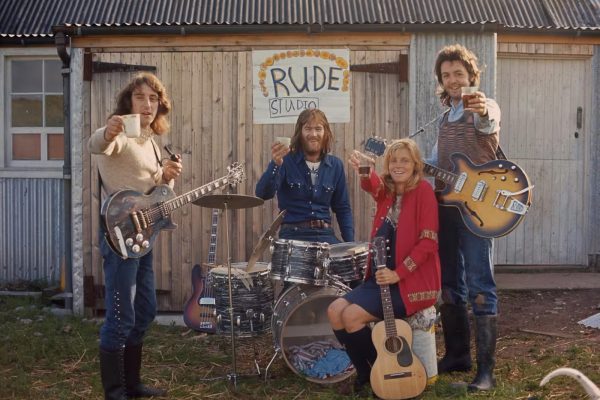
A portion of the documentary explores Eastman’s life, from being the mother of McCartney’s children to her personal transformation of being a receptionist turned international rockstar. The film does an excellent job highlighting Eastman’s integral role in McCartney’s life and as an icon in the music world as a whole.
Few people will ever truly know what it’s like being a Beatle, let alone a touring musician, but almost everyone can relate with self-doubts and fears of not being “good enough.”
While a documentary on Paul McCartney, the underlying theme to “Man on the Run” communicates a universal idea: when dealing with insurmountable pressure from the outside world that leads you to to doubt yourself and question your self worth, one can rely on their passions, loved-ones and ultimately themselves to cross that finish line.
“I doubted whether it was possible,” McCartney says in the final line of the documentary. “But looking back on it now, I think we made what seemed like an impossible dream come true.”
“Man on the Run” begins streaming on Prime Video on Feb. 27.