


In the age of media consumption dominated by streaming, a perceived notion of infinite choice has prevailed: No matter how eclectic your tastes or how deep you wish to dive into a particular artist or genre, anything and everything your heart desires is a tap or a click away.
But as any vinyl record seller in San Francisco will tell you, that is simply not always the case, even with mainstream artists.
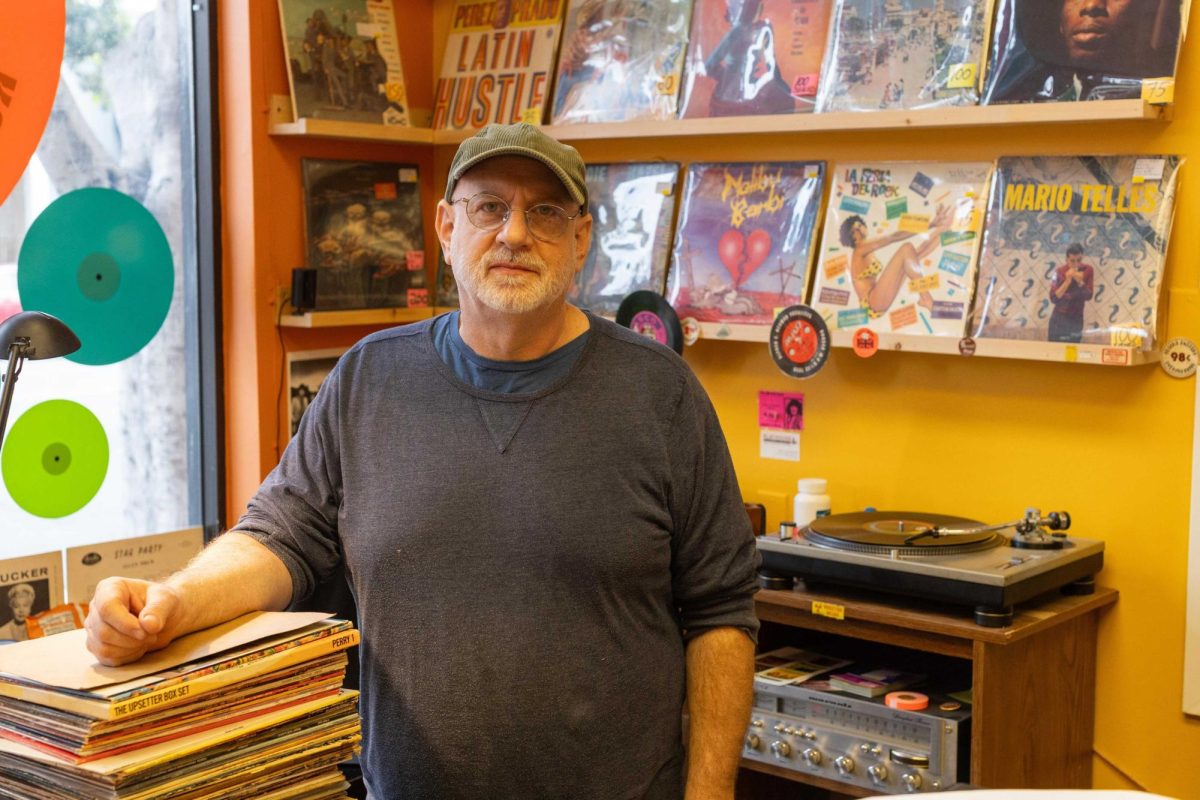
“One of the repeated cliches is that everything is available online now,” said Chris Guttmacher, owner of The Plastic Pancake, a small record store on the corner of Valencia and 21st streets. “There’s a lot of stuff that is, but there’s important records on big labels by big artists that are just not there.”
As Gen Zers express feeling overwhelmed by an increasingly digital world, a staggering 63% of 18-24-year-olds reported interest in exploring a more analog lifestyle in 2026. For young people, this includes decentralizing their all-in-one smartphones with MP3 players and digital cameras, limiting their screen time and social media usage and starting physical media collections of CDs, DVDs and vinyls.
A Vinyl Boom
Guttmacher has worked in record stores selling vinyl since 1985. A Boston native, he worked his way through all three Amoeba Music locations before landing in Los Angeles where he opened his own storefront, Blue Bag Records, in 2013.
Amoeba Music is widely regarded as the world’s largest independent record store chain, with two Bay Area locations in San Francisco’s Haight-Ashbury neighborhood and on Berkeley’s Telegraph Avenue, as well as a third Hollywood storefront that opened in 2001.
“I feel like small record stores really became a thing again around 2010,” Guttmacher said. “I remember working in Amoeba in Hollywood and thinking places like this are the only way to do it. Then there started to be a trickle of small stores, and I started to realize maybe I could actually do this.”
Since opening Plastic Pancakes in September 2025, Guttmacher has felt right at home in San Francisco’s Mission District despite the fluctuating nature of record sales. As a strictly secondhand seller, Guttmacher is always pleasantly surprised by the preference range in his younger customer base.
“You’d meet some kid who was 20 years old and knew everything there was to know about Brazilian music in the 60s and 70s,” Guttmacher said. “I think it’s one of the good things about this whole internet zeitgeist.”
Vinyl’s initial decline in popularity began in the early 1980s, with sales of 8-tracks and cassette tapes surpassing vinyl in 1985. The downward trend continued for over three decades as CDs, digital downloads and streaming services overtook the global market.
The inception of Record Store Day, an annual celebration of independently-owned record stores, was a key point of growth for the medium’s revival in the new millennium. U.S. sales jumped nearly 150% following the first Record Store Day in April 2008, bringing the subculture of vinyl collection a little closer into the mainstream light.
“Record Store Day helped promote the in-store record experience,” said Shona Mauro-Sachs, the marketing and events manager for Amoeba’s Haight-Ashbury location. “Gen X and before used to line up for concert tickets before they went on sale, and you would meet other fans in line with such a communal experience. I think that has translated to lining up for Record Store Day.”
However, it wouldn’t be until 2021 that record sales surpassed the billion-dollar mark for the first time since 1985. Mauro-Sachs credits the isolation and digital burnout cultivated by the COVID-19 pandemic for sparking Gen Z’s initial curiosity with physical media.
“People were bored,” Mauro-Sachs said. “Even for a generation that isn’t as much about IRL experiences, to have all of them taken from you changes the landscape.”
While the overall vinyl boom has slowed down in the last couple of years, the desire to own music in favor of exclusively streaming is growing among Gen Z. In the aftermath of the global lock down, record sales continued to climb, growing 22% in the first half of 2023. According to a report from YouGov in 2023, more than half of 18-24-year-olds “like” to purchase physical copies of music.
“As we’re in an increasingly digital age, to be able to have something physical, it’s an actual experience instead of just pressing play and walking away,” Mauro-Sachs said. “The experience of being able to look at a row of albums by an artist that you love and pull out the exact one that you want to hear right then. That’s irreplaceable.”
DVD Revival
Vinyl’s unexpected sticking power with Gen Z has some wondering if DVDs will see a similar resurgence.
Four years ago, Rowan Francis started as a barista at Fayes, a coffeehouse east of Mission Dolores Park that doubles as one of three remaining DVD rental destinations in San Francisco. Around the same time, Francis began “hoarding” DVDs and Blu-rays – many of them gifted by loved ones – in an attempt to build a comprehensive personal library of their favorite movies and TV shows.
“It’s being able to glance at your shelf and pick something out as opposed to having to scour through and scroll for hours,” Francis said. “I like having people over and showing them my shelf and being like, ‘pick something out.’ It’s kind of a flex.”
Unlike the vinyl boom of the 2020s, sales of DVD, Blu-Ray and Ultra HD discs have continued to fall this decade from their peak in the mid-2000s. In late 2023, both streaming giant Netflix and consumer electronics retailer Best Buy announced their plans to phase out physical discs.
Nevertheless, younger generations who grew up with video discs are rediscovering the medium, including from local rental hot spots like Fayes or Video Wave of Noe Valley.
“Younger people get excited when they realize, they’re like, ‘Oh my God, I do have a PlayStation,’ and then they want to check stuff out,” Francis said. “People are starting to realize that being able to pay for something once is a lot better than having to pay every month, or being able to rent an individual item rather than having to pay for the entire collection at once [is] just a lot simpler.”
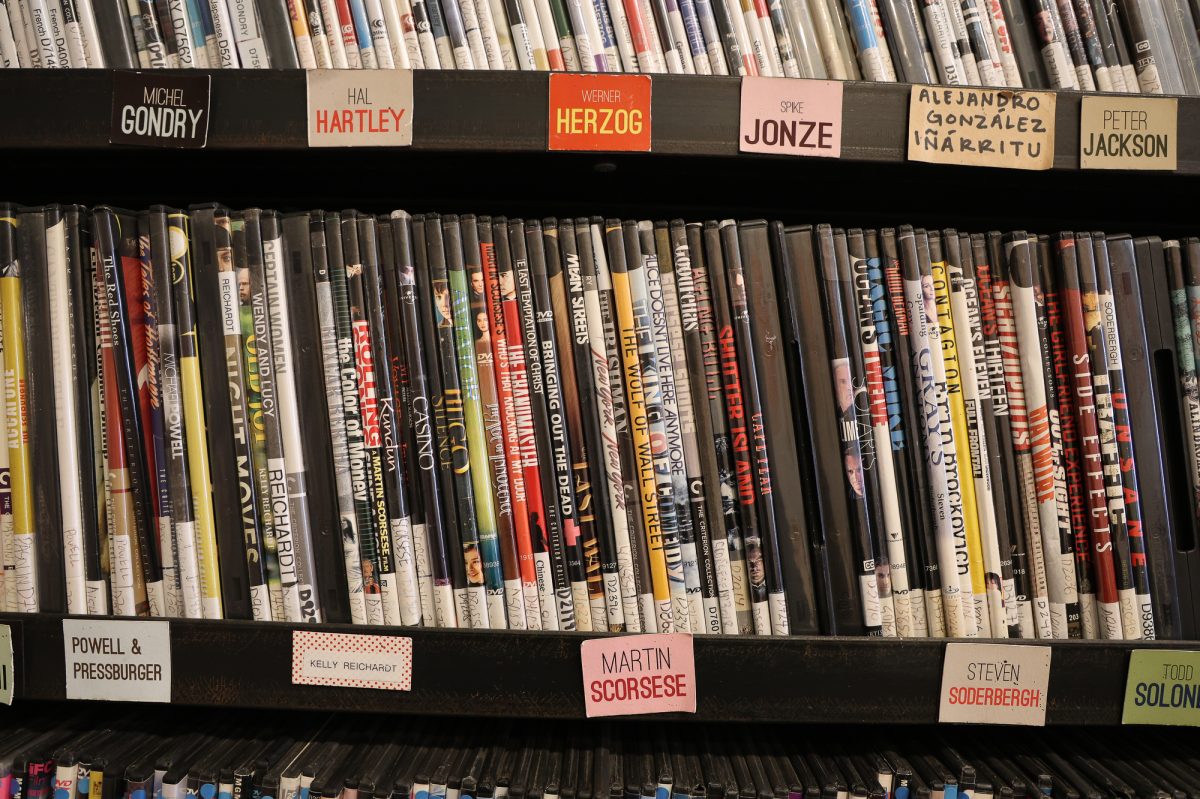
Video Wave owner Colin Hutton, who bought the 43-year-old storefront in 2005, has also seen a slight spike of younger people in recent years in the midst of a generally older-skewing customer base.
“My new customers range from someone who recently joined who was born in 2007 to someone who recently joined and they were born in 1932,” Hutton said. “All of those people are frustrated with streaming and the limitation on selection, the poor quality [and] the ever-changing nature of it.”
Even with musings of a vinyl-esque DVD revival, Hutton doesn’t see the medium hitting the mainstream any time soon, as evidenced by a recent decision to transition Video Wave to a subscription-based model in order to stay afloat.
“I’m still not making enough money, but it’s a joyous job,” Hutton said. “Everyone who comes in here is here because they want to be here.”
While DVDs may not be headed for a comeback as big as vinyl’s, Guttmacher feels hopeful for the future of physical media.
“Records are the most durable medium there is,” Guttmacher said, “All that stuff online could disappear in a heartbeat. Files get corrupted, and records last longer than people do.”
Editor’s Note: Chat GPT 5.2 Pro was used on Feb. 18 to help determine validity and source material of a graphed series of data points on home media sales by format from 1998 to 2024 from Digital Entertainment Group cited in this article.