

Various shades of blue denim flooded the campus on Wednesday as the Associated Students Women’s Center hosted its annual Denim Day event at Malcolm X Plaza.
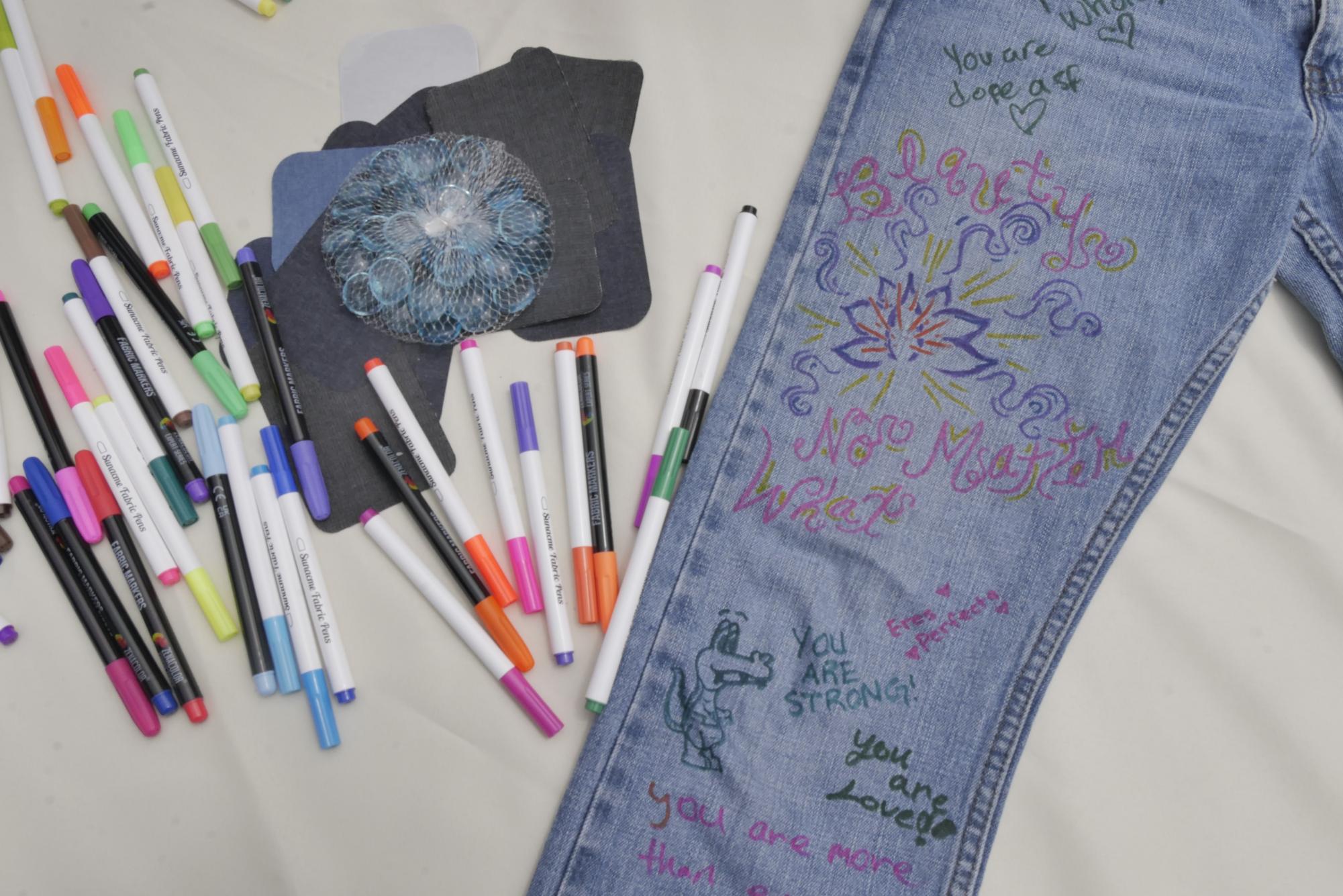
The Women’s Center invited students to decorate a pair of blue jeans with affirmative messages outside the Cesar Chavez Student Center. The center also distributed products such as tampons, Plan B and pamphlets about women’s health services, including Planned Parenthood.
Denim Day originated from a 1998 landmark case in Italy in which a young woman was sexually assaulted, but the perpetrator was later acquitted due to the victim wearing “very, very tight jeans.” The chief judge claimed that “she had to help him remove them, and by removing the jeans it was no longer rape but consensual sex.”

A decade later, the decision was reversed, but the case made a lasting impression on how sexual violence is perceived.
Denim Day falls on the last Wednesday of April, which is Sexual Assault Awareness Month. The day seeks to “reclaim denim” in order to combat the stigma of sexual violence, according to Women’s Center intern Marian Martinez.
Madeline Cox, a third-year Broadcasting and Electronic Communication Arts student, is the acting director of the Women’s Center and believes that with the current administration, “supporting victims of sexual violences is needed more than ever.”
The event took advantage of the surrounding foot traffic as many people approached the table, not aware of the significance of Denim Day.
“It’s just good to see that there’s people on campus who care about issues like this that aren’t really easy to talk about,” said Carmello Davis, a microbiology student.
Abraham Barbosa, a fourth-year marketing student, feels that men can do more to stop harm against women.
“Treat women how you treat your mom and your sister… It’s all about respect,” said Barbosa, who has an older sister. “It’s been a blessing to have an older sister. I’ve seen what she’s gone through. It’s sad in parts.”
One roadblock in addressing sexual assault cases is that victims often have a hard time coming forward. According to the National Sexual Violence Resource Center, 63% of sexual assaults go unreported.
A common reason for this is that victims know their perpetrators on a personal level, making it hard to talk to authorities.
“It’s very difficult to come forward because oftentimes, their perpetrators are people that they are close to,” Cox said. “I think that people don’t really understand when they’re talking about ‘Well, why didn’t you just report?’ Because it’s not that easy.”
Events like Denim Day and organizations like the Women’s Center hope to bring awareness and aid to this sensitive topic.
“As a center, we do want to strive to be a place where people do know that we have resources for them,” Cox said.