

Fidelity is a fickle thing. The act of adaptation heavily relies upon an artist bringing unique perspectives to preexisting work, whatever it may be. In “The History of Sound,” Oliver Hermanus has handsomely directed Ben Shattuck’s script, one based on Shattuck’s own short story. Aye, there’s the rub.
Rigidity is the modus operandi for this gay love story set before, during and in the aftermath of World War I. Rigid is the public expression of love between these two men, rigidity is what one was raised on and what the other eschews yet falls into. Though it may feel apt for a formal rigidity to dominate the film’s craft, this endless standstill quickly proves tiresome.
The saga follows Lionel Worthing, played by Paul Mescal, a musical prodigy whose preternatural sense for sound, known even as a child in 1910 Kentucky, sets him on a path to Boston Conservatory where he befriends fellow David White, played by Josh O’Connor, with whom he falls into a whirlwind romance. The war tears the two apart as White goes off to the trenches, but they reunite years later and venture on a song-recording mission through rural Maine while contending with how to love each other and still live in the repressed 1920s.
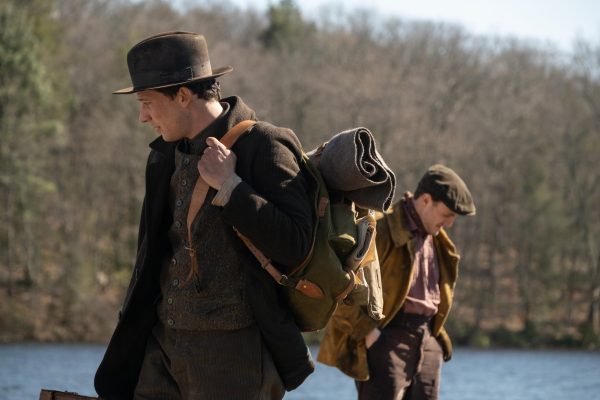
While this is rich as a premise, Hermanus and Shattuck’s adaptation gets stuck scratching at the tip of the iceberg. There are clearly inner worlds within Lionel and David, made so clear by Mescal and O’Connor’s sweet and earnest performances, but their passions are rendered so chaste in the edit until their fires fizzle faster than an audience can keep up with.
Passion is the textual throughline between these two men, for each other and music, yet neither of these great loves are granted enough space to blossom by Shattuck’s clipped script nor Hermanus and his languid camera. Shattuck’s delicate preservation of his own story leaves little room for risk while Hermanus’s preference for the subdued inches toward drowsy. It’s thanks to Mescal and O’Connor that the film doesn’t implode.
Lionel’s farmboy shyness and insecurity are embodied beautifully by Mescal’s physicality, even if his accent work is dubious at best. The Oscar-nominated Irishman’s turn here is charming and lived-in, but often too quiet to carry the emotions thrust upon him by an unwieldy script. Still, he’s effective with his consistently conscious poise and gritted affectations, but O’Connor acquits himself more easily with less pressure on his shoulders.
As White, O’Connor flickers in and out of the picture, bringing a brooding yet lovely rogueishness to him that endears and confounds in equal measure, especially once he’s out of focus. Their scenes together traversing Maine for songs mark the film’s high point, brimming with the possibilities of a livelier film that never comes to pass.
It’s a shame that their performances, effective in isolation but crackling with quite a special chemistry when together, go so underserved by the craft around them. Hermanus competently stages every scene and tries his best to imbue the countless moments of rest and quiet with an ethereal and unspoken thoughtfulness, but the result is arduous. Paced like molasses, the story can’t ever break from its ways, which could befit such a repressed time in history, yet there’s never promise of life beyond the veil of the duo’s meandering and Lionel’s disquieted isolation.
Late into the film, Hermanus and Shattuck brush up against interesting branches, a girlfriend to Lionel whose class difference unsettles his farmboy roots, an Italian fling whose brash youthful confidence clashes with Lionel’s oak tree nature, but they are waved away with in favor of didactic flashbacks to times long gone.
All of these branches, while interesting, are hampered, like the rest of the film, by an overwrought score, out of place for a story whose passions purportedly lie in sound, alongside some dreadfully crisp digital cinematography which provides the whole ordeal with a History Channel sheen.
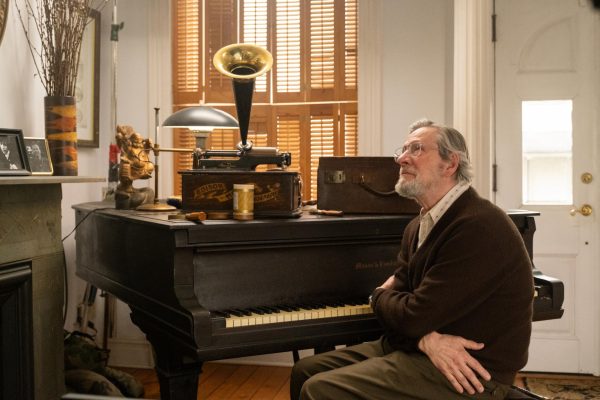
Somewhat miraculously, all glaring issues fade in the last 20-odd minutes when Chris Cooper enters like a wrecking ball. His gravelly voice lends an honest vulnerability to the film that the preceding hour and a half or so fail to conjure.
In this section, Hermanus wisely loosens his grip on the reins of the film and lets one of the most undervalued actors of his generation run with the emotions that have been so tightly held. All comes pouring out in a still tonally imbalanced and melodramatic ending, yet Cooper makes it work not because of what came before, but in spite of it.
“The History of Sound” promises more than it can deliver upon, yet this early fall indie doesn’t go without its high points. There are remarkable little moments that come and go like whispers, but the project on balance is unfulfilling and dramatically miscalculated. Risk aversion can only take you so far when staging a sprawling saga of love across time. Implications of more daring and adventurous stories thwart an already unremarkable story with so much life brimming just beneath a surface that never gets cracked.