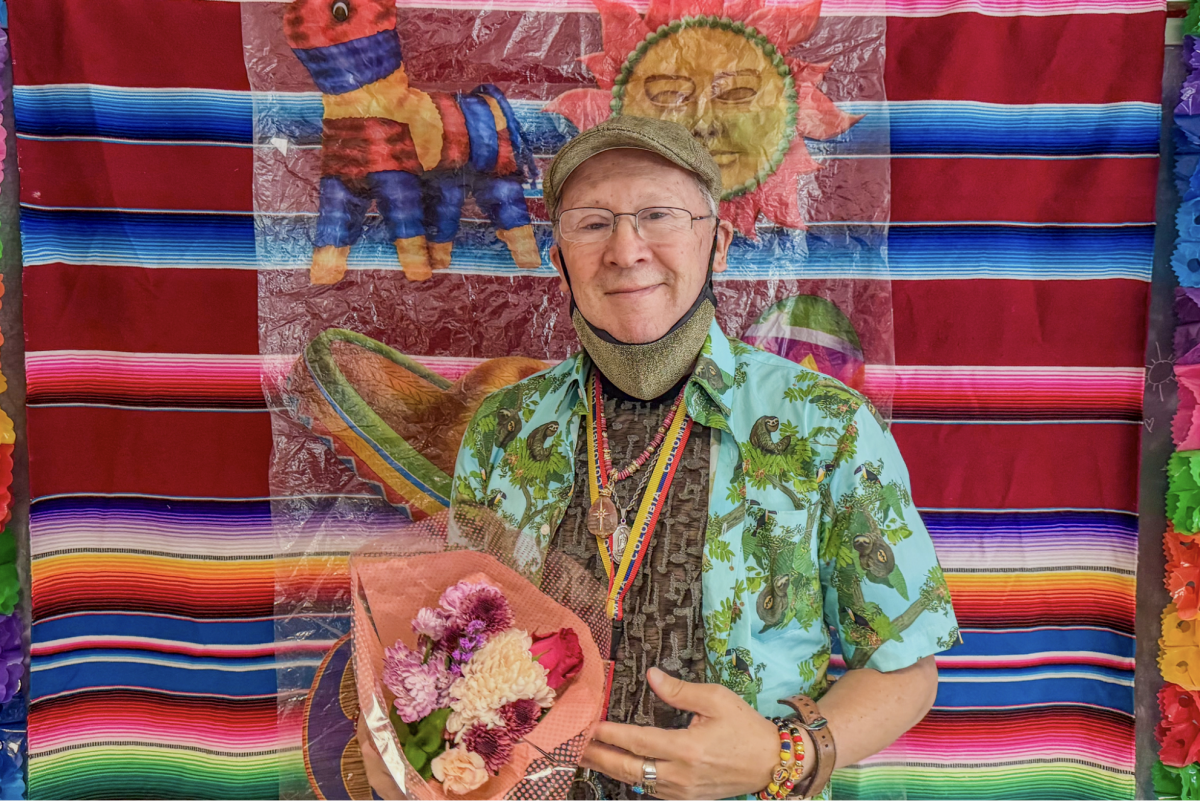


The smell of popcorn and churros led students to the second floor of the Student Services Building as the brand-new Equity & Community Inclusion Center hosted their first official event in their new space.
The ECIC, a $2.5 million project that was officially completed this semester, hosted a “DECILand” open house event to welcome students to the new center.
Eventgoers were treated with food, including popcorn, churros, horchata and cotton candy, as well as activities such as arcade basketball, but only after their meal ticket was stamped by visiting each of the different centers and familiarizing themselves with where each group is situated.

Dalyce Brown, the outreach, recruitment and retention specialist and coordinator of the inaugural event, previously worked for Disney and took inspiration from Disneyland to come up with “DECILand.” DECI stands for division of equity, community and inclusion.
“The students, they love us. They love us at staff, make sure that they know where we are and how to find us,” Brown said. “I just wanted new students, old students to be more acclimated with this space and feel like, ‘Hey, not only do I belong here but I’m comfortable here,’ but also just to be in a new community with other identities, other students that you’ve never probably approached before.”
The units comprising the new space will be ASPIRE, Oceania Scholars, the Black Unity Center, LGBTQIA+ Student Life, Office of Diversity & Student Equity, Interfaith Programs (Muslim Student Life, Jewish Student Life), Latinx Student Center and the Dream Resource Center. There is also a lactation room and a meditation room.
Van Kambak, a first-year film student, had never been in the Student Services Building before, but said he has a habit of purposely getting himself lost just for the fun of it.
“I walked in and I was like, ‘I am going to spend so much time in here,’” Kambak said. “It’s comfy. It’s fun. Everyone in here is super nice. I could see myself either studying in here or just chilling in here for long periods of time. I highly recommend coming over here.”
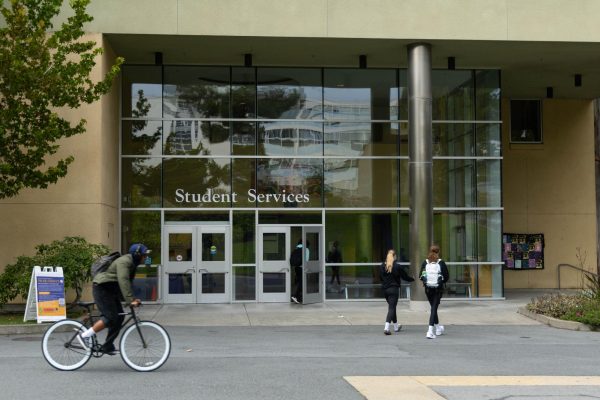
Brando Henriquez, a third-year race and resistance student, had mixed feelings about the new space, although he enjoyed the event.
“I think it’s a good way to reintroduce the idea of community inclusion to students, big fan of free food,” Henriquez said. “I think that the only thing really missing is having multiple printing stations, which was really useful in the previous location. Each division had its own printing station and its own bathroom.”
The old space, which was located in Village C, was a preferable location for students, and the move to the new space previously faced some backlash.
Some students, like Henriquez, had qualms about having a singular shared kitchen and pantry space for all the groups.
“There used to be multiple food pantries in the Latinx Student Center, and the Black Unity Center had their own food pantry. And the AAPI Center also had its own food pantry,” Henriquez said. “So I’m looking forward to seeing if the food pantry comes back because, as of right now, I don’t think it’s back yet.”
Brown acknowledged that the previous location at Village was easier for students to find, but hopes that the community will translate into the new space.
“When it comes down to identity as students with community, it’s never the space, it’s the people,” Brown said.

Miguel Hernandez, associate vice president and dean of students, hopes that the new space offers students a unique opportunity to be a part of multiple groups opposed to choosing just one.
“Both spaces provided an opportunity for students to come together and community to happen,” Hernandez said. “This space offers a different, maybe next-level opportunity that, although there are individual spaces that we still honor, they are able to collaborate. My hope for students is that they see more of their identity throughout the space versus having to choose or pick one identity at a time.”
More events will soon be hosted in the new center, including movie nights, karaoke nights and game nights. Brown’s goal for the center is that it continues to be a place that fosters community and brings students together.
“This is a place for students to decompress and know that they’re supported,” Brown said. “My hope is that students know that when they do come to this space that they’re supported. This is a space for them, a space for them to decompress and just come together and get whatever help that they need, either us as staff or peers.”