

Nobody’s doing it like James Cameron. No other blockbuster-forward auteur still infuses their impossibly massive adventures with his level of heart-on-sleeve earnestness, nor do they match his rigorously structured action sequences that soar on the highest level of technical wizardry in the industry. “Avatar: Fire and Ash,” like its predecessors, is nothing short of a miracle in an age dominated by lackluster, half-hearted attempts at spectacle.
This may make “Avatar” sound like nothing more than water in a desert. In a way, it is. What makes this bugnuts, hyper-culturally insensitive trilogy about feline-esque blue creatures and their wondrously natural alien world stand out in today’s cinematic landscape is exactly what critics of the first film dinged it for back in 2009. Cameron’s unwavering commitment to realizing mythic archetypes through pinpoint precise artistry and broad emotional strokes painted across bulky three-hour-plus runtimes is exactly what’s so refreshing in today’s blockbuster milieu.
Mired in self-aware snark and a general embarrassment with itself, nearly every major franchise today is too sterile and too risk-averse to ever make any emotional impact. “Avatar,” by comparison, has no qualms about its larger-than-life emotionality.
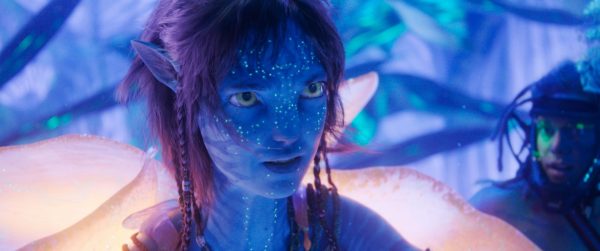
Picking up with the Sully family in the wake of the eldest son’s death, Neytiri and Jake (Zoe Saldaña and Sam Worthington) can barely face that reality. Meanwhile, their children Lo’ak and Kiri (Britain Dalton and Sigourney Weaver) are trying to fit in the best they can with their new home in the water-based Metkayina clan. When their human friend Spider (Jack Champion) must return to the Omatikaya, his evil father Colonel Miles Quaritch (Stephen Lang) returns in his Avatar body to hunt the Sully family, and everyone soon encounters the vengeful Varang (Oona Chaplin) of the Mangkwan tribe, the ash Na’vi.
Cameron has always embraced spectacle and has never shied away from sequels. “Aliens” and “Terminator 2” are some of the best of all time, but they were standalone follow-ups that deftly continued a story, but never felt like intentionally serialized storytelling. With his highly ambitious concurrent production of the second and third “Avatar” films, Cameron has, intentionally or not, met franchise filmmaking on its own terms and outdone it once more. In an age of overly serialized cinematic universes and interconnected worlds that feel more and more like homework every passing year, Cameron’s two mega-sized adventure films operate as one titanic arc that lives and breathes within the confines of itself.
Beyond these films’ continually astonishing visual effects, which continue to put the gloopy and tawdry VFX work that pervades migraine-inducing summer sequels year after year, the foundational emotional framework of these two sequels continues to astonish. 2022’s “Avatar: The Way of Water” blew open the box office, like the original, and as this threequel surely will, but what was so shocking about that initial follow-up was just how intricately mapped the narrative and emotions of this seemingly unwieldy ensemble actually were. The 13-year-long wait was more than earned, and “Fire and Ash” is no different, for better and worse.
For the first time in his career, Cameron seems to be playing the hits, at least on a structural level. If it ain’t broke, don’t fix it. When working with an unprecedentedly gargantuan scale, the urge to stick to what you know is understandable but disappointing. Big picture narrative beats are easy to see coming from hours and acts away, but the emotional revelations between characters are not and that’s what keeps this sequel still feeling fresh. That and Cameron’s willingness to get freakier and more unabashedly goofy with it, though it’s hard to imagine that latter descriptor ever enters his lexicon.
Varang is a particular gateway drug to Gonzoland. Chaplin’s physical presence is intoxicating and her playfulness lights up the screen in the most exciting addition this film makes to the world of Pandora. This femme fatale archetype is a familiar staple of Cameron’s oeuvre and a welcome one here, especially as the ash clan’s fire-domme antics with the increasingly conflicted Quaritch escalate. Cameron lets his freak flag fly as much with their tryst as he flies his big, earnest conservationist flag in sequences dedicated to the fight for the Tulkun, Pandora’s incredibly intelligent whale-esque species being hunted by the human forces.
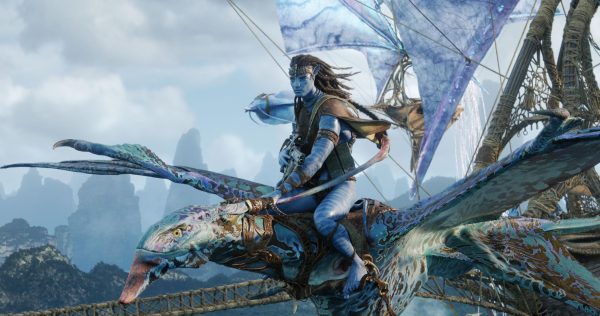
It’s in that latter portion, Cameron’s unerring humanism, that the film soars as its predecessors did, but also where it flounders as they did. Na’vi culture is still a nondiscerning hodgepodge simulacrum of various native cultures whose traditions are approximated to questionable ends by a heavily white cast. Is this all in the vein of “good old-fashioned” boomer liberalism? Probably, but even when building a fantasy world around the subversion of the horrible “noble savage” trope, the initial steeping of the world in it is still quite reprehensible. Of course, this is all a fantasy world and there is no Na’vi culture being appropriated, and it’s a miracle that Cameron pulls these off time and again.
That the master of spectacle is deeply committed to this series, alleging to make two more if this follows suit in cracking the $2 billion mark at the box office, or near it, says a lot about his passion, but the films speak even louder. Blockbusters have missed Cameron’s zeal and bombastic, gaudy tastes. His endless innovations in the worlds of performance capture and 3D may read as empty or vain tricks, but they never fail to dazzle. When most studio filmmaking feels anonymous and palatable, “Avatar” once again serves as a reminder that there are no limits to cinema. Even if not all that narratively audacious, there is no doubting the emotional and visual splendor of Cameron’s returns to Pandora.
“Avatar: Fire and Ash” opens in theaters Friday.