
Often mistaken for Mexico’s Independence Day, Cinco de Mayo, or May 5, commemorates the 1862 Battle of Puebla, where Mexican forces defeated the French. Though not a decisive victory, it remains a powerful symbol of resistance, cultural identity and pride across Mexico.
Today, Cinco de Mayo is celebrated primarily in the United States, where it has become a day to honor Mexican heritage and culture.
Festivities often include traditional music, dance, food and community events that highlight the richness and diversity of Mexican traditions. While its historical roots remain important, the holiday has evolved into a broader celebration of cultural pride and resilience among Mexicans.
Origin
The celebration of Cinco de Mayo dates back to 1862, when Mexico’s president at the time Benito Juárez suspended payments on foreign debt, a move that triggered the French invasion of Mexico. General Ignacio Zaragoza led the Mexican army to victory over French troops at the Battle of Puebla.
Although this victory did not bring the conflict to a close as France subsequently gained the upper hand for a time, the triumph at Puebla bolstered national morale and became a symbol of resistance. Today, this event remains a source of commemoration and celebration for Mexicans.
Evolution
In Puebla, Cinco de Mayo is celebrated with military parades and civic ceremonies, including soldiers and marching bands, historical reenactments of the Battle of Puebla, flag-raising ceremonies, tributes to national heroes, and school performances. However, contrary to common belief abroad, it is neither an official national holiday nor does it correspond to Mexico’s Independence Day, September 16.
Over time, the holiday has been the subject of misinformation, especially outside the country, where U.S. media and commercial celebrations often confuse it with Mexican Independence Day.
During the 1950s and 1960s, Cinco de Mayo gained prominence in the United States as Mexican communities used the celebration to honor their cultural heritage and identity. Because the holiday commemorates a Mexican victory over a foreign power, it became a symbol of pride and resilience.
Traditions
Cinco de Mayo celebrations feature traditional dances, attire such as the “China Poblana” dress and a wide variety of Mexican cuisine. Mexican snacks, antojitos Mexicanos, include tacos, elote, tamales, quesadillas, sopes and churros. An essential part of the commemoration is reinforcing cultural identity and a sense of community.
Furthermore, many celebrations include live music — particularly mariachi bands and folk ensembles — as well as reenactments of the Battle of Puebla and educational activities that highlight the history behind the date. In Mexican communities, Cinco de Mayo is also celebrated with festivals, cultural fairs and family gatherings that strengthen a sense of identity, pride and connection to cultural roots.
Celebrations on Campus
Today, the Latine Greek Council will host the “Noche de Lotería” (Lottery Night) event at 7 p.m. in Humanities 113. The activity aims to provide a space for socializing, games and cultural connections with the student community.
On May 13, the department of Latina/Latino studies will host “Miercoles de Movimiento,” or “Movement Wednesday” in Malcolm X Plaza from noon to 2 p.m, featuring a live DJ set and a cumbia lesson by Dr. Michael De Anda Muñiz. This event fosters a safe space that highlights “the importance of music and moving our bodies as a form of cultural healing and resistance.”
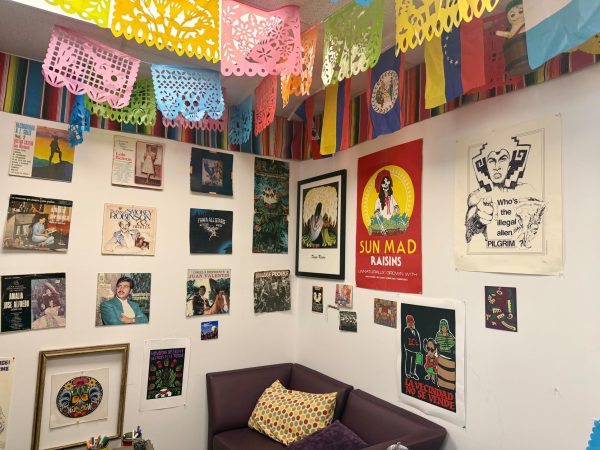
Additionally, the Latinx Student Center continues to serve as a key space for students to build community and strengthen their identity. The center is open Monday through Friday from 9 a.m. to 5 p.m. for students who wish to drop by.
Emmanuel Padilla, director of the Latinx Student Center and a leader in community inclusion, reflected on the misinformation surrounding Cinco de Mayo.
“In 10th grade, when I was in high school here in San Francisco, the student newspaper stated that May 5 is Mexico’s Independence Day,” Padilla said in Spanish. “How could a teacher let that happen, let it get printed for all the students, if it’s completely false?”
That misunderstanding inspired Padilla to educate others and speak out about the true meaning of Cinco de Mayo.
“That motivated me to share the truth,” Padilla said. “It is important that everyone is informed and takes part in the conversation.”
Padilla emphasized the importance of correctly identifying the date and giving its significance the weight it deserves.
“It is important that we recognize what May 5 actually is… that everyone is informed that there is a difference between Independence Day and May 5… because those two are often confused,” Padilla said. “Our culture is not just a party.”
María Espinoza-Herrera, a criminal justice major with a minor in Latino/Latina studies, shared how her parents taught her about the importance of her roots.
“My parents have always deeply involved us in our traditions, our culture and traditional Mexican life,” Espinoza-Herrera said in Spanish.
For her, it is essential that the university acknowledges this date and raises awareness so that students feel connected to their traditions.
“You never forget where you come from… You can take the Mexican out of Mexico, but Mexico never leaves the Mexican’s heart,” Espinoza-Herrera said. “It is important to feel at home, wherever you happen to be.”