

Intro
Ozzy Palacio: 00:00 – 00:07
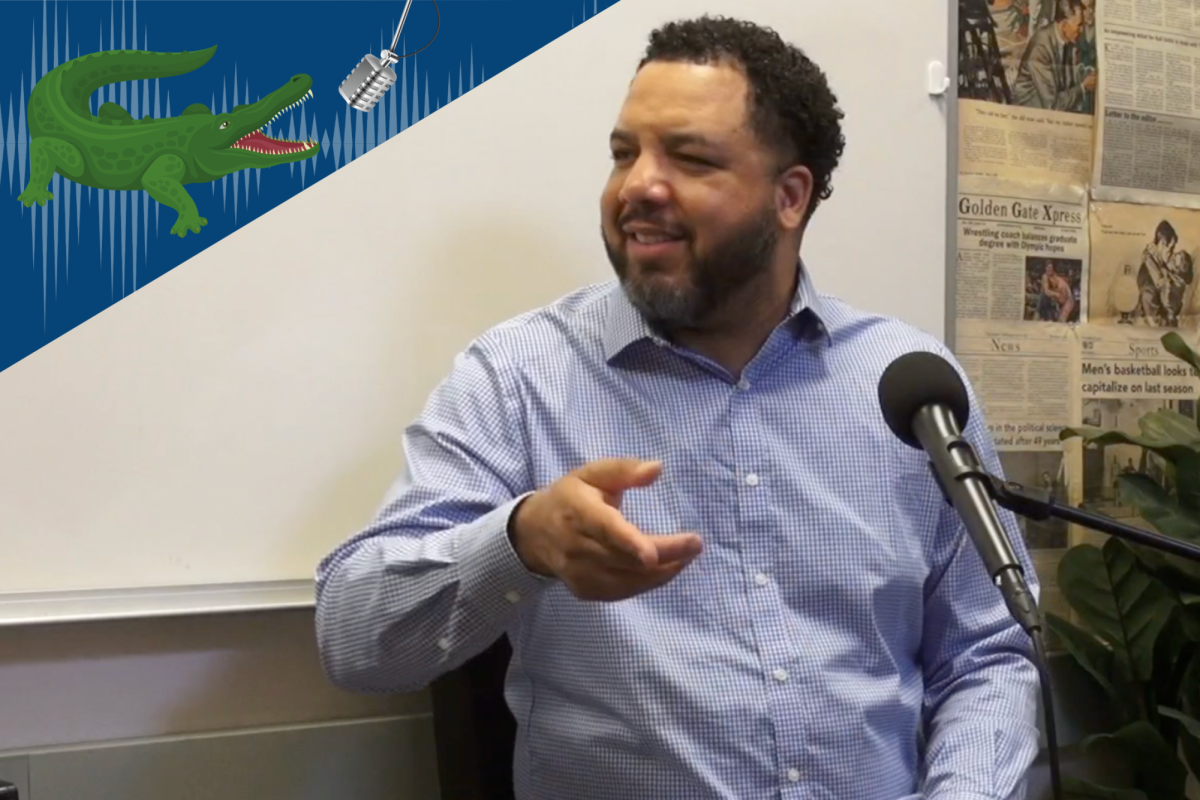
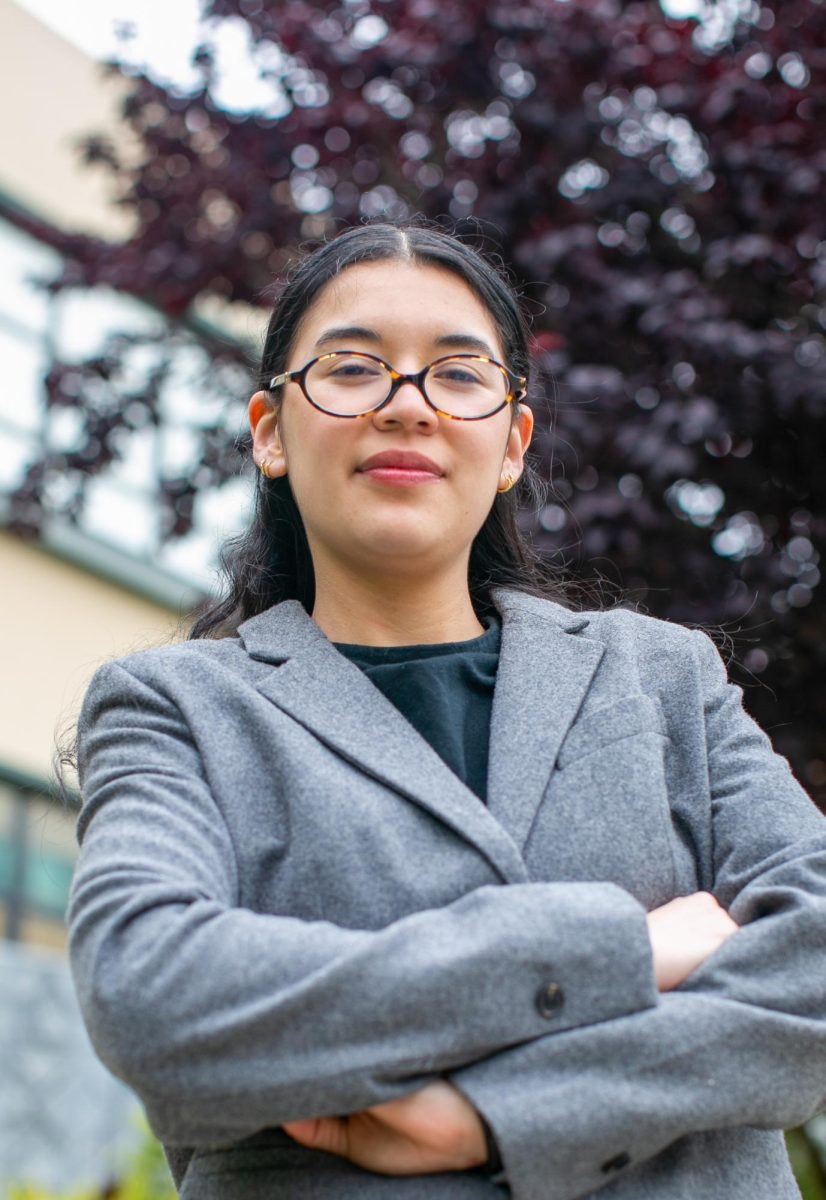
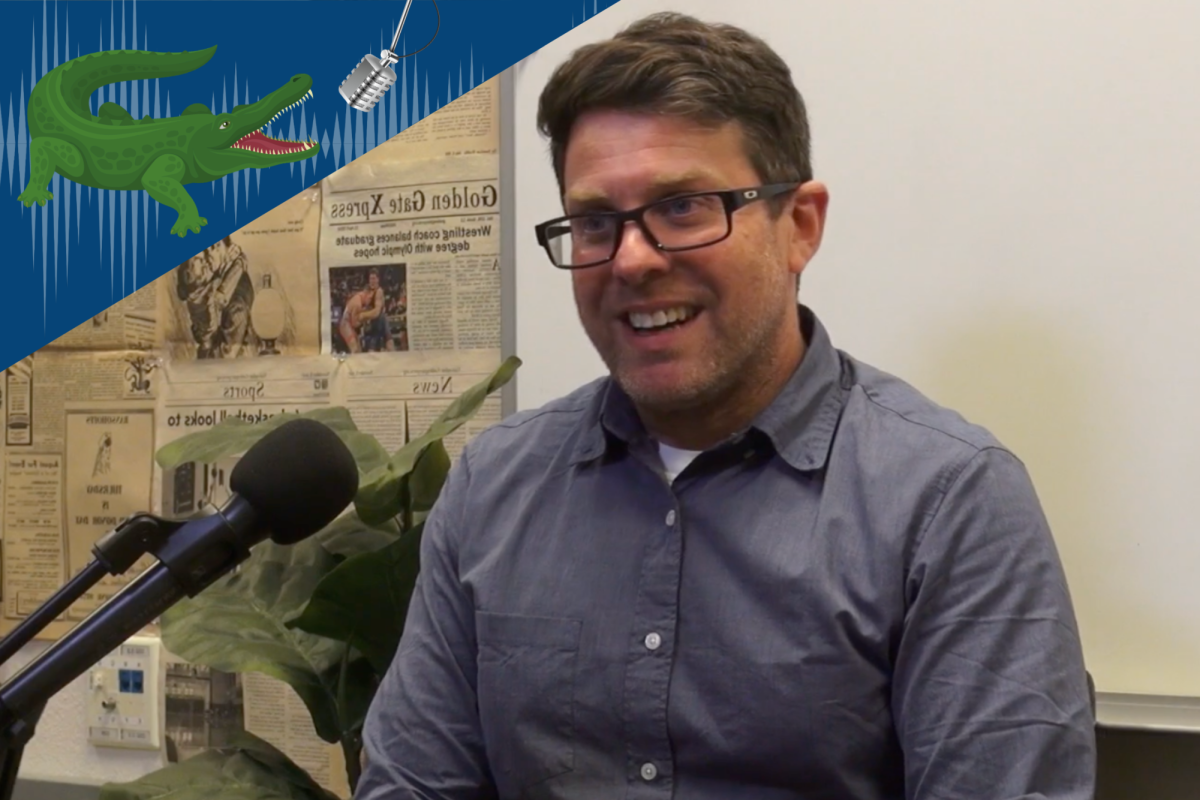
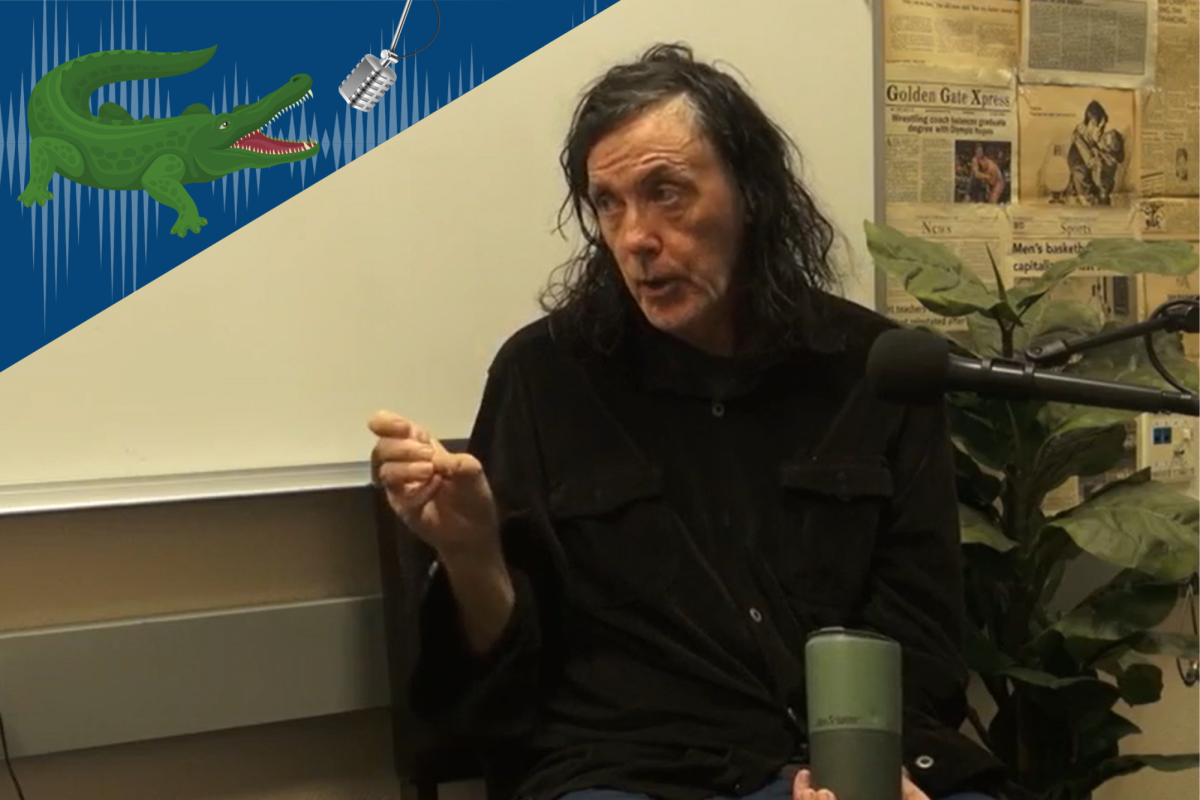
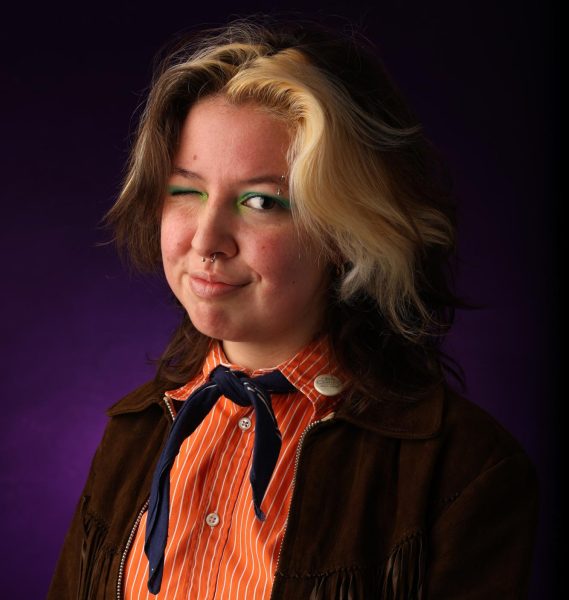
Welcome to “Between the Issues.” I’m Ozzy Palacio, a staff member for Golden Gate Xpress. Today, I’m here with Astro Carlyle, the online and engagement editor of Xpress Magazine.
Astro Carlyle: 00:07 – 00:08
Hello!
Palacio: 00:08 – 00:09
Thank you for coming on Astro.
Interview
00:09 – 00:11
First up, what year are you in and how old are you?
Carlyle: 00:11 – 00:15
I am 22 and I’m a super senior. I’m in my fifth year.
Palacio: 00:15 – 0:19
It’s ok to be a super senior. We got to get our education. And what is your major?
Carlyle: 00:19 – 00:20
I am a [Broadcast and Electronic Communication Arts] major.
Palacio: 00:20 – 00:23
What role has media played in your student experience at SFSU?
Carlyle: 00:23 – 00:39
Media has played a really big role in my student experience here. I’ve been in radio about three years. I’m general manager this year, was program director for like a year. Media is super important. I’m more interested in radio, TV media. I’m getting into newspaper. I have a subscription to Rolling Stone.
Palacio: 00:39 – 00:42
How did you first get involved with the student radio student, and would you share its name?
Carlyle: 00:42 – 00:58
It’s KSFS. I don’t know what it stands for. I think it’s just a general, professional-sounding name. I got started in it the first time I toured campus. I walked past the radio and TV sign on the Creative Arts Building. It’s not even in there anymore. The radio station used to be in the basement, which I wish I would’ve gotten to see.
00:58 – 01:07
I saw them tabling and they were like, we have radio. And then I took the radio class and I was like, “This is what I want to do.” I switched my major from political science, I got into BECA.
Palacio: 01:07 – 01:09
And what year did you switch your major?
Carlyle: 01:09 – 01:11
I switched my second year.
Palacio: 01:11 – 01:16
Fast turnaround. And what are some of the challenges you faced working on both print publication and broadcasting publication?
Carlyle: 01:16 – 01:29
Broadcasting publication, I feel like it’s hard to get everyone to do their job. I think I’ve been better at that. We’re throwing a bunch of events at The Depot, we’re collaborating with them. I’m having the events team plan. In the past, I’ve had lake shows, and I plan it all.
Palacio: 01:29 – 01:36
And did you have any previous experience before you came to SF State with broadcasting or radio? Any experience formally, or just an interest?
Carlyle: 01:36 – 01:38
I’ve always had an interest in radio. I’ve always listened to it.
Palacio: 01:38- 01:41
And where are you from? What’s the local radio station there?
Carlyle: 01:41 – 01:44
I’m from San Diego. I would say, like NPR, iHeart for sure.
Palacio: 01:44 – 01:48
And have you explored any options in careers with NPR locally, here in the Bay Area?
Carlyle: 01:48 – 01:54
I would love to work for KQED. I met this guy who used to be in the punk scene, and I got his email. So, I just need to take him out for coffee.
Palacio: 01:54 – 02:01
That’s super exciting. How do you manage the potential conflicts of interest in working for both Xpress and KSFS?
Carlyle: 02:01 – 02:24
That’s been kind of hard for me. I thought that I could do a collaboration. I’ve been vetoed on that by the magazine. I respect that. I’m not a journalism student. I don’t really know how it’s supposed to work. There are some pictures of the KSFS lake show that got posted in the magazine because my colleague, Josh, sent them in. I would love if they could work together more closely. I just have to see how I can do that without violating any boundaries.
Palacio: 02:24 – 02:29
And how do you think your work on Xpress has changed the way that you do radio?
Carlyle: 02:29 – 02:42
It’s changed the way I do radio because I’ve been doing a lot more engagement work for Xpress, and that’s helped me do engagement work for KSFS. Doing more Instagram reels, getting people more interested. I think working with the design team has really opened my eyes.
Palacio: 02:42 – 02:43
Is it your first semester on Xpress?
Carlyle: 02:43 – 02:44
It is, yeah.
Palacio: 02:44 – 02:48
How did you come to online and engagement, specifically through working with Xpress?
Carlyle: 02:48 – 02:56
I didn’t think that I could work for the magazine because usually you have to do, we call it GWAR, it’s like the thesis class, and they just waived that for me.
02:56 – 3:10
The previous multimedia editor interviewed me about a band called Elephant Garden, and I talked about how I worked on the online for KSFS and the Instagram. And they were like, maybe we should consider you. And then I had an interview with Bailey and Olivia, it seemed like it’d be a fun thing.
Palacio: 3:10 – 03:17
Yeah, it seems like it’s been a really good fit so far. And kind of following on the heels of you connecting with Bailey and Olivia, how has Xpress as a whole helped you connect with other students?
Carlyle: 03:17 – 03:23
It’s opened a whole new branch. I didn’t know a lot of journalism students, I’m meeting more of them.
03:23 – 03:30
Angel, I’m working with on a multimedia project. I do audio for her. She’s doing a band documentary, so that’s been pretty great.
Palacio: 03:30 – 03:32
Well looking forward to seeing that whenever you have it coming out.
03:32 – 03:37
Throughout your time on the radio, have you increased the notice of interest in students for DJing at all?
Carlyle: 03:37 – 03:59
Yes. Tabling yesterday, I was walking past and a student came up and was asking about DJing. DJ is pretty broad. It can be just like talking on the radio, but I think this person wanted to mix. So, there’s been a lot of interest in that. We sent out an interest post to play at a show in November that we’re doing with San Jose and Santa Clara, and there’s been a lot of interest for that.
Palacio: 03:59 – 04:08
So when you see the interest in DJing, where is it primarily focused? Do you have people that are wanting to spin records, or mix their own music completely, or is it just a really broad, varied interest?
Carlyle: 04:08 – 04:24
It’s pretty broad. There’s sports. We have a comedy show. There’s a lot of people who just play music they like. A lot of people are interested in spinning records, but we tell them not to touch it until we do a workshop, and we never do a workshop. But Grant, our music manager, is actually doing that this semester.
Palacio: 04:24 – 04:27
I think records have definitely been making their way more into the mainstream for younger people.
Carlyle: 04:27 – 04:28
For sure.
Palacio: 04:28 – 04:30
But how do students go about getting a radio slot?
Carlyle: 04:30 – 04:34
They have to take the class, that’s it. And then you have to do a show.
Palacio: 04:34 – 04:38
And I imagine there’s pretty limited slots on KSFS. So how do you go about selecting?
Carlyle: 04:38 – 04:55
I was the program director for a year and now Heba is the program director, but it’s really hard. We have everyone send in an interest form with three days and three times they can do. We mix them up, and then it always happens after the schedule is finalized. People are like, “Wait, I have class,” “I have work,” and then you have to mix everything around again.
Palacio: 04:55 – 04:58
What is the schedule looking like right now? Are you feeling pretty good about it?
Carlyle: 04:58 – 05:11
Yeah, it’s definitely finalized now. My show on Saturdays also got cut, but now I have a slot on Wednesday, so it’s fine. I usually do band interviews, but now I’m just doing that separately on Twitch and having a little music show. I used to have a rock ‘n’ roll show.
Palacio: 05:11 – 05:15
So what’s your main focus in terms of music? Where do you really like to direct your attention?
Carlyle: 05:15 – 05:28
I love rock. I love interviewing rock musicians. There are lots of great local rock musicians. Punk is also great, but it’s harder to work with them because they’re so loud. But they’re usually great people. They’re usually kind of shy. It doesn’t match.
Palacio: 05:28 – 05:33
When you came into the San Francisco music scene, since I imagine you moved for college, where did you really start to find your roots?
Carlyle: 05:33 – 05:39
I would say radio. I feel like I have a family there. TV too. I’ve been getting into TV a lot more.
05:39 – 05:45
We did Friday Morning Live last semester, which is a spoof of SNL. I directed, I acted and I wrote for that.
Palacio: 05:45 – 05:48
Are you looking forward to any more projects like that coming up in the future?
Carlyle: 05:48 – 05:55
Yeah, for my directing class, we’re doing a telethon at the end of the year. Right now, we’re practicing directing different segments, and I’m in charge of the music segment.
05:55 – 05:59
Hopefully, it’s going to be Novus Moon. We’re still tying that down.
Palacio: 05:59 – 06:04
Do you feel like both the journalism and BECA departments are offering enough resources for students to get involved?
Carlyle: 06:04 – 06:22
I don’t think enough people know about radio. People will see the table and say, “I didn’t know we had a station.” I think it would be great, too, if it wasn’t a class. Anyone could do it, but it’s kind of hard. The class fills up right away, and they tried to cut 305, the basics, last semester. And they had to bring it back because the waitlist for 505, the upper level, was so full.
Palacio: 06:22 – 06:26
And how do you think that’s impacted students’ willingness to be curious about radio?
Carlyle: 06:26 – 06:39
I think people are still going for it. I don’t think they’re deterred by a filling up class at all. The class gets bigger and bigger over the years. Jeff Jacoby, the professor, if you come to the first day of class, he’ll try to get you in, even if there’s like no official slot.
Palacio: 06:39 – 06:48
That’s really encouraging to hear professors are really fighting for you guys in that way. With so many course cuts to San Francisco State, how do you think students are seeking radio experiences off campus?
Carlyle: 06:48 – 07:02
A lot of our team does community radio, as well. A lot of them do BFF. BFF is great, they talk about shows in the area. Sophia, our web-weaver, it’s a new position, works at BFF and has a show called “Butch Bait.”
Palacio: 07:02 – 07:04
And for people that don’t know, how would you describe BFF?
Carlyle: 07:04 – 7:14
I just say, really community-based radio. They’re always throwing events. They’re always trying to get people into other community-based events. It’s broad; there are lots of different topics that the radio shows are on.
Palacio: 07:14 – 07:17
Is there anything that BFF does that you’d like to emulate?
Carlyle: 07:17 – 07:21
I would love to throw more events and be more collaborative within the organizations.
Palacio: 07:21 – 07:26
Do you feel that, being a student organization, you’re way more limited in the scope of event space, particularly?
Carlyle: 07:26 – 07:35
Definitely. I think it’s also a money issue and a time issue. I’m trying to work on this, but if they’re not getting paid, they’re not really motivated unless you’re on them all the time.
Palacio: 07:35 – 07:39
Do you feel like the pay is a major incentive for students in the radio department?
Carlyle: 07:39 – 07:44
I think so, definitely. There are other schools that pay their departments and they seem to run a lot better.
Palacio: 07:44 – 07:46
And what are some of the other schools you’ve seen that run like that?
Carlyle: 07:46 – 07:50
I can’t name any specifically. I don’t think any CSUs pay their people.
Palacio: 07:50 – 07:54
What would be the best-case scenario for KSFS right now?
Carlyle: 07:54 – 08:11
I think if we had the budget to pay managers, that would be great. And have people come in outside of the class, because if it’s just in class, they’re like, “Oh I’m just going to do bare minimum and go.” It needs to be applications for positions to make sure the person’s actually qualified and not just like, “Oh, I want to do this,” and then they don’t do anything the whole semester.
Palacio: 08:11 – 08:16
So how did you originally come onto Xpress beyond the interest in journalism?
Carlyle: 08:16 – 08:39
I used to be a journalism minor and I thought I’d be able to talk more about music, like have a little column or something. I didn’t fully understand what the magazine actually was. I think it’s super cool that our school has a magazine and it comes out four times a year. I’m also the engagement editor. I don’t hear anything about it until it comes out in the boxes. So, we need to fix that.
Palacio: 08:39 – 08:42
And what are some of your major magazine inspirations when you’re curating Xpress?
Carlyle: 08:42 – 08:44
I would say Rolling Stone. That’s a huge one.
Palacio: 08:44 – 08:49
Are you feeling good about the content that your fellow editors and staff reporters are producing this semester?
Carlyle: 08:49 – 09:00
I think they’re doing great. I think the Ben Fong Torres story was great. Bailey had a spread and it had Rolling Stone magazine pictures, and it had the staff that had worked here and gone on to work at Rolling Stone.
Palacio: 09:00 – 09:03
Where would you like to see some improvement from Xpress?
Carlyle: 09:03 – 09:21
In the radio, how we run it, each manager has a team. Here it’s editors, but I think each editor should have a team of people that helps them do what they need to do. Because I get a little overwhelmed. And I think schedules should be more of a hard deadline because people will send me stuff day of and be like, “This needs to be posted,” and I can’t always get to it.
Palacio: 09:21 – 09:25
Do you feel like your role at Xpress is setting you up for a successful career post-graduation?
Carlyle: 09:25 – 09:33
I think so, yeah. I love to have variety in the things I do. I’d love to work for a music magazine doing engagement or online.
09:33 – 09:34
What’s your position again?
Palacio: 09:34 – 09:36
I’m a staff reporter for Golden Gate Xpress.
Carlyle: 09:36 – 09:38
Are you interested in working at KALW?
Palacio: 09:38 – 09:55
Yeah, I have some contacts over there that are very talented journalists. They’re very sweet people in tandem with their journalism abilities. So, I would definitely be interested in KALW and definitely want to expand a little bit more on SF State’s opportunities they have for radio that they have for students here. So, that’d definitely be an interest of mine.
Carlyle: 9:55 – 09:56
What kind of work would you want to do for them?
Palacio: 09:56 – 10:20
For KALW, I would definitely want to do staff reporting. If not, I’d love to do a feature series more than anything else. I was speaking with Ben Trefny, their executive producer, and he really highlighted their focus on stories that have a beginning and a clear end with feature ledes. Like Valkyries, they have a very clear season. And say radio, it’s really hard to chronicle a band when everything they do is individually different.
10:20 – 10:22
What are some of the bands that you’ve really enjoyed following?
Carlyle: 10:22 – 10:32
Doghouse is a big one. I throw a lot of lake shows with Alex. Elephant Garden was cool. Las Ratas was awesome. I work with Kinda Good Band and Persephone a lot.
Palacio: 10:32 – 10:2
I think it’s a really big highlight with the Bay Area music scene, too, is everyone is so connected. How have you found some challenges in drawing the links between band members?
Carlyle: 10:42 – 10:57
I don’t think it’s been that challenging. I’ve only had one band that’s been difficult to interview. I won’t name them, but they cancelled on me a couple times, but no one else has cancelled on me ever. And throwing shows, I connect bands and then they play shows in the future together and I love that.
Palacio: 10:57 – 11:01
And what are some of your hopes for the Bay Area music scene going forward? Just super broadly.
Carlyle: 11:01 – 11:12
I’m just trying to support local bands, uplift them, trying to make them some money. That’s really hard. I need to find more venues that pay, like The Depot has been really great because they actually pay the musicians.
Palacio: 11:12 – 11:17
How does The Depot structure function, with often being a free entry venue, into paying the musicians?
Carlyle: 11:17 – 11:27
I think they have funding from somewhere, like the department funds them because it’s a community-building kind of thing. Community building is also super important to me.
Palacio: 11:27 – 11:33
And what role do you think the mixers kind of serve for students connecting beyond the obvious community aspect of it?
Carlyle: 11:33 – 11:46
I think it helps to make friends. You can study with those friends, and all the teachers always say, “You don’t know who you’re going to be working for in the future. You don’t know what company your colleagues are going to be at,” so it’s really good to build those connections now.
Palacio: 11:46 – 11:51
And what is the attitude in the BECA department surrounding AI usage and human defunding?
Carlyle: 11:51 – 12:07
We don’t like AI usage at all. We had something where you had to send in a little logo for your show, and someone used AI and we said no because it’s not creative. We’re in art, even if it’s radio, and if you’re not going to be creative, then why are you here?
Palacio: 12:07 – 12:17
And within the realm of art usage, specifically in the creative arts, how do you feel the kind of camaraderie between arts and humanities students has evolved with the impending use of AI?
Carlyle: 12:17 – 12:19
How does journalism look at AI?
Palacio: 12:19 – 12:25
We have an AI policy that states you are not allowed to do any of your writing under AI. It is very strongly discouraged.
Carlyle: 12:25 – 12:26
That’s good.
Palacio: 12:26 – 12:27
Short answer.
Carlyle: 12:27 – 12:31
I think we’d have similar views on that. It’s really hard to tell what’s AI and what’s not now.
Palacio: 12:31 – 12:34
Does the BECA program currently have an AI usage policy?
Carlyle: 12:34 – 12:45
Yeah. Every teacher has it in their syllabus that you’re not allowed to use AI. Some teachers kind of bend it, and they say if you’re using it for topics, like prompts for something, it’s fine, but you can’t use it to do your work.
Palacio: 12:45 – 13:09
I know there’s definitely some kind of blurry patches with, say, using Otter AI, a program used to transcript your interviews. A lot of students are kind of going back and forth, but as far as AI in the journalism department as a whole, I’m sure you’ve seen the strong discouragement, if not complete ban, between Xpress and Golden Gate Xpress. And I think all of our students are really looking forward to collaborating with their peers more strongly, rather than using this kind of foreign property.
Carlyle: 13:09 – 13:28
Because it’s just stealing people’s work. And our school bought some kind of membership from ChatGPT for everyone and spent I believe it was $20 million on it. I know funding is weird and there are different things allocated for different sections, but if we don’t have money and we’re laying off teachers, they laid off all the lecturers in the BECA department except for one.
Editor’s note: According to Kenzie Harris, BECA office manager, the department currently has five lecturer faculty with active three-year contracts, as of Fall 2025.
Palacio: 13:28 – 13:30
Every single BECA lecturer has been laid off?
Carlyle: 13:30 – 13:41
Every single lecturer. That’s why 305, the lower-level radio, was being cancelled. Elaine, who was super talented, she works for iHeart. She was let go because of budget cuts.
Palacio: 13:41 – 14:03
And I think that’s been a really big issue in both, it seems like, the BECA and the journalism departments is we’re having these lecturers who hold real positions at valuable firms, that teach students with real-life experience, being laid off. And so, now this linkage between students and real jobs is being cut. There was an article released that Gen Z is some of the most unemployable thus far, and I think that definitely has a big part to do with it.
Carlyle: 14:03 – 14:12
I think there are a lot of like, iPad babies in our generation, too, unfortunately. Everyone’s just scrolling and they’re not really aware, which makes sense with the state of the world.
Palacio: 14:12 – 14:17
Do you feel like radio is encouraging a more honest and direct conversation?
Carlyle: 14:17 – 14:31
I think so, for sure, and I think it’s a lot of more eclectic people. I think that’d be similar for magazine and newspaper, who aren’t just going to be on their phones and aren’t just going to be going with the trends, they’re going to be doing their own research and looking into things that they’re invested in.
Palacio: 14:31 – 14:34
And are you looking forward to being on the staff of Xpress next semester?
Carlyle: 14:34 – 14:44
I don’t think I’ll have time. I’m just trying to graduate. I think I’ll do an internship, hopefully at KQED next semester. So, I only wanna take like two classes next semester.
Palacio: 14:44 – 14:47
Did you apply for the KQED internships this past cycle in the summer?
Carlyle: 14:47 – 14:52
No. I think it’s this month that you have to turn them in for January, so I need to get that done.
Palacio: 14:52 – 14:54
And we’re on track to graduating this spring?
Carlyle: 14:54 – 14:56
Yes. When are you planning to graduate?
Palacio: 14:56 – 15:16
I will hopefully be graduating in Spring 2027. Yeah, I’m trying to get my journalism credits, morbidly, out of the way. So I’m just trying to get it figured out. Xpress and Golden Gate Xpress, I think the tie we can draw between them is they’re both very demanding, especially for working students. How have you balanced the workflow between your job and working at both the radio station and Xpress magazine?
Carlyle: 15:16 – 15:26
It’s been hard. I feel like I need to make a schedule, so I can put adequate time into both. I just need to talk to the magazine and be like, “Hey, we need to stick to deadlines because it’s overwhelming.”
Palacio: 15:26 – 15:31
Has most of your issue been having to edit other people’s work outside your own scope?
Carlyle: 15:31 – 15:46
Yeah, a lot of it. Like for Instagram posts, you’re supposed to have the caption. There’s like a little caption that goes on the post, and then there’s a caption under the post, and Bailey told everyone you have to have it by the time your first draft is up. And people haven’t even sent it in now after it’s been released.
Palacio: 15:46 – 15:55
Yeah, and I think that’s one of the really frustrating parts of student journalism as well. It’s because you’re not only responsible for yourself in your role, but your role often expands into things you do not expect it to.
Carlyle: 15:55 – 16:04
Yeah, and I think it’s been a lot too because I’m not a journalism student, so this is entirely new for me and I’m in a leadership position so it’s a lot.
Palacio: 16:04 – 16:06
How many articles are you having to produce this semester?
Carlyle: 16:06 – 16:09
None. It was waived. I’m getting special treatment.
Palacio: 16:09 – 16:15
Do you think that’s benefited the way you interact with the magazine? Do you have a little bit more free flow and outside perspective to bring into it?
Carlyle: 16:15 – 16:23
I think it’s helped a lot. I think it leaves space for people who have more experience to post their articles because there’s only so much space in each magazine.
Outro
Palacio: 16:23 – 16:25
Thank you for your time, Astro.