

Intro
Davis: 0:00-0:23
I think it really starts with the coaches. So they really identify the talent. They bring them to campus. They, you know, whether it’s email or talking to them on the phone, texting, that kind of thing. And then, as it gets later in the process, usually on an official visit, that type of thing, where they come to campus, I’ll take some time to meet them and their family.
Interview
Archuleta: 00:26 – 00:40
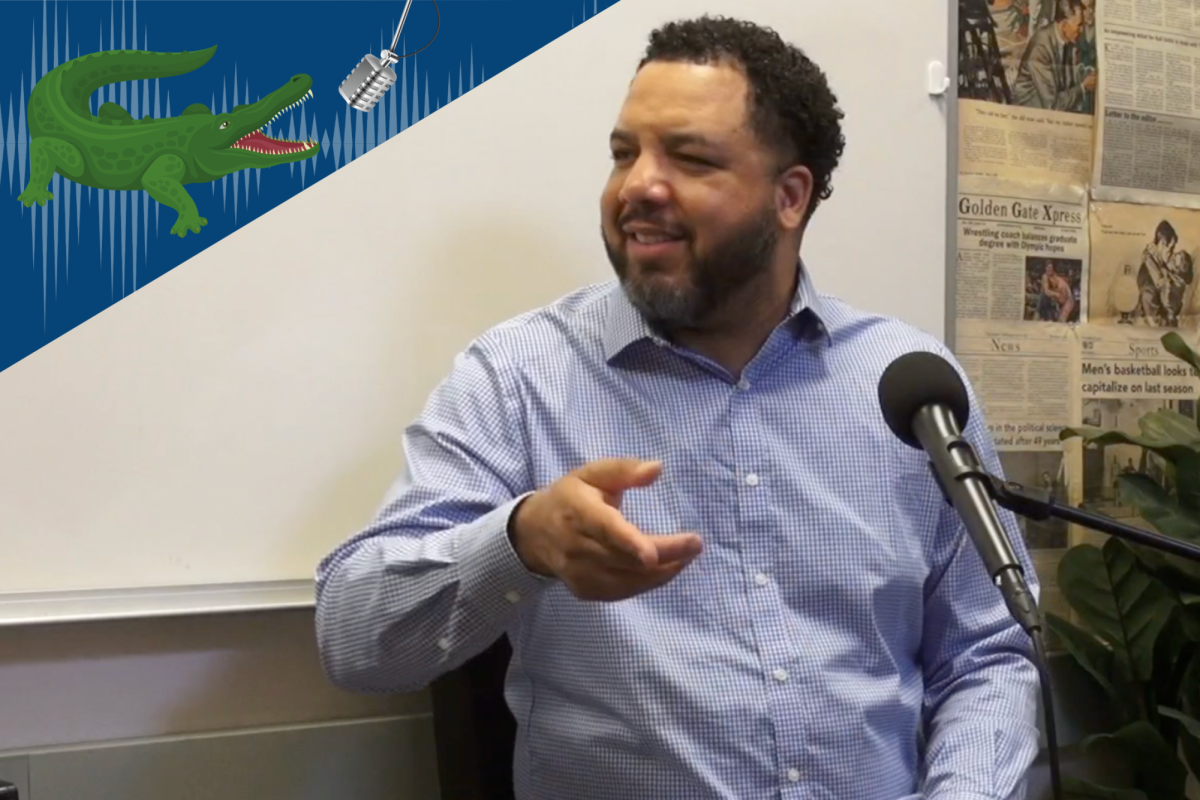
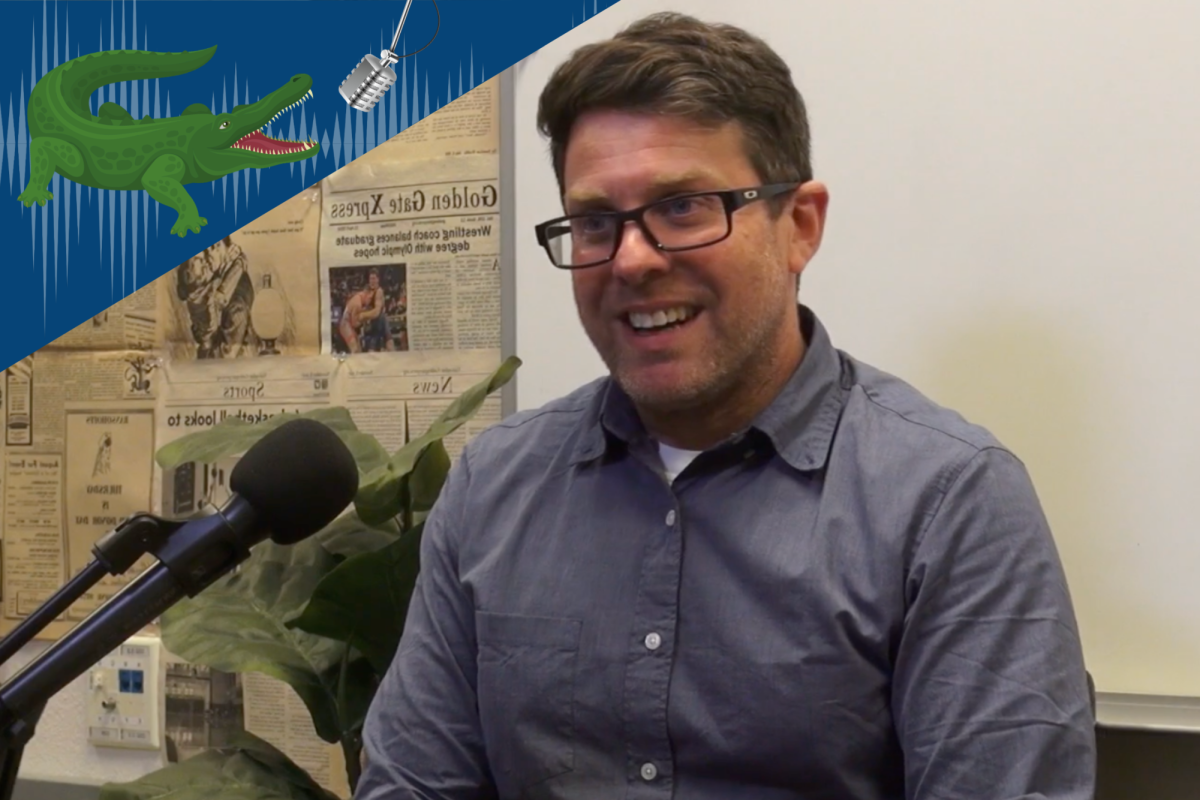
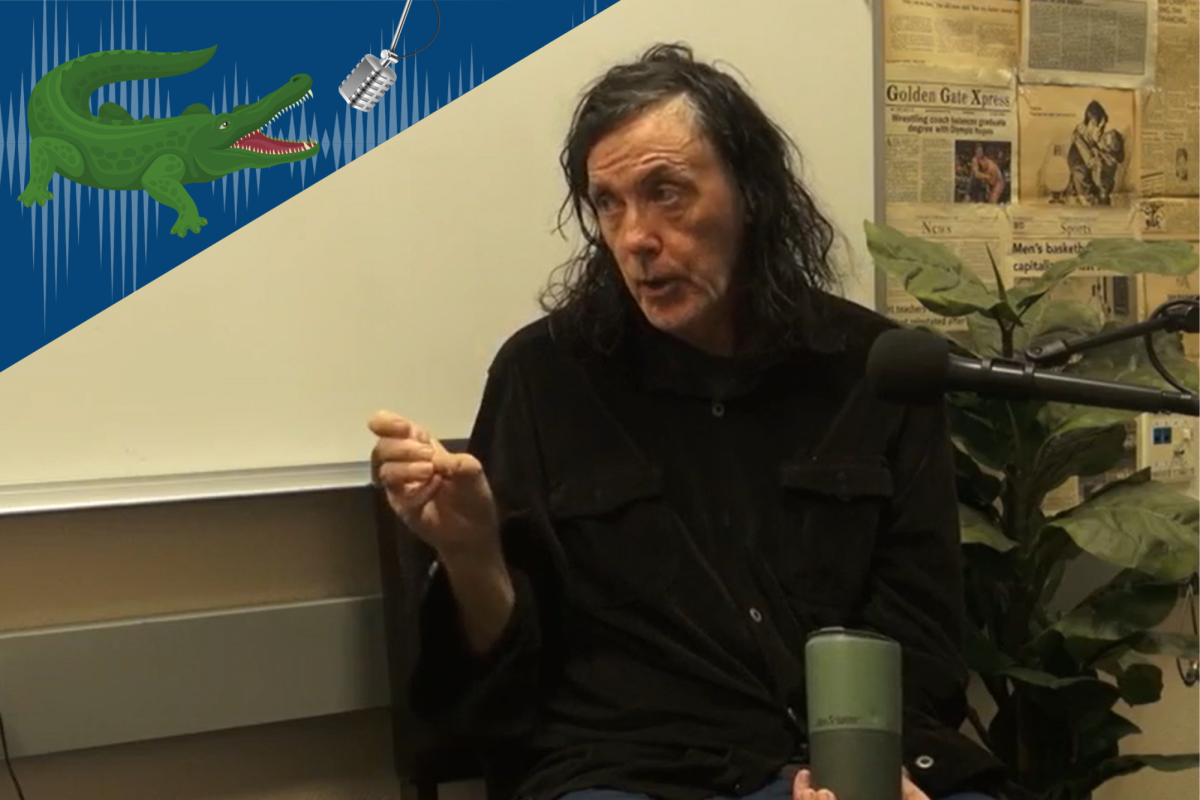
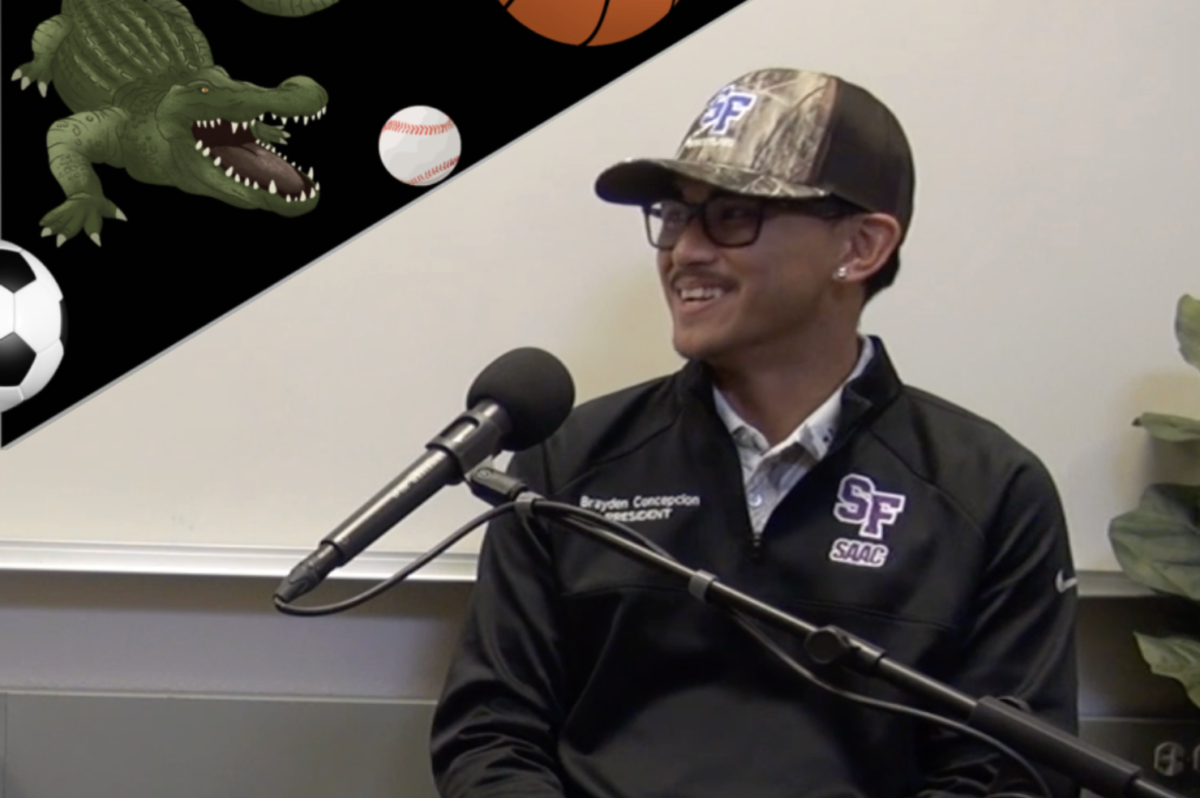
Hello everyone, welcome back to The Chomp. I’m your host for today’s episode, Daniel Archuleta, and we have a special guest joining us today. Back on Jan. 7, he was named the official athletic director of SF State. We welcome in Brandon Davis.
Davis: 00:41 – 00:42
Thanks for having me.
Archuleta: 00:42 – 00:55
Yeah, welcome in. So you can just explain the whole process of how it came to be. You got the interim tag removed, and just first off, how excited are you to have the official title?
Davis: 00:56 – 01:24
Yeah, it’s good. It’s a bit of a relief. There was obviously an application process, so I had to go through that hiring committee. [I] met with the Vice President and the AVP, and so, [I] went through that process. I guess [in] November and December, I got the offer right before the holidays. So that was nice to put my mind at ease knowing that was kind of behind me and official.
01:24 – 01:33
Obviously, the announcement didn’t come until the paperwork was all done in the new year. But, yeah, [I’m] really excited to be able to to move forward and do work for the student athletes.
Archuleta: 01:34 – 01:40
Nice, nice. Now, do you know how many other candidates there were? Any outside oppositions? Any people?
Davis: 01:40 – 01:41
I don’t. I don’t.
Archuleta: 01:42 – 01:44
Gotcha, they kept it all in house.
Davis: 01:44 – 01:45
Yeah.
Archuleta: 01:49 – 01:50
How long did you have the interim title yet again for?
Davis: 01:51 – 01:54
For a year and four months, I think
Archuleta: 01:55 – 02:17
Gotcha, quite an interesting time when you had the interim tag. You had to foresee a lot. Obviously, the removal of three sports. You’ve done quite a lot. So just, right now, is it really trying to just get everything figured out? You know, smooth sailing? Are you trying to hit the ground running and get some positive momentum?
Davis: 02:18 – 02:43
Yeah, I think you were trying to clean some things up still. You know, fiscally, we need to make sure that we’re in the black and we’re coming in on budget, just like any department on campus. So making sure we’re doing that. We’re looking at how we can fundraise for scholarships. We’ve been competitive in some sports. We’ve struggled in others. So I want to make sure all of our teams are competitive. You need money to do that.
02:43 – 03:13
Getting those scholarships is going to be an important piece of that puzzle. So finding ways to do that, whether it’s new revenue streams, whether it’s donations, that type of thing. That’s probably one of our biggest priorities. We’ve been fortunate because the last time I was here, we were talking about the alternative consultation that the students were in favor of. We were very fortunate to have that pass. So the student fees have ramped up a little bit.
03:13 – 03:36
Obviously, that’s going to still take some time as that increases, and that’ll help us additionally, but we also have to be cognizant of what enrollment is, because that funding is tied to enrollment, so we’re really dependent on that. So just because we might have a little more money in the bank doesn’t mean we can go out and go crazy with it.
Archuleta: 03:37 – 04:02
Absolutely. You did touch on the athletics fee, it’s in the students tuition now, so I’m really looking to see, what moves forward now? I mean, you might’ve just spoken about it, but can we say now that the whole athletic program is moving upward, and we’re kind of putting everything behind us now and we’re able to move forward?
Davis: 04:03 – 04:33
Yeah, I think we’d like to think that. We still need to be sure that we’re not spending like crazy. We still have some money that’s on the general fund of the university, so we need to make sure that we’re being careful there, and we don’t want to overspend on that side of things, because we are fortunate that the university sponsors us to a degree. We want to make sure that we are, again, just being cautious and careful with that hard earned money.
Archuleta: 04:34 – 05:04
Yeah, you also did say there [are] some teams that were not doing so great this past season. Softball is again off and running, now with a couple games under their belt. Is there any sort of hope that the softball team could end this academic school year with a strong hand and show that there’s a little bit of winning happening at this school.
Davis: 05:05 – 05:33
Yeah, I think wrestling, also. W had four guys who finished as champions at the MPSF championships. They have regionals coming up, and hopefully we get a few qualifiers to nationals. We had a national champion last year in Johnny Lopez. And so hopefully, they can have a strong performance. They’re in South Dakota for championships, where volleyball was last year. And yeah, softball is off to a great start.
05:33 – 06:02
So, you know, stay healthy. They’ve got a tough conference. National rankings came out today. [California State University] San Marcos and [CSU] East Bay are ranked second and third in the nation, in the top 25. We’re hopeful we can get back into the top 25. We were ranked last year. We’re probably one of the toughest conferences in the nation. So to get out to that start that we’ve had, really strong and then carry that forward to conference.
Archuleta: 06:03 – 06:19
I’m curious [about], you know, no more baseball [and] we still have a baseball diamond on campus. Are there any plans on what that’s being used for? I know it was taken off the facilities tab on the website. I’m just curious what the future holds for the actual baseball diamond.
Davis: 06:20 – 06:45
Yeah, I think, well, when you say the facilities tab on the athletics website, right? Yeah, since we don’t have baseball, we don’t list it as a facility that we’re actively using, but we do actively use it quite a bit. We have some deals with one of the local high schools, as well as City College [of San Francisco]. City College is playing their home games here. So is the high school, high school is also practicing. We’ve got some other groups out there using the field.
06:45 – 07:13
Rugby has been able to use the outfield as well. And then the high school is also using it for some football practices in the outfield. So we’re renting that, generating revenue, again, finding ways to fund the student scholarship. So it’s been unfortunate to not have baseball. It’s quiet down there now and but there have been some positives to that, in that we’re able to generate that revenue for our other programs.
Archuleta: 07:14 – – 07:22
Gotcha. Any talks about possibly having the students being able to use it any moving forward? Is it closed? Is it open?
Davis: 07:23 – 7:55
Yeah, so that’s an interesting question. That field is all natural grass, so it takes a lot of wear and tear just from getting used by anybody. We have a new system on campus, 25Live, so we’ve had folks request to use it. The rugby club is the one that has used it the most, I would say. And then we’ve had other requests for the other facilities, not as much directly for baseball, but we’ve had a softball one that got rained out this past weekend.
07:55 – 08:03
I think one of the fraternities wanted to use that. And that’s something we’re open to, as long as we plan ahead and we can get those things lined up.
Archuleta: 08:04 – 08:19
Gotcha. Now I’m curious about your involvement with recruiting. Is that something that’s strictly on the coaches, or will you now look to have yourself be in that process for any of these sports that we offer?
Davis: 08:20 – 08:44
I think it really starts with the coaches. So they really identify the talent. They bring them to campus. They you know, whether it’s email or talking to them on the phone, texting, that kind of thing. And then, as it gets later in the process, usually on an official visit, that type of thing, where they come to campus, I’ll take some time to meet them and their family, if they’re interested in doing that.
Archuleta: 08:45 – 08:49
[Are] there any possible prospects that we can look forward to next year?
Davis: 08:51- 09:10
Yeah, I think the coaches are always recruiting folks. I think we’ve had some folks sign. I think we’ve already got a volleyball player that’s enrolled this semester that came this second semester to play next year. So, you know, I think per NCAA rules, we can’t name folks who haven’t signed. But, we’re always actively recruiting.
Archuleta: 09:11 – 09:31
I’m curious too about N.I.L. and SF State. Obviously, we’re not [as] fortunate as other schools. You know, we are Division II at the end of the day. I’m just curious what more can we expect to see out of possible spending to get collegiate athletes on this campus
Davis: 09:32- 09:58
We actually had a meeting this morning. You know, collectives are a thing now. A lot of those are fueled by local businesses. And whether it’s a car dealership or restaurants or folks who want to get involved somehow, big donors. So we do have a platform called Opendorse. So the student athletes are on that right now. A few of them have had deals. Those are usually through that platform.
09:58 – 10:25
I think one of our softball players has a Vuori deal, and some of the wrestlers had some things with video games and that type of thing. In terms of corporate sponsorships, we are lacking on that side. That’s something we’re going to look to improve in the future. We’ve got to get a plan set and pricing and figure all that out, see what the market will bear and then go out and see who’s interested.
Archuleta: 10:26 – 10:36
Have there been any sort of talks [with] the professional teams in the area about possibly collaborating, or any sort of partnerships there on that front?
Davis: 10:37 – 11:07
Yeah, it’s always a little tough in terms of what we’re allowed to do as an NCAA program and what they’re allowed to do, whether it’s Major League Baseball or the NBA or WNBA, that type of thing. We do have alumni nights. We work with our alumni department and so we’ve had alumni nights for the [Golden State] Warriors, [which] was just last week? And we’ve got the [San Francisco] Giants in April. We did a WNBA game.
11:07 – 11:20
We did the San Jose Earthquakes. And so we’ve been in talks with different organizations with those types of activations, but in terms of partnerships, it’s kind of a hard space to work in.
Archuleta: 11:21 – 11:24
What’s the future look like for the whole athletic program?
Davis: 11:25 – 11:56
I think, you know, the goal is to be here for as long as the university’s here. So we’re looking to be here for years to come, and with that, we want to be a place for the students to come to games. You know, they get free admission. Those student fees pay their admission, so you’re not just paying for us to have a program. You’re paying to come and have a good time at the game, so they can sign up for a free season pass. So we want to be part of the campus.
11:56 – 12:13
We want the students to come, and we want to attract high-level student athletes who do well in the classroom and who do well on the court, or the mat or the field. We want to have some competitive success at the CCAA and at the regional and national levels.
Archuleta: 12:14- 12:31
And then just the last question for me, what feels most important to you? Is it more just keeping everything afloat with how everything’s gone on in these past few years, or are you now looking to have us be a little bit of a powerhouse within the conference?
Davis: 12:32 – 12:45
Yeah, I think, again, our conference in most of the sports is one of the most competitive in the country. So it’s not as easy as flipping the switch, as much as we’d like that, it takes some time.
Archuleta: 12:46 – 12:46
We’re not Indiana Football.
Davis: 12:47 – 13:17
We’re not. We don’t have Mark Cuban. So with that, I think you know it takes time to recruit. We’ve seen that success with volleyball. They got back to the conference tournament this past year. So we’ve got talent. I think the programs that we have, who have had success, we’ve gotten student athletes who have been here two, three, four, years, and we’ve maintained and kept those student athletes. They’ve done a really good job here, and then they’ve shown success here.
13:17 – 13:47
We were lucky that Johnny came in, transferred and won a national championship. But that’s not going to happen every time. And so I think to build in those student athletes, get them to a system, and then bring in even more talented student athletes and keep building on that. We can have more success next year, whether we were on the top of the standing at the end of the year. It’s tough, but I think it’s doable in some sports.
13:47 – 14:14
Again, it depends on the type of the sport. Because [in] some sports, the transfer portal plays a bigger impact. There’s more transfers in certain sports than others. You know, all kinds of things, coaches are going to leave. It could be our institution, it could be other institutions. So there’s a lot of factors there, but I think we knew this was going to be a rebuilding year for us for the most part, but I think with a plan in place for scholarships, we’re going to hit the ground running for next year.
Archuleta: 14:15 – 14:18
Gotcha. Sounds good. Brandon Davis, thank you for joining us today.
Davis: 14:19 – 14:20
Thanks for having me.