





From Monday to Friday, the General Union of Palestinian Students at San Francisco State University is celebrating Palestine Awareness Week with various cultural and political events.
GUPS kicked the week off with a Dabke workshop, a Palestinian traditional dance that has become a global symbol of Palestinian resilience. Around 20 students gathered in Malcolm X Plaza to dance in protest of the ongoing genocide in Gaza.
The traditional folk dance originates from the Levant region of the Middle East, with the word “Dabke” translating to “stamping of the feet.” Dabke has been performed by Palestinians as an act of protest against the Israeli occupation.
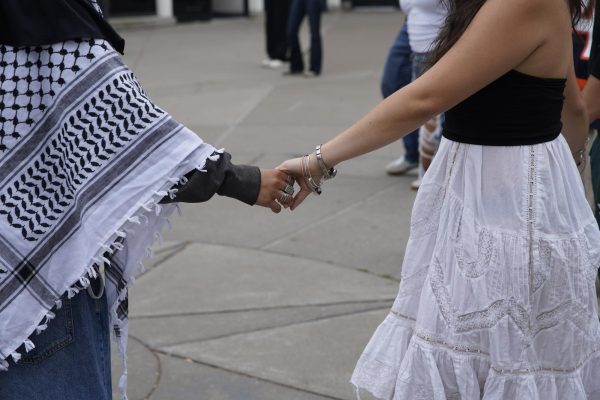
“It’s a beautiful way to have people come together to learn about our history and our culture, to learn about why we do Debka, to learn the moves,” said Nura Fattah, co-president of GUPS. “It’s a symbol of resistance as we’ve seen that Israel loves to steal, not only people, but also our land, and our culture, which is whether it’s our dancing like a Debar, our music, our food.”
Tomorrow, GUPS is hosting an event titled “Palestine 101 and Today” in Burk Hall room 237, including a lesson on Palestine and Israeli occupation. GUPS continues raising awareness for Palestine on Thursday with an ICE Israel Occupation Force teach-in taking place in the same room. GUPS will wrap up the week with a Tatreez embroidery workshop, historically used as a form of Palestinian resistance, at Dolores Park on April 3.
Christopher Chehade, a Palestinian student at SFSU, attended the Dabke workshop with students from various communities to learn about the historical background of the traditional Arab folk dance. Chehade spoke about his experience performing Dabke and the effect of having cultural events to lift Palestinian resistance.
“Palestinian voices and resistance will always try to be suppressed. No matter what, we’ll find ways to fight against it and come up with new ways of resistance,” Chehade said. “Events like the Dabke workshop are still effective, because even if something doesn’t have a direct effect or direct cause, having the GUPS sign out here, having Palestinian music going out, it will keep the Palestinian people’s minds.”
Hazbelt Benito, a member of the La Raza student organization, heard about Palestine Awareness Week from his friends. It was Benito’s first time attending an event led by GUPS, but they said that learning about different cultures is a vital part of SFSU.
“It’s beautiful that Dabke has become a form of resistance because people need something to look forward to, to believe in and to fight, because without hope, it gets crushed and that’s what they want,” Benito said. “They want us to stop believing, to stop uniting, because individuals are weak. But once we unite with our power, with our culture, we can weaponize that and push for better change.”
Fattah was instrumental in organizing the events for the week. She emphasized the importance of speaking out about Palestine by educating their peers.
“Palestinian Awareness Week is to bring awareness to what Palestine is, whether it’s through cultural aspects, like having the Dabke workshop, or educating our students and peers about how ICE and IOF are interconnected, and about a Palestine 101, to understand the history of Palestine, and also talk about the current state of Palestine,” Fattah said.
Fattah pointed out the death toll and decades of suffering of Palestinians under the Israeli occupation.
“It’s important because literally thousands of Palestinians, not just since Oct. 7, but for the last 70 years – we have been under occupation, under apartheid and have been oppressed,” Fattah said. “Even in the diaspora saying, ‘from the river to the sea, Palestine will be free’ is antisemitic, which is not the case at all. Judaism and Zionism are two completely different things. I want to emphasize that these are people. They’re not just numbers. These are people who had lives, had loved ones, who had aspirations and dreams.”
James Aziz, a GUPS officer, believes that there have not been major changes in Gaza after the declaration of a peace plan. Aziz said the U.S. and Israel war with Iran has taken away global attention from Palestine, which is negatively affecting them.
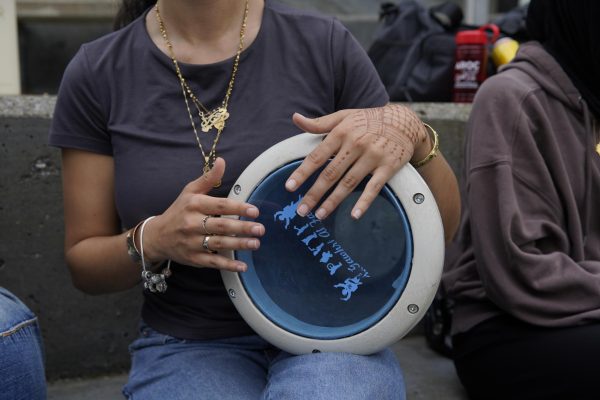
“Partially, the war in the Middle East has been a plot to distract from the ongoing genocide in Palestine, and people either know that or they don’t,” Aziz said. “By coming to these events, people can see that Palestine is still in need to be in the limelight, highlighted and still requires awareness. It’s like Palestine is healed because there was a ceasefire. No, the ceasefire has already been broken hundreds of times, and they continue to break it, especially as the war in the Middle East continues.”
Last year, Hamas and Israel agreed on a US-led Gaza peace plan, including an immediate ceasefire, the release of hostages’ release and the demilitarization of the Gaza Strip. However, numerous reports show Israeli forces continuing attacks on Gaza, killing hundreds of Palestinians and preventing aid from entering the region.
Fattah emphasized the importance of community organizing events within SFSU with ICE raids targeting different communities and the war in Iran. They view GUPS’ fight beyond that of Palestinian liberation.
“It’s more than Palestinian resistance. GUPS is educating people on Palestine, and to have a community where they’re being seen and heard,” Fattah said. “We support our comrades and our people who are within the struggle and that are within the movement, whether that’s ICE or police, whatever the case may be, GUPS will always stand on the right side of history.”

gigi ps • Apr 3, 2026 at 6:26 pm
Beautiful representation of the sfsu student body. music and dance as a form of resistance <3
Ari Fridman • Apr 2, 2026 at 11:02 pm
Disappointing to see this kind of propaganda from a school newspaper