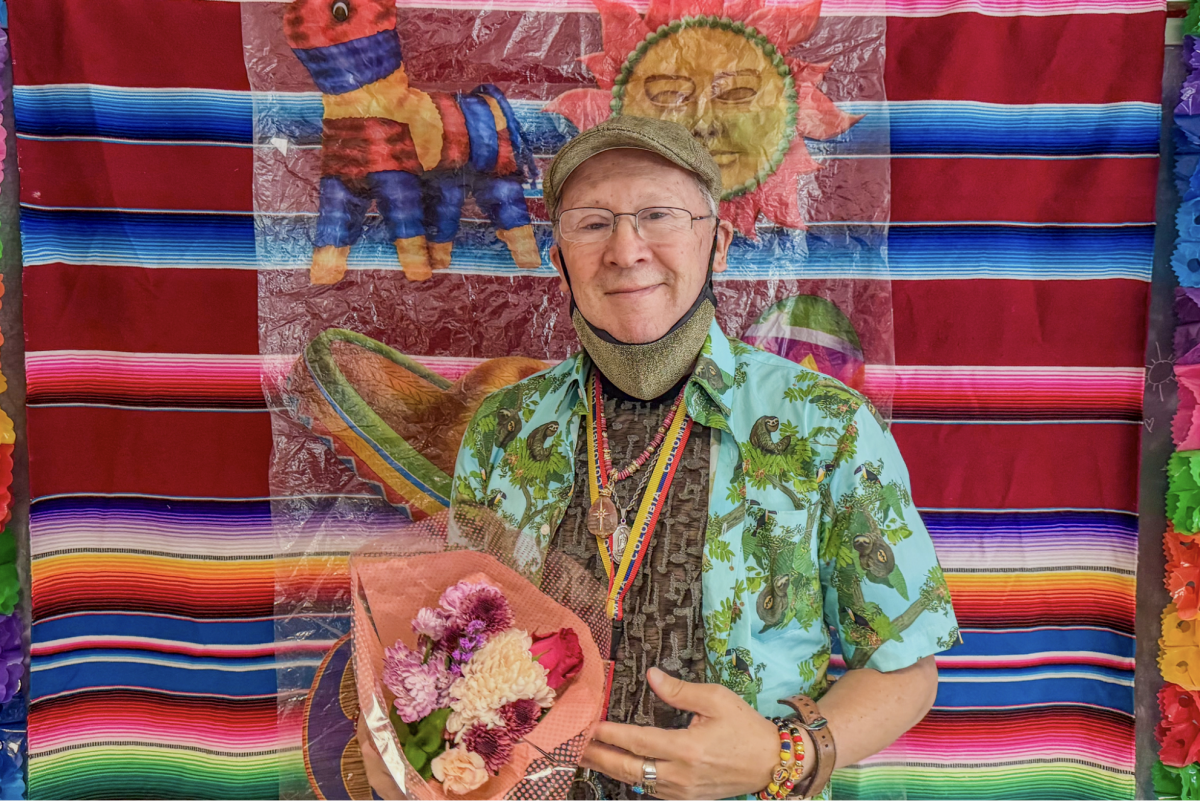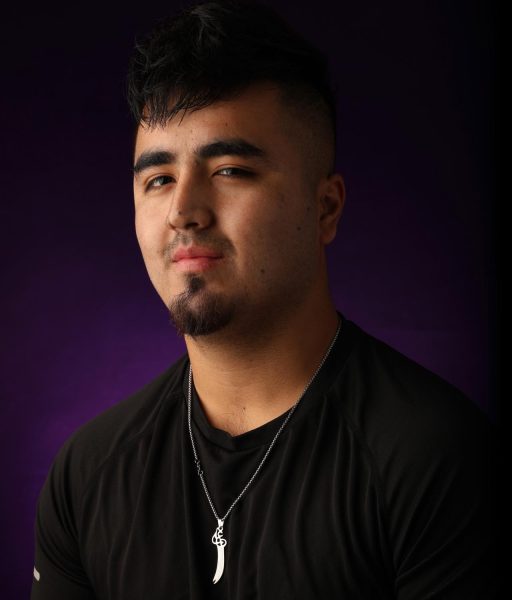


Activist Mahmoud Khalil and his lawyer Marc Van Der Hout spoke during a panel with the General Union for Palestine Students on April 23 at San Francisco State University.
Khalil was the negotiator and spokesperson for the Pro-Palestinate encampment at Columbia University back in 2024. Born and raised in Syria, he was one of the first Palestinian activists that the Trump administration arrested and moved to deport despite his green card status. After three months in an immigration facility in Louisiana, a federal judge ruled that President Donald Trump could no longer detain or deport him.
The panel started with a short video of Khalil’s journey from the encampment to getting released from the ICE detention center, and now battling his legal case in different U.S. courts.
Khalil emphasized the continuation of resistance in any way possible as the government wants students to be fearful and hesitate.
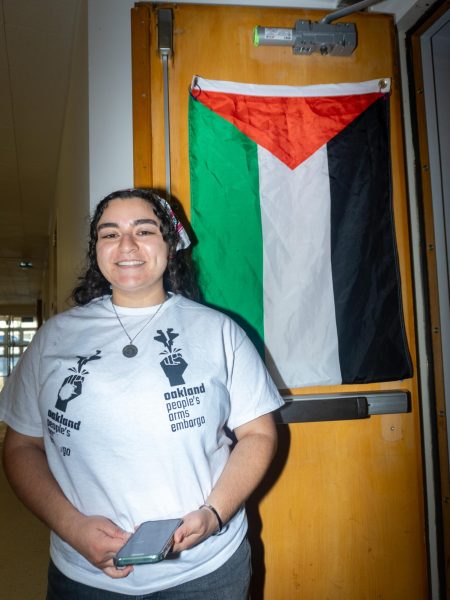
“Everyone has their own risk, intelligence, and different situations. But to me, as an individual, in 20 years, when they look at this, I don’t want to be someone who was silent while people are being killed,” Khalil said. “They want us to feel helpless and fearful that we’re not winning or not doing anything, so we stop the resistance. It’s just a matter of resistance and continuing to actually, there are so many ways to be engaged in organizing and engaged in opposing Zionism that don’t have to be risky, don’t have to be public.”
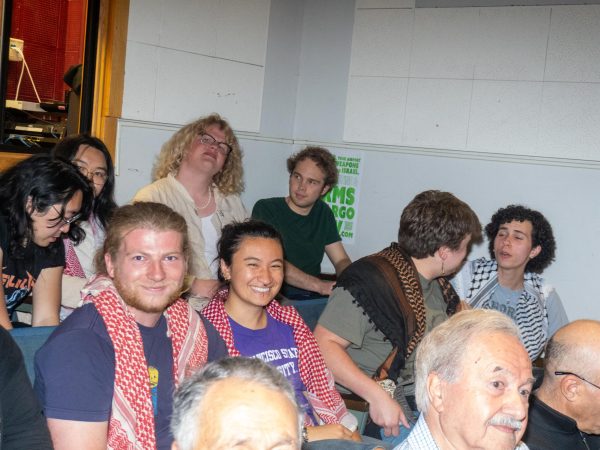
GUPS invited Khalil to speak alongside Rama Ali Kased and Larry Salomon, professors of race and resistance studies, at Knuth Hall in the Creative Arts Building. The event nearly filled the hall, drawing over 300 attendees.
“The Palestine Liberation Movement has been going on for over 100 years. Historic Palestine comes from a generation and generations of fighters and activists and organizers and teachers and people who’ve taught us so much and have built us to where we are today,” Kased said. “One part of the movement that I was so moved and excited about to see grow was the legal arm of our movement, the lawyers and the organizations that were popping up that were doing Palestine work, and probably left the legal fight of our movement, which the Mahmoud case uplifted that.”
Van Der Hout is a California state bar-certified specialist in immigration and national law and one of 25 lawyers working on Khalil’s case. He said going to different courts over the past year hasn’t been easy. The team is challenging the third circuit court and expecting a decision in the middle of April, at the same time in the fifth circuit court and immigration appeal.
“The reason we were down in Louisiana on this case in the immigration court is the [Trump] administration. The administration has tried to send everybody, Mahmoud and other people, to Louisiana or Texas for their hearings,” Van Der Hout said. “Why? Because they will be in what’s called the Fifth Circuit Court of Appeals, which is by far the most conservative court in the country.”
On Sep. 12, 2025, a Louisiana immigration judge ordered the deportation of a Colombian graduate student, Mahmoud Khalil, for presenting false information on his green card application. Khalil’s legal team appealed the deportation later but was denied by the immigration board, which he called biased and politically motivated. Khalil’s legal team’s appeal denial opens the government and immigration’s hand for arrest or deportation.
While in detention, Khalil was denied access to the birth of his first son, Dean. Khalil’s wife Noor Abdala was in the audience during the panel.
“The first time I held Dean was in a courtroom at seven in the morning. They gave us one hour before my court hearing,” Khalil said. “That was also the first time I met Noor after detention. I mean, I don’t think I can describe it, but it’s just like, it’s a mix of rage and happiness, rage at the system that took from me this moment… I will never forgive them for taking that moment from me.”
During the panel, Kahlil said that the Trump administration controlled the immigration court by firing judges who were appointed by the Biden administration.
“At first, the federal court agreed with us, and then, in the third circle, which is the appellate court, basically said that you have no jurisdiction; they did not even look into the case itself,” Khalil said. “They knew they had nothing against me whatsoever, because if they went to the federal court, they would have to present some sort of evidence.”
Khalil said that the Trump administration was weaponizing the immigration court.
“My targeting would send a message across U.S. colleges that even if you don’t commit any crime whatsoever, we can still come after you in one way or another,” Khalil said. “That’s an example of weaponization of immigration court and also other examples of weaponization of federal funds to go after universities, weaponization of some sort of federal laws to go after newspapers and journalists.”
Natalie Spencer, a second-year apparel design and merchandising student, found the panel to be inspirational.
“I decided to come to this panel event to listen to Khalil because it was a learning opportunity. Not for a grade, not to earn course credits, solely to learn about the cause for Palestinian liberation and the experience of an activist detained for his role in the movement,” Spencer said. “I attended not only to gain knowledge and perspective, but also because there is strength in numbers when attending these events. Looking around the room and seeing people of all ages, ethnicities and backgrounds was truly so inspiring.”
Khalil said that as a new parent, it hasn’t been easy to deal with 25 lawyers and multiple legal cases, it isn’t comparable to the conditions that Israel’s attacks and bombing have caused in Palestine, Iran, and Sudan.
“At least I know that my son is being fed and wouldn’t be bombed by Israeli missiles,” Khalil said. “The targeting of us is more around abstraction from the real story in Palestine. They want us to be busy with legal cases and don’t focus our energy on what really matters, which is the U.S. complicity in the occupation in Palestine.”
Sabreen Imtair, a current professor and former member of GUPS, spoke about the importance of hosting Khalil in a sanctuary city like San Francisco.
“General Union of Palestine Students bringing Mahmoud Khalil here is a reminder that Palestinians and Arabs have been warning about how repression tactics and immigration policies could be turned on everybody,” Imtair said. “We’re in a moment right now where everybody’s getting kidnapped and locked up, whether you’re a citizen or you’re not a citizen, or you have some type of documentation, or you don’t. Or like Mahmoud Khalil’s case, which he has documentation and a green card.”
Khalil said he represented student activists and a movement for social justice.
“I was targeted because I represent a movement for social justice, liberation and human rights,” Khalil said. “I got targeted for what I represent, which is the brave students in this country who are much more courageous than me, who put so much on the line than I did, and they would never let them reflect on that main story.”