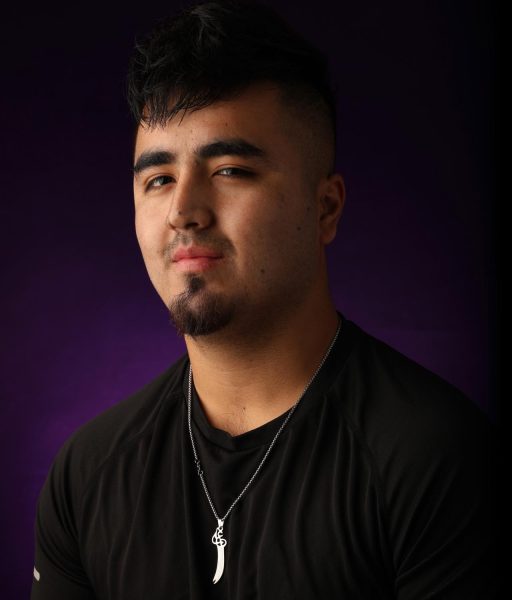


The League of Filipino Students at San Francisco State University hosted a documentary screening yesterday in Burk Hall as part of their Defend Negros campaign, following the death of Filipino American activist and alum Lyle Prijoles.
Yesterday’s event drew in community members from various student organizations as part of the LFS’ Defend Negros campaign featuring the film “After the Dead Season,” which follows the life of farmers fighting for land in the Negros Occidental province in the Philippines.
Last week, the LFS held a vigil ceremony for Prijoles, an SFSU alum and Filipino American activist who was killed during a clash between the Philippine military and an armed resistance group. Prijoles was a journalism and Asian American studies major at SFSU and the former chairperson of the SFSU chapter of the LFS.
On April 19, a conflict between the Philippine army and the New People’s Army in Negros Occidental killed 19 people, including Prijoles and Seattle activist Kai Sorem. The Philippine government claimed the encounter was against armed communist rebels, which neutralized 19 members of the armed resistance group. However, the New People’s Army claimed not all those killed in the encounter were armed combatants, and nine were civilians.
Carmen Veracruz is a member of Gabriela, an anti-imperialist grassroots organization and sister organization of LFS. The organization, which has various chapters across the nation, focuses on the anti-imperialist movement, advocates for migrant rights, fighting for national democracy, focusing on women’s issues and the rights of children in the Philippines.
Veracruz said that the event aimed to spread awareness of the ongoing conditions of the Negro people in the Philippines.
“We decided to hold this collaboration event really to raise awareness,” Veracruz said. “Not just solely around this news event, this April 19 massacre of the Negros 19, but also to show that this is an ongoing problem of the conditions of the people of Negros not being improved due to government neglect and active government repression.”
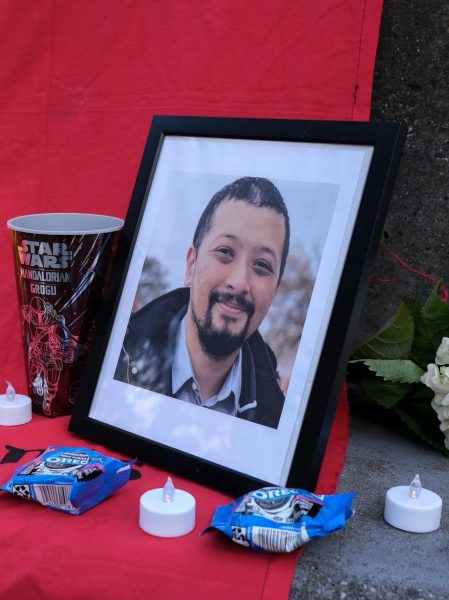
LFS’ posted on their Instagram that they “condemn the massacre of students, journalists, peasant organizations and overseas kababayan,” which is a Tagalog word meaning “fellow countryman, compatriot or townmate” and often used as a term for solidarity. The Defend Negros campaign calls for justice for the 19 people killed in the conflict.
Ana Bonificio, a member of Gabriela, emphasized the struggle of the Negros Occidental farmers and not being able to benefit from their own land because of the built system by the Philippine government and the foreign corporation.
“Negros Island is known as the sugar bowl of the Philippines. 60% overall sugar production comes from negros and 63% of the land is privately owned,” Bonificio said. ”They operate under the Hacienda economy, which has origins from the Spanish colonial era.”
Bonificio said that the hacienda system was a “large-scale cultivation” of cash crops for export and trade and that 97% of sugarcane workers depend on the pacquiao, or piece rate system, for their daily earnings – roughly $3.
“It’s the land being taken away from the people, and it’s not being used to provide for the people,” Bonificio said. “It’s being used to benefit corporations outside of the Philippines or the top 1%.”
AJ Ramos, a member of Anakbayan at City College of San Francisco, an overseas Filipino youth organization fighting for national democracy in the Philippines, attended the SFSU chapter of LFS’s Defend Negros event. Ramos said she was inspired by what she learned about the Negros Occidental conditions in the Philippines.
“My concern for the people in the Philippines and people who are forced to migrate from the Philippines that are abroad brought me here,” Ramos said. “Because we see that the Philippines is under such dire conditions, due to bureaucrat capitalism, due to U.S. imperialism, due to semi-feudalism. These conditions are the result of our actions… It’s ultimately why we see that the Philippine government, through the Armed Forces of the Philippines.”
Ramos did not know Prijoles personally, but resonated with his efforts to learn about the conditions in the Philippines.
“Lyle helped inspire many people in our organizations,” Ramos said. “Whether we knew him personally or not, whether we worked with him closely or not, but it’s really inspired people like me to continue fighting.”
JJ Rabago, an LFS member and event speaker, said that the LFS was a “first political home” for Prjioles.
“He took what he learned here at SF State and applied it beyond the classroom, which is very important to extend, going beyond the borders of just the classroom itself,” Rabago said. “Being able to go back to the Philippines and witness the conditions firsthand, witness not only the conditions, but the repression of the Filipino people, led him to go back home and actually integrate with the peasantry.”
Veracruz emphasized the importance of spreading awareness of the Filipino people’s condition and the fight for the Filipino diaspora.
“I think it’s extremely important, especially even if you’re Filipino American or if your family’s been here for one generation or multiple generations, that we are not separate from the movement that is going on in the Philippines,” Veracruz said. “That it is our families, in one way or another, were forced to migrate here, whether it was due to war, economic conditions, labor, export policy, etc., and that in turn is our right to go back home and to improve the conditions for the Filipinos that are still in the Philippines as well.”