

Intro
Alvarez: 00:06 – 00:25
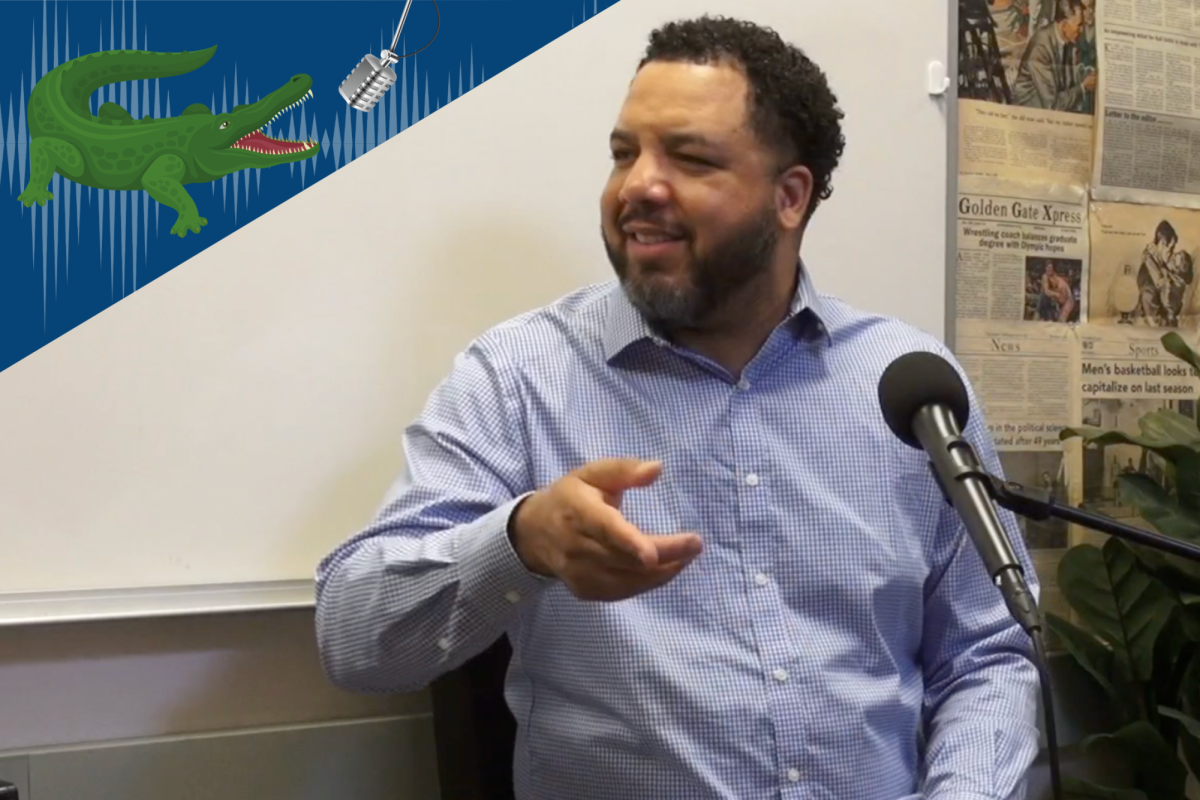
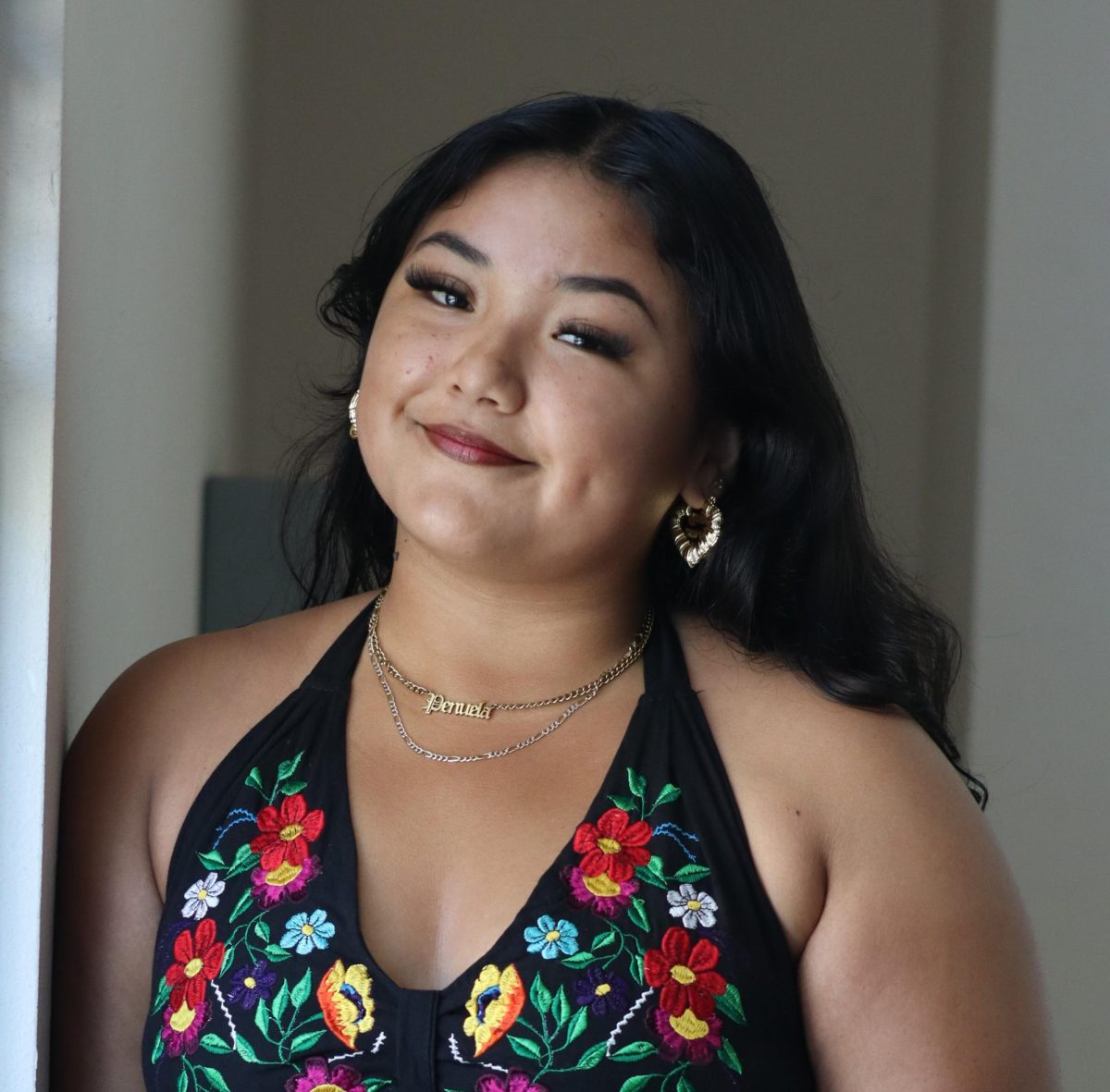
Hi everyone, and welcome back to another episode of Gator Talk. This is Autumn Alvarez, the politics editor for Golden Gate Xpress. Today, I am joined by SFSU’s faith-based club Intervarsity leader, Monse Ochoa. Today we’ll be discussing what it’s like to be a part of a faith-based club and why these types of communities matter to SFSU’s campus.
Interview
Alvarez: 00:26 – 00:30
Monse, do you want to introduce yourself and tell us a little bit about who you are?
Ochoa: 00:30 – 00:42
Yeah. My name is Monse. I’m a third-year at SF State. My major is creative writing, so I’m excited for the interview as well. I’ve been with IV for all three years that I’ve been here.
Alvarez: 00:43 – 00:49
That’s awesome. Can you tell our listeners and our viewers a little bit about what IV InterVarsity is?
Ochoa: 00:49 – 01:02
IV does stand for InterVarsity. We’re a Christian fellowship group on campus. We’ve been here since the ‘60s, established, and it’s a Christian organization around all campuses around the U.S.
Alvarez: 01:02 – 01:06
Nice. And so, do you guys also interact with UCSF as well?
Ochoa: 01:06-01:20
Yeah, so those are our neighbors. We’d say like CCSF and USF. We all get together many times a semester. But the small groups, once fall is in session, we stick to ourselves.
Alvarez: 01:20 – 01:27
Gotcha. How many members do you guys have at one time? I guess, each semester?
Ochoa: 01:27 – 01:33
For club members? I’d say a good handful about — I’d say right now about 10.
Alvarez: 01:34 – 01:35
Oh, that’s awesome.
Ochoa: 01:35- 01:48
And then each of us lead. We’re into partner groups and small groups. And then you just probably have five to 15 members in each small group. It could be five up to 15.
Alvarez: 01:49- 02:07
That’s awesome. That’s a big group. How do groups like this, because I’m sure there’s a lot of other faith-based groups on campus and InterVarsity is Christian, like you said, so how do you guys network and build that community on campus? How do you interact with people, get them to join InterVarsity?
Ochoa: 02:07- 02:11
We mostly let everyone know that we’re interdenominational.
Alvarez: 02:11- 02:12
Okay.
Ochoa: 02:12- 02:26
Meaning any religion, nonreligion, everyone is welcome to us. So, we just want to let people know, who are just finding out about their faith, to just welcome them and lead them to our path,
which is Jesus Christ.
Alvarez: 02:26 – 02:29
That’s awesome. Yeah, definitely.
02:29- 02:39
I know you said you’re more welcoming to just anybody that wants to join, that wants to learn more. And so how do those conversations go with people?
Ochoa: 02:40 – 03:00
It really depends. There’s a huge variety, especially in San Francisco. But we just let people know off the bat that we are not here to judge. We’re just here to have an open mind and talk and just get to know you. What’s your background? How did you come forth with spirituality? What’s on your mind, really.
03:00 – 03:18
We want to let everyone know we’re not here to converge. We’re not here to judge
or shame anyone. We want to teach mostly about the Bible as well. And so, a lot of our members are newcomers, and many people haven’t read the Bible or just know about it, so we’re just here to teach you, really, just read along together.
03:18 – 03:30
We’re not here to preach or tell you what you’re doing is wrong. Genuinely. We just want everyone to have a first look at the Bible and read it. Whatever applies to you applies to you.
Alvarez: 03:31 – 03:51
That’s awesome. That’s a good message. And I guess, like you said, you lead a small group.
And how do those look like? I know I see some groups that are like, they meet in the Cesar Chavez building. I have, I think in previous semesters, I’ve had IV come up to me and asked me about it. How do you guys interact during those small groups?
Ochoa: 03:52 – 04:17
During the small groups, we usually have some specific locations. Right now, we’re in Creative Arts 114. But for my group instance, I specifically lead LaFe, which is a Latino fellowship Group. We also have a BCM, so Black Campus Ministry. And then IV, our general grouping. And of course, everyone is welcome to any single one of those meetings.
Alvarez: 04:18 – 04:20
Awesome. And they’re all under IV, right?
Ochoa: 04:20 – 04:20
Yes.
Alvarez: 04:20 – 04:25
And so how many of those do you have? Is it just two different groups?
Ochoa: 04:26 – 04:42
Yeah, it depends really every semester who chooses to lead it. Just who chooses to lead it. Every semester we do have different groups. Sometimes, we lead Asian fellowship as well. Or LGBTQ+ fellowships as well.
Alvarez: 04:42 – 04:42
Oh, cool.
Ochoa: 04:43 – 04:57
We just want everyone to be inclusive. And to make sure this is a safe space. But again, everyone is welcome and we usually lead as well in room 114 or if it’s a sunny day, we choose
to have a picnic outside.
Alvarez: 04:57 – 04:58
Oh, that’s nice.
Ochoa: 04:58 – 05:21
People tend to go because it’s sunnier, it’s warmer. And then we provide snacks, and we print out our passage. We probably do up to 10 verses, not to keep it super long. We give background info on it, and we read it. What questions do we have? What can we answer for you? And then how can this apply to you in your life?
05:21 – 05:40
And with that, we get to know everyone as well. We go around. We have our same schedule. Introduce ourselves. We have icebreakers all the time. So there’s always newcomers and there’s always people that tend to stay throughout the whole semester. But it’s also just
to get to know one another. We want to build community.
Alvarez: 05:41 – 05:53
I know you’ve gone over how you open up the door to visitors. And so, during
those small groups when you do have visitors, what is it like when you interact with those first timers?
Ochoa: 05:53 – 06:11
The first timers? Personally, I think it’s always exciting because I do like to get to know people even outside the Bible study. So we just welcome them. We’re enthusiastic about it, but we also know where your level is at. If you don’t want to share that much, then that’s completely OK.
06:11 – 06:31
But we ask the typical things like your name, your major, what’s your background, whatever you want to share. We let them know that this is also a safe space. Whatever is here
applies to just you. We just let them be as comfortable as they can be.
Alvarez: 06:31 – 06:43
I know you said you’re Christian based, and it’s just about building that community around Christ and having those interactions. Tell me a little bit more about the values of IV.
Ochoa: 06:44 – 07:08
We tend to stick away from specific churches. We don’t lead people to go to this faith, this denomination. Whatever you want to seek out, you go ahead and seek out. We mostly want people to follow Christ. And just even outside of college, many people that want to follow
Christ are new to it.
07:08 – 07:25
Like when they come to college, we want to apply to it outside of them.
So then we continue forth on how to love our neighbor, and we want that to grow and we want mostly negative messages about Christ, we want those to tend to go away.
07:25 – 07:49
People get yelled at that Christ doesn’t favor you. We want everyone to know that that is not true. As we follow our loving God. You are loved no matter what. Outside of small groups we tend to have community service. I know in September, like we go down to the Tenderloin and we’re going to hand out hot chocolate to people.
Alvarez: 07:49 – 07:50
Oh, that’s sweet.
Ochoa: 07:50 – 07:59
So we tend to have Bible studies and we see how we can help people outside our community? How do we follow what we’re teaching to people as well?
Alvarez: 07:59 – 08:08
Like putting your faith into action and just being able to share Christ with other people. I think that’s a great message. That’s really beautiful.
08:11 – 08:24
And I know you talked a little bit about people saying, like, “Christ doesn’t exist,”
or things like that. Has IV or have you seen any other faith-based groups on campus kind of face adversity or any challenges?
Ochoa: 08:25 – 08:56
We’ve had a little challenges. And it’s really not that big. I’d say we handle it pretty well. There are many clubs on campus that are also Christ-based, and we get along with many of them. Every group is different for everyone. So, we recommend many other Christian clubs
as well on campus. There are some that we don’t associate with, but we just tend to tell
people, if it’s for you, it’s for you. We cannot be associated with some certain clubs.
Alvarez: 08:57 – 09:13
Yeah. That’s awesome. It’s like Christ is for everybody, too. So, it’s just like being able to share that. But, like you said, not putting pressure on people, not judging them, but just
sharing that love. And if it’s the right thing for them, then it is. And if it’s not, then yeah.
Ochoa: 09:13 – 09:28
Because we’re in San Francisco, of all places. There’s a lot of just anti-religion here. But we just want to make sure that we’re not here to converge or tell you you’re wrong. Just come if you want to come in.
Alvarez: 09:28 – 09:41
I think having that humble spirit as well is going to speak louder to people as well, even if it’s not like joining a club, but just the way that you interact with people and the way that you share God with everybody. Yeah. That’s beautiful.
09:41 – 09:47
And what does it mean to you to have faith on campus and to have this group?
Ochoa: 09:47 – 10:09
To me, I think it’s just growing love for one another. I love to get to know people. I’ve met so many new faces every single semester through IV. I think for many incoming freshmen
or transfers, when you just want to get to know people and just have friends. I think IV was
perfect for me.
10:09 – 10:28
We tend to have that as one of her points as well. Like, as I said, like we want to build community. And to me just building a community is amazing. Having friends who just aren’t part of a Bible study that I hang out with outside of campus, outside of the club rooms. It’ all nice.
10:28 – 10:50
My main message that I also tend to teach a little more in my Bible studies is just to love everyone. It’s really hard, but you have to try and just know that Jesus loves you. Even if you do wrong, there’s no wrong in his eyes.
Alvarez: 10:51 – 11:09
Yeah. That’s awesome. Why do you think that it’s important for college students,
in general, to kind of have this environment to go to? I know you said to have places to go outside of campus and the club, but what’s the most important part of just having this type of environment?
Ochoa: 11:10 – 11:36
I think growing as a person. I think, especially, there’s hard times among us, really. There’s just always something that you need to fall back into, to get a peace of mind and relax, especially from the outside world. Through us, that’s Christ. And once you relax, you’re composed. We want to use his teachings to apply to the outside world, especially right now.
Alvarez: 11:37 – 11:42
Definitely. And what do you think students can gain from being part of a faith-based club?
Ochoa: 11:42 – 12:18
I think it’s their mental health. It helps a lot. There is a bunch of networking involved as well. A lot of people like clubs to network. How does this grow in my resume? If you’d want to help on your resume you could join leadership and leadership skills. You are taught many skills. You are taught how to lead. So, I think it’s great to learn how to evolve in a workspace as well. I think just how to be a better person as well, for yourself personally and just how to interact with people outside as well.
Alvarez: 12:18 – 12:34
Nice. And I should have probably asked this earlier, because I know you said you’re from LA before we started recording. You’re from SoCal. And so, when you did transfer over here, were you connected with IV at all?
Ochoa: 12:34 – 12:37
No, I’m Catholic.
Alvarez: 12:37 – 12:37
Okay.
Ochoa: 12:38 – 12:55
So I was just stuck to my church, really. And then, where I was from, everyone was Catholic as well. So then, I came to San Francisco with an open mind, and I just I came, like everyone else,
first week, walking to see through clubs. I signed up for a bunch of them.
12:55 – 13:18
And IV stuck out to me because they were really calming as well, they weren’t really strict, I’d say, and did reach out. There’s a bunch of activities to do, really, like outside the city and then in campus, I’d say. And then their teachings and their ways of leading a Bible study was the most comfortable to me.
Alvarez: 13:19 – 13:23
Okay, nice. And when did you become a leader? When was your first semester becoming a leader?
Ochoa: 13:23 – 13:25
My second semester of my first year.
Alvarez: 13:26 – 13:36
Oh, wow. Yeah. That’s awesome. And how is that? How has that time been for you? Can you tell us a little bit about just the experience and what it felt like to become a leader?
Ochoa: 13:36 – 13:58
Yeah, it was nerve-racking. I have been a leader before in some aspects, like in my church growing up, like with youth ministry, like leading teenagers. I’d say it’s different because these are college students and older. But it was nerve-racking, really. I was excited, but I was also nervous.
13:58 – 14:20
There’s a lot of people that come to Bible studies, a lot of people from different aspects and groups. And I just had to think, “How do I apply this to everyone with an open mind?” But as soon as I did my first leadership group, it was amazing. It was really fun. I also have had amazing partners, as well.
14:20 – 14:38
I was co-leading with my leader. Her name is Carla. She’s been an amazing friend to me that I’ve met through IV. I met her as a leader like, “Oh, you’re part of the club.” But then we got together, and then we just became so inseparable through IV and outside.
Alvarez: 14:39 – 14:41
Nice. So those relationships, those connections you guys built–
Ochoa: 14:41 – 14:46
We grow, and they’re really helpful in times of need.
Alvarez: 14:46 – 15:06
As college students, like you said, with mental health, I think we go through so much. I mean, not just mental health, but just looking for people, looking for connections and friends. And definitely, you can find that through a bunch of clubs. But I think even having faith-based clubs is even better, because you’re growing your connection with God and with other people at the same time.
Outro
Alvarez: 15:06 – 15:12
All right. Well, this has been Autumn Alvarez for GGX. Thank you so much for watching and listening.