
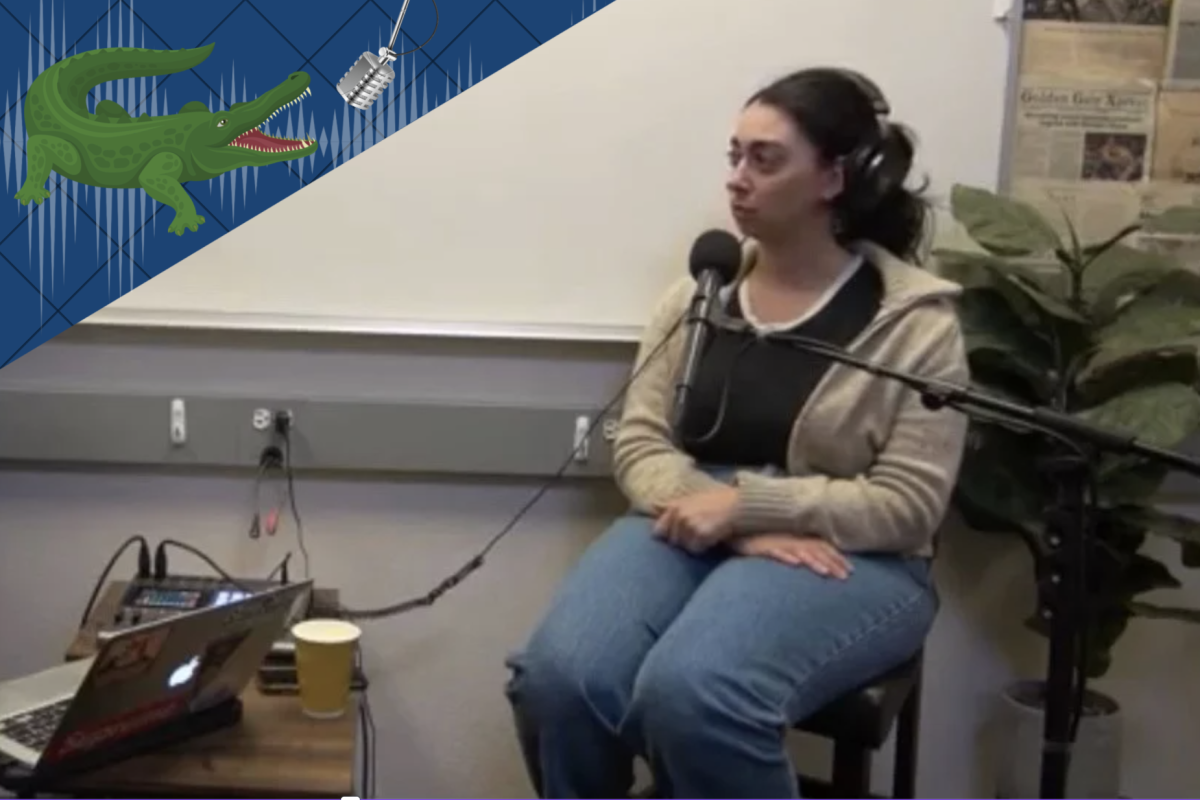
Intro
Archuleta: 0:00-0:27
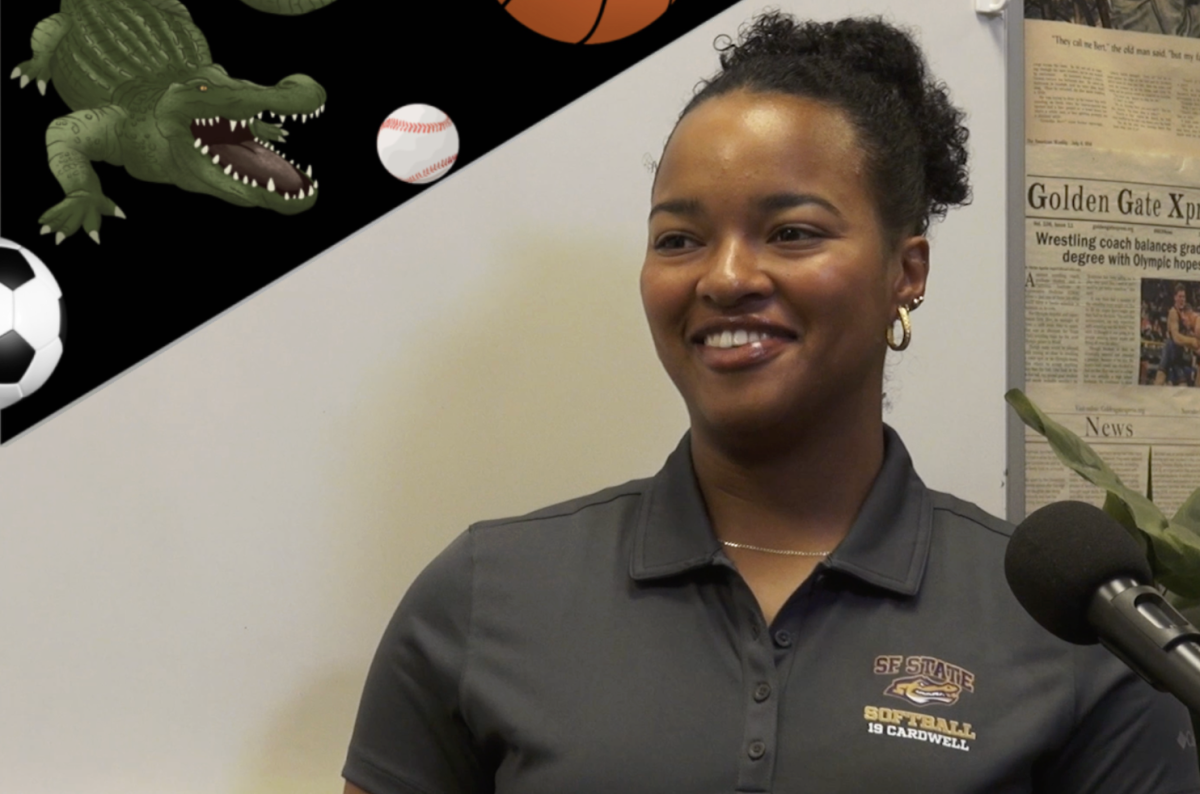
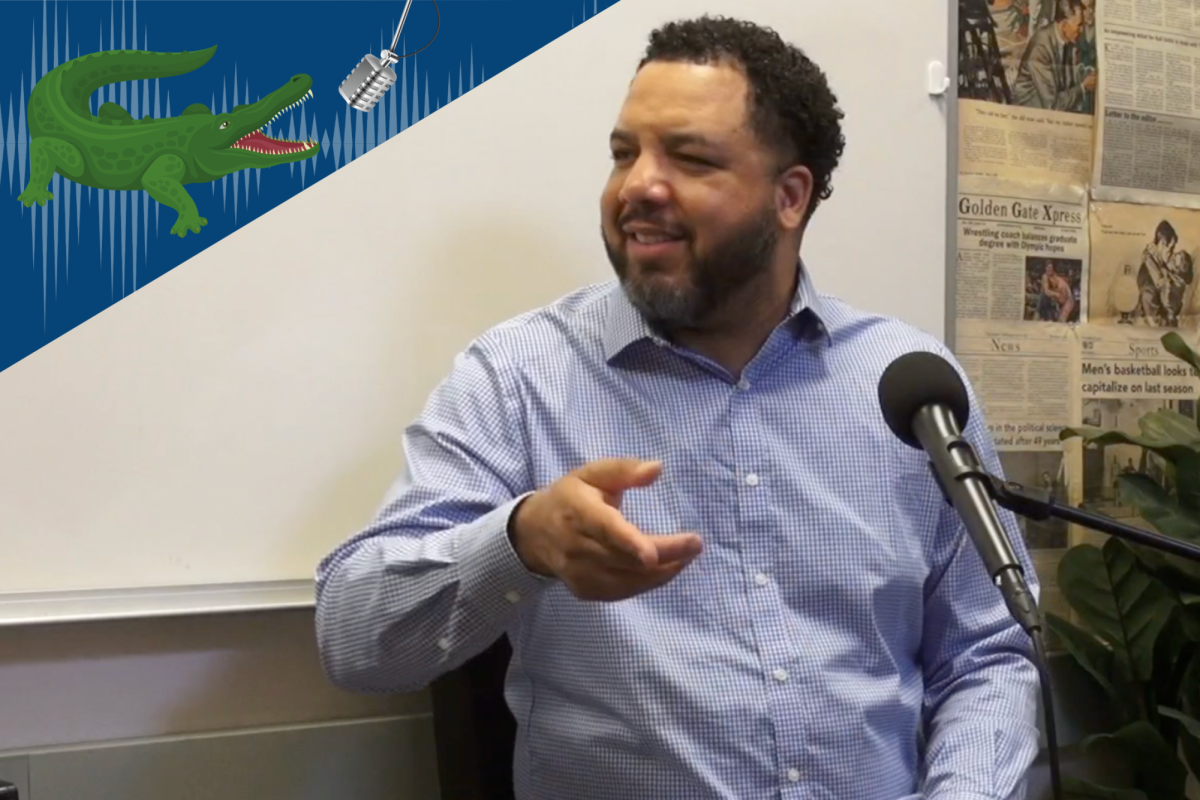
What’s up, Gators. Welcome back to Gator Talk. I’m your host for this episode, Daniel Archuleta, and we got a special guest joining us today. She is a sports reporter who has covered so much in her 10 plus years. She has covered the Golden State Warriors and Oakland Athletics for the Bay Area News Group, and she has just finished her second season as the San Francisco Giants beat reporter for the SF Chronicle. Our guest today, Shayna Rubin.
Thank you for joining us.
Rubin: 0:27-0:29
Thanks for having me. I really appreciate it.
Interview
Archuleta: 0:29-0:38
As you made your way over here, was there any sort of memories walking the halls, walking around the campus? Anything that came to mind as you made it over here?
Rubin: 0:38 – 1:15
It’s funny because when I walked in, I realized that I didn’t look at the name of the building. There’s a new building. It feels newer, but it also feels so old and familiar. And I haven’t been here, I think, in maybe a little over seven years or eight years, or something like that. So, a lot of memories came screaming back, and walking to the Humanities building. It felt like I knew where to go. And seeing everything on the walls and all the memories definitely came crashing back in a great way. So it’s just a lot of good memories here, a lot of fun, especially in this building, especially in the humanities building, just so it’s a good time.
Archuleta: 1:16-1:26
Also, you spent some time on staff with the Golden Gate Xpress. Just talk to me a little bit about that when being on staff and some of the stories that you came across in the past
Rubin: 1:27-2:09
I wish I remembered specific stories, because I feel like a lot of what we did was very game oriented, like, watching the volleyball team, watching the basketball team, watching the baseball team, and it was a really good prep for me, because I think that when people might think about reading about games, or reading about athletes, or reading about what goes on in a sporting event, people might not understand the challenge of documenting something like that.
2:09-2:49
I think it’s definitely a lost art with the advent of social media and aggregation and the fact that you have every single bit of information at your fingertips, that sort of recording what’s happening is, you know, who cares what happened the day before? But I definitely learned the cadence of how to write on deadline, how to edit on deadline, how to do even a post game interview, how to set something up to a point where you know you’re the one interrupting a student athlete’s process, their day, their post game, their pre game, and the coach too.
2:49-3:20
And I think that’s where I learned they want to talk too. They want to share their passions, and they want to share their abilities and their skill and the coaches want to talk up their players too. So I think that’s where I first, it was the first time I had ever done any sort of sports writing, and the first time that I had ever realized the mutual benefits of sports reporting, when it comes to the journalists being able to tell a story, but also the athletes being able to share their story.
3:20-3:33
And it sounds very simple now when I’m saying it, but when I was doing it, in real time, I learned to appreciate just the beauty of sports journalism as I read it growing up, and how it actually goes into practice.
Archuleta: 3:33-4:28
Gotcha. It’s interesting because, for me, I didn’t know what I really wanted to do up until maybe junior year of high school, and I started writing for our small little paper we had at South San Francisco High School, The Warrior Post. And I was approached by our EIC at the time, and she was like, “Oh, you’re really big into sports. You want to help write for us?” And I looked at her, and I was like, “you know, that’s actually a good idea.” And no one else was going to do it. And then just blowing up, it really became more something that I love to do. And here I am, trying my best to get everything also, kind of like modeled and molded together.
As for you, when did you know this was the career that you wanted to join? Was it always sports writing, sports reporting?
Rubin: 4:29-4:49
Yeah, it definitely wasn’t always writing, period. I think when I got into school, when I got into SF State, I thought that I was going to go to law school, so I was studying political science, and because that’s what my dad did. He’s like, “you want to go to law school,” “ you study political science.” And looking back. I just had no idea what that entailed and what that meant for me long term.
4:49-5:19
And then, once I became a junior, I think it hit me like I’m not pursuing what I’m actually good at. I’m not pursuing what I want to do. The prospect of something that’s stable isn’t actually what I need to be pursuing, which sounds crazy, and I think it’s a privilege to be able to say you don’t have to pursue something stable, but being young and, maybe a little stupid, I was more inclined to get into writing.
5:19-5:43
And so, I just switched to journalism when I was like 20. As the pivot to journalism happened at the same time as me recognizing my affinity for passion for sports and sports writing as a whole. I was really into reading about sports. I was really into reading about the 49ers. I was really into reading about the Giants.
5:43-6:11
And this was happening when, I mean, the warriors were kind of becoming popular, but this was happening at the kind of like the perfect time for barrier sports, because the Giants were a very big deal. The 49ers were becoming a big deal with Jim Harbaugh, that strange era, and Steph Curry was just starting to come up. And now, I’m very much aging myself. So, I was feeling the fever like I was excited about sports in general. That’s what really invigorated me.
6:11-6:37
And I was really excited to read about sports, and even more so, given the times, I was really excited and sort of obsessed about consuming it in the social media capacity that I was reading it. I was following guys like Tim Kawakami and Marcus Thompson and Andrew Baggarly and Alex Pavlovic, and they were sharing all the stories that I wanted to know about my favorite teams.
6:37-6:57
And I was so drawn to what they were doing that I just pictured myself doing the same thing, and that sounds really, I don’t know if it sounds entitled, but it’s just I got really excited at the idea of pursuing something like that. So,I just decided I was going to do what I could do to make it happen. And I guess it is worth saying.
6:58-7:28
But I had this voice in the back of my head that said, you know, you go to SF State. This is not a premier. It’s a very good journalism school. But in sports journalism, it’s a lot of, you know, Syracuse and Missouri and Northwestern and you have a lot of people that are crowding the space that are from more prestigious, quote, unquote, institution[s]. So I was both daunted by the prospect of it, but also felt like I really just want to try and see what happens.
7:28-7:42
I’m already here. I already have the passion for it, and maybe I was, I mean, there’s a little bit of blind naivete involved, but I felt really excited at the idea that it might work out. So that’s really what was fueling everything
Archuleta: 7:42-8:08
You’ve been covering games and teams for over 10 years now. I’m just curious to know, have you noticed anything evolve within your writing and reporting. Like, is there a certain time that you can look back and say, like, “Okay, now I’m starting to get into a real groove of churning out stories and being on the daily grind?”
Rubin: 8:09-8:37
When I first started, I’ve been doing this about 10 years. Yeah, when I first graduated, I was really just trying to find work, and I was mad that I wasn’t getting an opportunity to write. Because I think you have to sort of have this minor ego to a point where you’re saying, “I have something I want to say, and no one’s giving me the chance,” which sounds entitled, maybe, but you have to have that little voice in your head saying, like, “someone’s gonna give you a chance, and they’re gonna love that they gave you a chance.”
8:37-9:09
So, I was letting that run the way that I operated, a little bit. But I also worked at PAC-12 network, which was just probably the one of the best things that ever happened to me, because I learned so much about relationships. The type of work that you actually have to put in to be able to do the things you think you deserve to do, to do things you want to do. So I was doing the most basic, boring stuff.
9:09-9:34
I was uploading videos to the website and putting a headline on it. I was sometimes lucky, if I was lucky, I was in charge of social media, and it was just posting a highlight from a volleyball game or something like that. And in real time, sometimes I would spend, like Tuesday nights alone in the basement of PAC-12 network, just, posting things, the lights would turn off on me.
9:35-9:57
I’d have to, it was a bizarre work experience. And we were all contractors, and we were making next to no money. I don’t know if I should say that, but it was a strange bonding experience with a lot of people that had the same dreams that I had. And also, we also had these opportunities to cover some college games.
9:58-10:20
Sometimes, I would be able to go cover swim meets and Katie Ledecky, and in Washington, or I’d get to go to USC and cover a football game, or go to Pullman to cover Washington State, or something like that. So it was like these odd, tedious moments blended with little glimpses of opportunity. And so, the excitement kept pumping through me and I had so much fun with all the people I was working with.
10:20-10:49
And then at the same time, it afforded me the opportunity to freelance. So I was working at SFBay at the same time, which Jesse Garnier operates. And when I was here, I just approached him and I said, “Do you need anyone to do anything?” Because there was a girl, I forgot her last name, Sarah, something. Gosh, I hate that I forget her last name now, but she covers the Jazz now, and she was covering the Warriors at the time.
10:50-11:09
And it was when they were just rising up, and she was really in the thick of it. And I looked at her, and I was like, “Oh, I can do something like that.” And he said, “Oh, yeah, we need someone to cover the Giants. Can you do that?” And I said, “Sure, why not?” So while I was still attending classes here, my senior year, I was at the ballpark covering the Giants.
11:09-11:36
And it’s completely different than what beat reporters do, but I was in the press box basically writing game stories about the 2014 Giants, and that team eventually went on to win the World Series. So I was kind of bullying my way into seats in the press box to get the best view. I was not really participating in the question asking part of it. I was just trying to observe how everyone else was doing it.
11:37-12:04
And that experience was really like a second school for me, because I was watching all the greats, who’ve been doing this for decades and decades, do the job. And looking back, if I was in my position now, looking at me then, I’d be maybe a little annoyed, because I was kind of in the way. I know that now, and I kind of knew that then.
12:04-12:32
But I’m so grateful that I had that opportunity to just soak it all in and also make some connections, because I was realized I had to be bold and ask people in the press box if they knew of any opportunities, because I knew that was the only way that I was going to be able to get anywhere. So, that opportunity introduced me to every, it opened the door for me in every way. So that’s really where everything changed for me.
Archuleta: 12:32-12:49
That’s pretty crazy to think you’re attending class here, and the next thing you know, you’re traveling across the city to get into the press box and watch the game and cover it to the best of your ability. It’s pretty crazy to think, but it’s gotten you to where you are right now, right?
Rubin: 12:50-12:56
Yeah, that opportunity opened every door. So I’m forever grateful to the SFBay, that was the best thing that ever happened to me, for sure.
Archuleta: 12:57-13:07
Okay, so now that you are in the position that you are, I’m very curious, and I’m sure anyone that else is watching is pretty curious to know, what does a typical game day for you look like?
Rubin: 13:08-13:38
Sure. So, for a basic game day, say it’s at home. Usually, if a game’s at 6:45, that’s first pitch, then the clubhouse is open at around a couple hours before that. So, I get to the ballpark around 3. So, I mean, the work day starts before that. I have to always be on alert for everything at all times and always constantly communicating with everyone.
13:39-14:04
That’s the biggest lesson is you always have to be communicating with everyone at all times. You’re always on. I’m always on, but get the ballpark at around 3, and then they have an open clubhouse where you can go in and talk to whoever you need to talk to you. Now that’s a lot easier said than done. They’re not just sitting there waiting to talk to you. They have their own schedules, their own lives, their own situations.
14:05-14:41
They’re not just sitting at their locker waiting to talk to the media, and frankly, they probably don’t want to talk to us for the most part. So, it’s really just about going in there knowing what the story of the day is. Say it’s, you know, Matt Chapman’s hand is hurting. He hasn’t been in a lineup for two days. You know that going in. So, if you see Matt Chapman at his locker, you stop and you say, let’s talk about what’s going on with your hand. And then you’re formulating a pregame story. So if he says, “Yeah, it’s been hurting. I got an injection. I might have to go on the injured list.” Then you know that you have a story that has to go out.
14:41-15:09
So, after the clubhouse, the clubhouse open like an hour. Then, after the clubhouse closes, the manager talks and say I have that information from Matt Chapman. His hand’s hurting. He says I have to go on the IL, then the manager talks, “Hey. Chapman said his hand is hurting. He says, Go on the IL (injured list). What’s going on with that?” And “Oh, yeah, we think, like, yeah, there could be a move made in the next few hours,” or whatever, the next days, and then after the manager talks, or there’s other questions, blah, blah, blah.
15:10-15:37
Go upstairs to the press box and write a story, Matt Chapman will go on the injured list. And that’s however many other details you want to put in there. Maybe there’s a bunch of other news, but for the most part, you’re looking for a pregame story to go up. Write that. It’s not really a huge deadline, but you want to get it out as soon as possible. You don’t really have all the time in the world to write something, especially that everyone else has.
15:37-16:03
You want to get it out as soon as possible. And then after that, it’s,I don’t know, timing wise, you usually have a couple hours before first pitch, and then I eat, and then get ready for the game, look at notes, try to prepare for Okay. What’s the matchup look like? What’s the lineup look like? What’s the potential guys to watch in this matchup?
16:04-16:28
That’s when it’s a good opportunity to fully, not even fully, but you can start to prepare the narrative that you want to look out for on that day. And then, when you watch the game, which is the best part, I mean, that’s your work is you’re just watching the baseball game unfold. You have to pay attention. I usually have a bunch of stat pages up. I’m writing notes as the game goes on.
16:29-16:
And then when the game ends, I have to have a story out about five minutes after the game ends. So, it goes out about five minutes after, so I’m writing the whole time. And then after the game ends, go downstairs. Talk to the manager again. We talk to the manager more than anybody, and ask him questions about the game. Go into the clubhouse again. So, they’re sick of us at this point. Ask the starting pitcher about what happened.
16:50-17:07
Ask any other pertinent questions to any other players. Ahen go back up, write something new or write add right through, so you’re writing the game story with more detail. And then it’s 11:00 and you’re done.
Archuleta: 17:08-17:09
Then you do it all over again
Rubin: 17:10-17:11
Then I do it all over the next day.
Archuleta: 17:12-17:31
A little bit of a fun question here. You have to travel also with the team. Just take me into the logistics of a beat writer trying to cover a team on the road. How much do you actually get to enjoy a certain city? Or possibly even just, are you going from airport, hotel to stadium?
Rubin: 17:32-17:51
I mean, in basketball, I covered the Warriors for a little bit. That travel is insane, because you’re going to five different cities in a week. So your airplane, hotel, game, airplane, hotel, game, airplane, hotel, game. And sometimes, I wake up and I wouldn’t know, or I’d be like, “Which city am I in?” “Oh, yeah, okay, I’m in Indiana.”
17:52-18:28
But baseball is a lot different. You have a couple days in each place, so you can kind of settle in, get used to the team you’re watching on the other side and enjoy the city. I mean, we don’t have a ton of time to enjoy the city. Just you have to get to the ballpark. You have a half a day to do something, and a lot of the time, even when I’m at home, you’re either traveling or you’re prepping for the day, or the night, for the game.
18:28-18:57
But if I’m trying to enjoy the city, like, if I’m in New York. Yeah, I’m gonna go to the deli and I’m gonna get a bagel and I’m gonna get I’m gonna walk up Fifth Avenue, and I’m going to enjoy the like, I have to get outside to enjoy the city a little bit. I’m definitely going to do that. So there’s always, I think what I have wound up doing is mostly just trying a lot of brunch spots and breakfast spots, because usually you have the mornings to yourself.
18:57-19:31
So I’m basically enjoying the country via breakfast and via a morning stroll. And it’s the summer, so it’s hot, so it’s a completely — Kansas City in July is not pleasant. So there’s only so much you can enjoy. But it’s also enjoyable to, sounds maybe a little corny, but it is enjoyable to see parts of the country that I wouldn’t see otherwise. Like I would never go to Kansas City unless something else brought me there.
19:31-19:56
I would never go to Kansas City in July. I would never go to Milwaukee in the middle of August, and it’s given me the deeper appreciation for different parts of the country And also given the opportunity to go places like Fenway and Wrigley Field and Dodger Stadium, which I think San Francisco people, they have their opinions about Dodger Stadium, but everything, every ballpark, is a unique experience.
19:57-20:18
So it’s the travel, it’s not really that grueling. I’ll be honest. It’s just, I’m sure, as the years go on, it gets grueling, but it’s really just fun to be able to hop between different cities and cover baseball. And ultimately, that’s what it boils down to.
Archuleta: 20:19-20:52
I agree, because like in 2022 when the Giants and the Niners were playing in Chicago, and then they had that doubleheader up in Milwaukee, I was up there for that. And, I never pictured myself ever going to Milwaukee, but I’m doing it as a fan. I’ve been to different stadiums. And, like you said, it is kind of a nice little way of seeing the country. It is pretty cool. You know, it’s more than just going to a certain game. You’re also going to a different city too.
20:53-21:04
You’ve been to many baseball games, basketball games, lot of football games too. What’s probably the best game that you’ve probably ever attended, or even maybe even wrote about
Rubin: 21:05-21:44
The best game I ever covered was game 4 of the ‘22 NBA Finals for sure. Game 4, Game 6. Four was when Steph, I forgot the points now, yeah, but when he scored 40 plus. It’s one of those things where, with Steph Curry, it’s hard to not be a fan. Even if you’re working like, I can out the media people when I say that when we’re all watching him do what he did in game 4 and what the whole team did in game 6.
21:44-22:05
That moment, and even, not just those moments, but seeing that when he hits those shots, that The game winners, or he makes that incredible, when he has his moments where it’s like, only Steph Curry could do that. Media, we’re not supposed to react, but you almost can’t. You have to. There’s a visceral reaction like, “Oh, oh my.” Like, “Whoa.”
22:05-22:48
There’s an automatic “whoa” factor to watching Steph that transcends the wall that we’re supposed to have up as objective reporters, because it’s just stunning to watch. And watching the ‘22 playoffs live was probably the best experience I’ll ever have potentially doing what I do, because every day either had the potential for a moment like that, or most usually did have a moment like that where you’re just watching and you just can’t believe that you’re witnessing, you know, you’re witnessing greatness.
22:49-23:11
And it’s really amazing when the talent goes through the wall of objectivity, and even more exciting, when you get to be the person to tell the story of how it felt, because that’s really what people want. People want the basics, and people want to know the logistics and the basic objective reporting of what’s going on.
23:11-23:32
But more than anything, they trust that you being there is going to be able to properly convey what it really felt like to be in that moment with him and with the team when they were doing something historic. And being able to watch Steph do something historic is the best thing I have ever seen.
Archuleta: 23:33-23:56
Yeah, because even too, that whole playoff run was crazy. I mean, you could say that about any title run in the NBA because it’s so long, the playoff run is so long, but when you think about it, like when the Denver series started, he [Curry] was coming off the bench. He was still coming back from being injured. And you know, Jordan Poole had some good games. And you know, they take care of Denver.
23:56-24:16
And then a whole new interesting little wrinkle was thrown into with Memphis and being such a young team. But you know, they had their own little hurdles that they needed to get to as a team, and then going to Dallas and, ultimately, taking care of Luka and them pretty quickly.
24:17-24:44
And even to Boston, you know, all the analytical nonsense that came from it, saying they didn’t have a chance. But out here, we knew what we had. So yeah, just that whole run, it really felt cool. Because, growing up for me, I still remember a lot of it, but you know, having it too, also with the parade culminating in San Francisco instead of Oakland.
24:44-25:25
Nothing against Oakland. But, you know, it felt new. It felt fresh. And, for Curry, Klay, Draymond to still be a part of it. It was something I guess we’ll really just live on for a very long time, especially with how the team is now. That’s awesome.
We’ll get into the whole hiring of Tony Vitello in a little bit, but let’s put a bow first on this 2025 Giants season. Melvin being fired, team ultimately underachieving, didn’t make the playoffs yet again. What are your overall impressions of the 2025 Giants?
Rubin: 25:25-25:47 So takeaways from the season is that they finished 81-81 and that’s exactly the type of team that they were. And at no point did it feel like they were exactly a mediocre team. It always just felt like they were an extreme, because they existed in extremes. And I guess that’s normal in baseball. There’s always the highs and the lows, and then you wind up where you wind up.
25:47-26:17
But I think that you look at where they were going into the season, and it felt very much like this is just a moment of transition for them. It’s Buster Posey’s first year at the helm. They have a new front office. They’re sort of trying to solidify their identity. And I don’t really know if I can define what it means to solidify an identity. But I think that, more than anything, as journalists, we were just curious what it would look like.
26:17-26:48
What is Buster Posey, the non player? What does he do as an executive? So, if we remove ourselves from the mediocre season and the sometimes piss-poor baseball that was played in the sometimes incredible baseball that was played, it felt like it was kind of a defining year for them organizationally. He made some bold moves, the Devers trade. I’ve never seen something like that in, I think, my life.
26:48-27:24
I mean, the Giants, in the different eras of Giants baseball, and this sort of era and post-Bonds, it felt like such a new feeling to be able to see that and signing, their richest contract, signing Adames, keeping Matt Chapman long term and firing the manager that he inherited. It felt like he was really making his mark, and the Vitello hire was just even more so just okay, he has a gut instinct about how he wants things to look.
27:24-27:56
And he’s not saying outright what he thinks needs to happen, except he wants pitching and defense and he wants clean baseball. But I think more than anything, the 2025 season was about Buster showing us what kind of executive he is, and it’s definitely an executive that’s following his gut instinct more than anything, and isn’t afraid to do the unprecedented, or the unorthodox or the bold decision.
Archuleta: 27:57-28:35
You can see, like you mentioned, he definitely has some sort of internal plan that he wants to set and you definitely see it coming into fruition as the season came through.
You mentioned it. I mentioned it. First-ever collegiate manager to make the move over now to professional coaching in baseball. It’s never been done before. So, what do you think, stepping into like, is there some sort of like a wall that he’s really shattering here? Or do you think this is just the same sort of coaching that he’s probably done so far at Tennessee?
Rubin: 28:36-28:53
I think it’s objectively going to be different, because the college season is completely different than the Major League [of Baseball] season, and, to my understanding, there’s going to be a lot of similarities. I don’t think they’re asking him to–they want him because of who he was as a college coach.
28:54-29:23
They’re not saying, “Yeah, we want you to come here and strip away all the bravado and the machismo and the collegiate spirit” and just be the type of manager that we’re used to seeing. I think that they brought him in. They want him because he can mix it up. But I think that if you want to look at it from a completely optimistic point of view, you could view it as the Giants doing something that no one has ever done, and they’re not really an organization that’s ever done that.
29:23-29:52
They’ve been very generally traditional. They haven’t stirred the pot much. So this is a time, and maybe in light of the Devers trade, where it’s like, oh, they’re really zigging when everyone else is zagging. Or you could look at it that way. You know, the college game is 56 games, and Major League baseball is 162 so there’s a completely different cadence to the season that he’s gonna have to adjust to.
29:52-30:17
He’s gonna have to manage a bullpen. He’s never really had to manage a bullpen the way that a major league manager has to manage a bullpen. He has to deal with ownership and invest, like large investments, into the team that he’s managing. He doesn’t have complete control over the roster, like college coaches are very much more invested in the recruitment process and what’s actually the product that’s on the field.
30:17-30:35
It’s [a] completely different beast that he’s dealing with, and who knows how that will translate, and also that there’s a different level of competition at the big league level. This is objectively, it’s a different, different type of skill set that you’re working with.
30:35-31:04
So it’s just a matter of he what his vision is for managing a major league team, what strings he can pull from his college days, and also what he wants to use with the resources has at the big league level to be able to do that and that’s something we’ll find out soon as the time goes on. It still feels very mysterious because we haven’t really heard from him when it comes to this job.
Archuleta: 31:05-31:16 It’s different. It’s definitely different, and we’ll see if it pans out.
Last question. What does the offseason look like for Shayna Rubin?
Rubin: 31:16-31:38
I mean, the offseason is [in] equal parts the most importance, I don’t know if “importance” is the right word. You have to keep up with what they’re doing in the offseason. The season’s over technically, but they’re working more. The team is working more than ever. You get to worry about free agents. You have to worry about trades. You have to worry about the new manager.
31:38-32:05
You have to worry about all the moves they’re going to make for 2026. That happens over the course of winter, so it’s equal parts making sure that I have those stories, and reporting those stories, and doing it with the disadvantage of not being at the ballpark every day to see the people that are involved and sort of being on my phone a lot and being on the computer a lot, and being nervous when I leave the house that I’m missing something.
32:05-32:20
Being slightly nervous to go on vacation, in case something happens when I’m on vacation, and then the other part is actually taking the vacation because I need a little time to breathe. And the perk, I don’t know if it’s a perk, but the benefit of working every day for seven months straight is that when the offseason hits, you can breathe and come up for air a little bit. And you have a generally good amount of time to come up for air. So, coming up for air a little bit, but also not really that much.
Outro
Archuleta: 32:20-32:51
Thank you so much for your time. Honestly, lot of insight into it. If you want to read more about Shayna, she is in the [San Francisco] Chronicle. Shayna Rubin, thank you again.
Rubin: 32:51-32:52
Thanks for having me.