

Intro
Jaiden Forey: 00:00 – 00:09
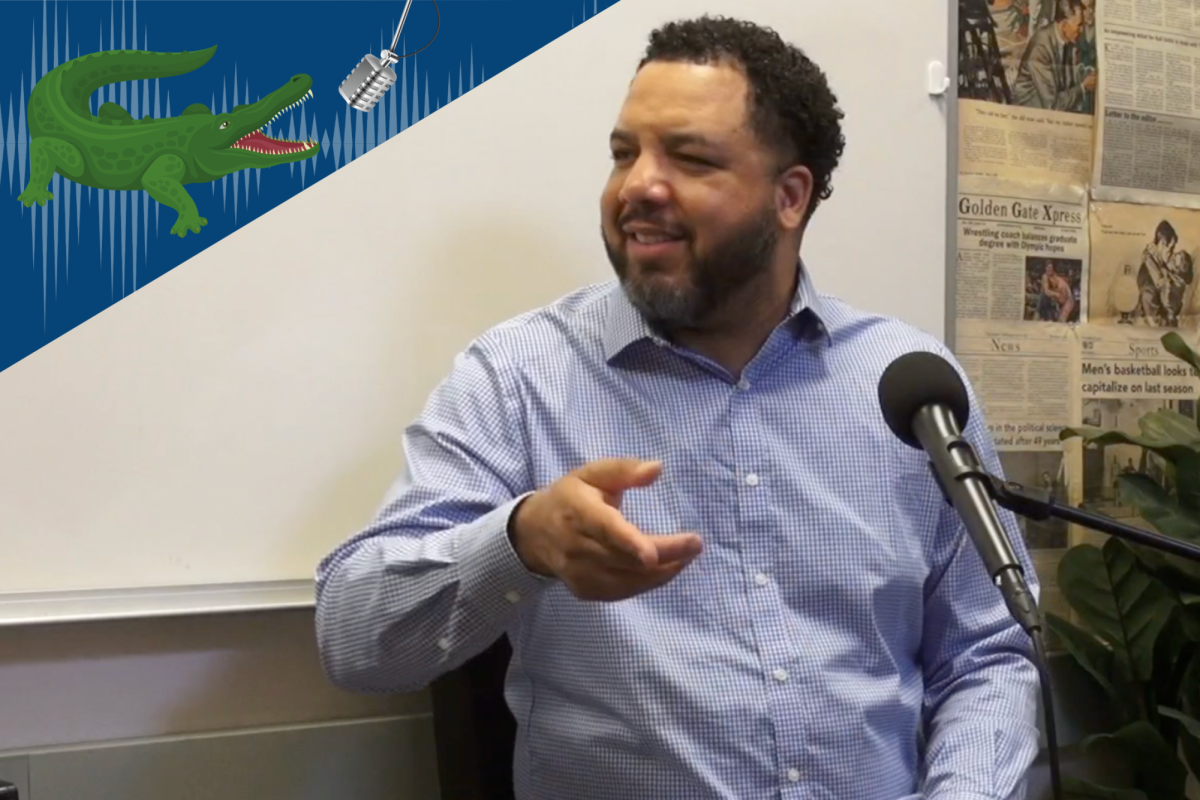
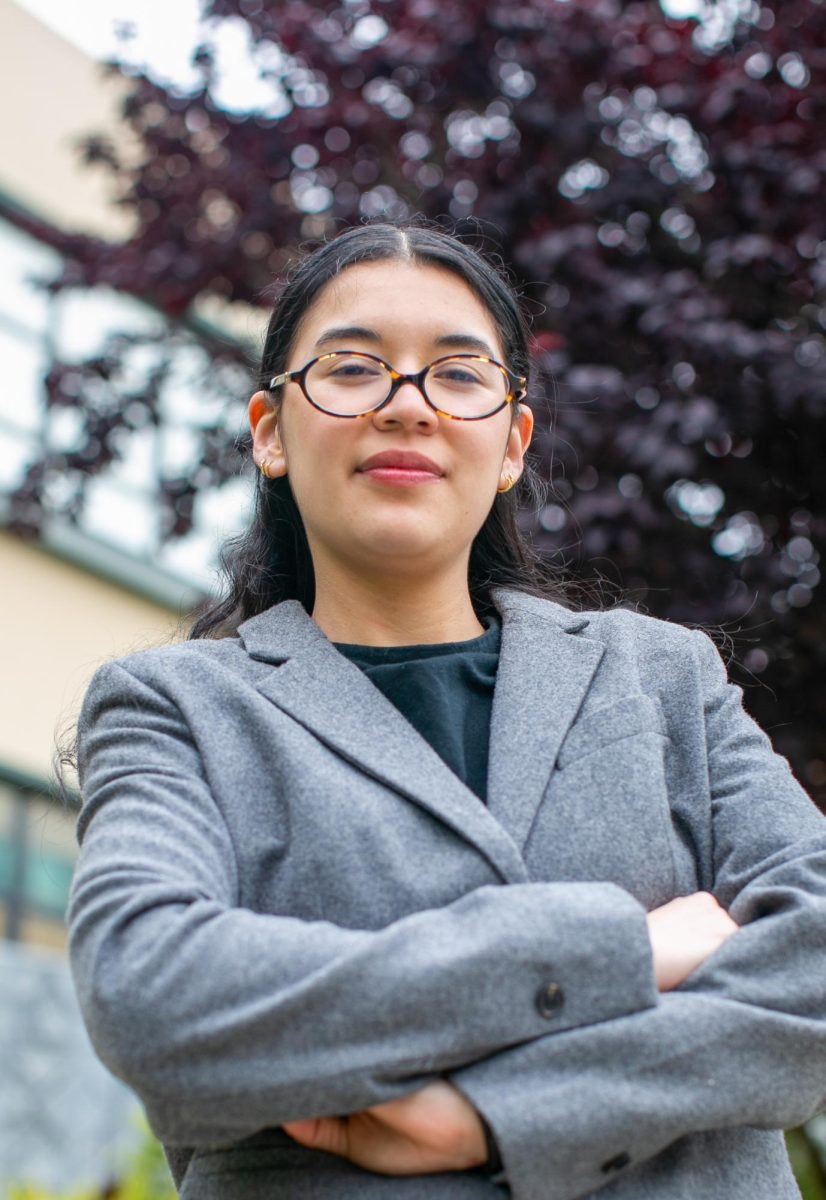
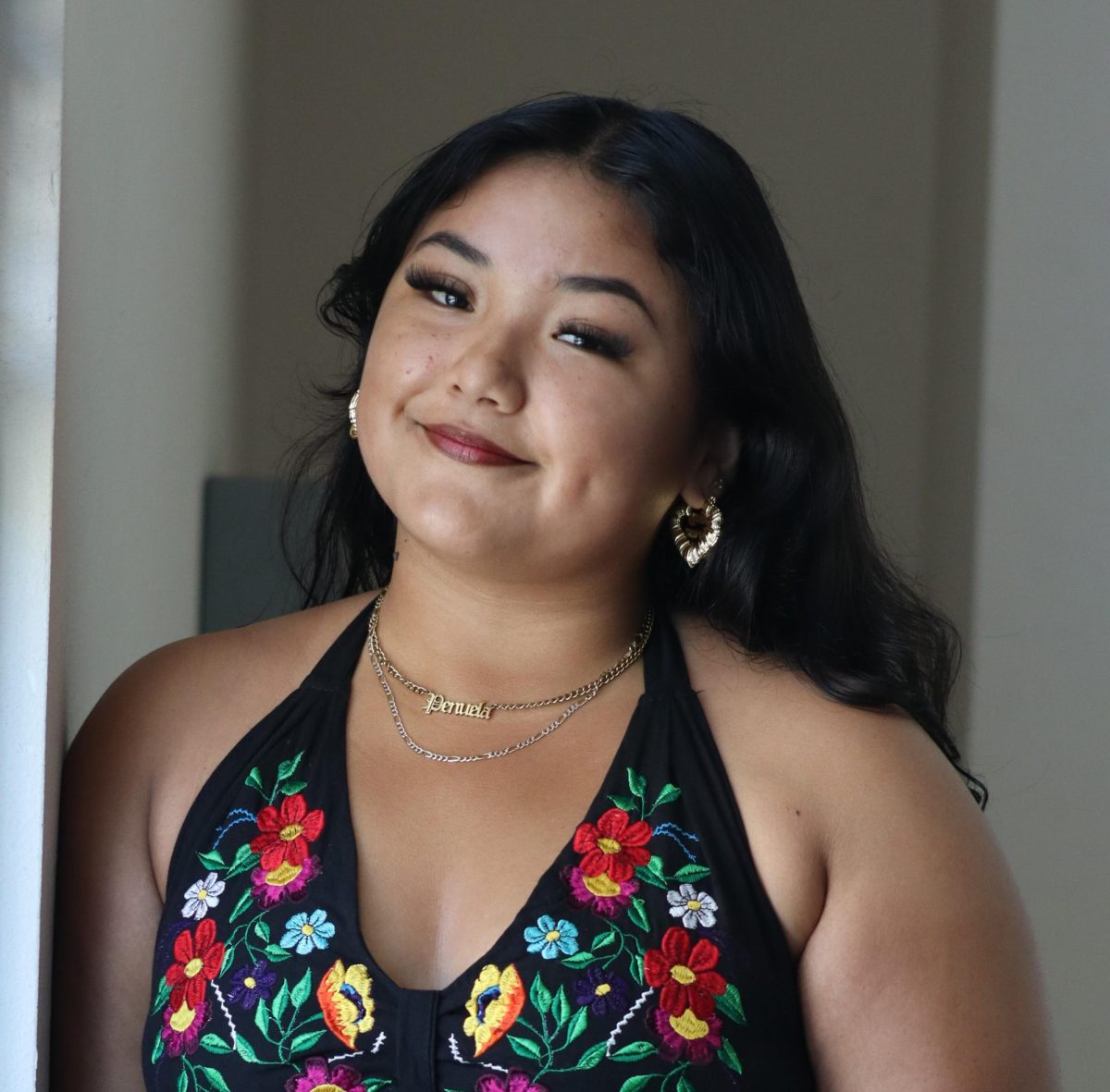
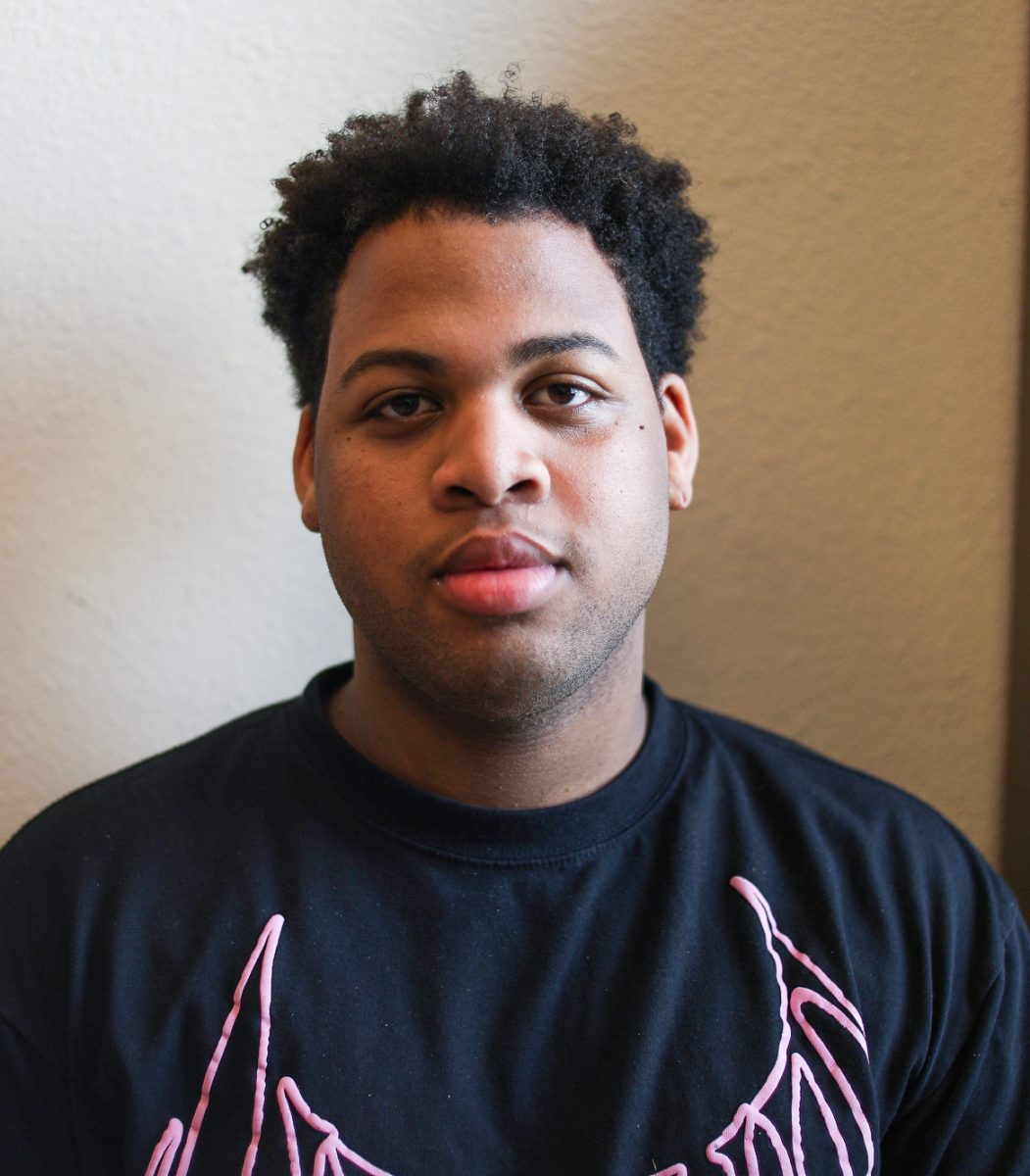
Hi, my name is Jaiden Forey. I’m a reporter for the Golden Gate Xpress, and today, we’re talking to Zoe Thompson and Diego Huerta about the cuts that their department is facing.
Interview
Forey: 00:16 – 00:21
Start by introducing yourselves, what your major is and all that.
Zoe Thompson: 00:22 – 00:30
I’m Zoe Thompson. I’m an English education senior here at SF State. I actually graduate in December, so [this is my] last semester.
Forey: 00:31 – 00:32
Good for you. What about you?
Diego Huerta: 00:33 – 00:37
My name is Diego Huerta. I’m a political science major. I’m a senior as well, and I’ll [also] be graduating in December.
Forey: 00:38 – 01:03
So just going into it, we’re talking about cuts today. I know both of your departments have faced that, obviously, as much as a lot of other departments here at [San Francisco] State have. Just hearing from Zoe, I know that you guys are both heavily involved in saving your guys’ departments. I guess starting off, how are you two doing that and how are you guys working together in order to do that?
Thompson: 01:04 – 01:34
The English department, we’ve actually been trying to organize since last spring. There’s a good six or seven of us that meet pretty regularly on Mondays and we have been circulating this petition that is essentially asking – first of all, we’re talking about all these budget cut issues that we’re saying: Hey, would you be willing to sign this petition that says that you want something done about this and you be willing to either come to a General Assembly, that actually is happening this coming Thursday.
01:34 – 1:52
We finally scheduled it. Or would you be willing to let the people who do go to the General Assembly speak for you and for our department? And so we want it to get at least 50% of our department to sign the petitions that we could say that this is something that our entire department cares about.
Thompson: 01:52 – 2:04
And so we hit that number, thankfully, and now we are moving into next steps. So we’re drafting demands and we’re going to discuss those on Thursday and then figure out where to go next from there.
Huerta: 02:05 – 2:30
Yeah, I would say the political science department is in a similar position. We haven’t gotten around to drafting a petition specifically that tries to gain 50% of the students in our department. But what we have done is we’ve organized through Political Science Gators’ meeting weekly with around seven people that consistently come and discuss these issues that we’re organizing around.
02:30 – 2:47
So I would say that’s the main part of our organizing is through the Political Science Gators and through our weekly meeting. But other than that, I would say we try our best to also relate to other departments and we share a lot of the same demands.
Thompson: 02:47 – 03:04
Yeah and a couple other departments, I know the math majors are also pretty involved. Film is involved and dance and music. And I know the philosophy majors have also been getting involved. I believe the psych majors are trying to get organized right now.
Forey: 03:04 – 03:19
I watched your video on Google Drive and you were talking about how the GEE’s, so English 216, 217, and 218 are getting cut. What classes are they offering to take now?
Thompson: 03:20 – 03:41
My understanding is it’s just been completely cut, that they are essentially saying, “Hey, you don’t need as much English education anymore. We don’t have the budget for it. So you only have to take — I’m going to get it — it’s one or two classes of English writing instead of the three that we’re used to. Yeah, they’re just not being prioritized by the school as a whole.
Forey: 03:42 – 03:54
What does registration look like? With the classes being cut, is it hard to get in if you’re not priority registration? Is it hard to get in these classes? And like the waitlist, what do those look like?
Thompson: 03:55 – 04:24
Yes, it’s very difficult to get in. I know a lot of students whose graduation is either being postponed or they’re having to take alternative classes because either the classes are full or they’ve been cut completely. So I’m actually one of these students. I was supposed to take a communications class. So leaving my department for English education majors is the speech and performance requirement, and they just aren’t offering it at all this semester. And they didn’t tell the professors.
04:25 – 04:52
The only reason I’m still graduating on time is my adviser was truly the GOAT and came to me and was like, “Hey, you need to do this or you won’t graduate.” And I was like, “I didn’t even realize this is going to be a problem.” And so now I’m in a[n] Acting 101 class. It’s a good class. I have a good professor, but it’s not what I’m supposed to be trained on. And I know so many other students are having similar issues, having to substitute or only having Zoom offerings of certain classes.
04:52 – 05:05
And so students who have disabilities or even just extra needs and Zoom doesn’t work for them are really struggling. And so we really want to increase the funding for our department so that we’re not having these problems in classes anymore.
Forey: 05:06 – 05:23
And then for you, Diego, you were recently at a town hall meeting regarding cut classes, shrinking lecturer numbers, and then just the department shrinking the budget in general. What was the point of the town hall meeting for political science majors?
Huerta: 05:24 – 05:56
I think the main point of the political science town hall was just to discuss the issues that have been facing our department that relate directly to the budget cuts. I can give one example off the top of my head. There [are] two classes that are critical to our major. This is 250 Comparative Politics and 275 [Introduction to] Political Theory. And both of these classes, in a department that has hundreds of majors, are only being offered for one section each in the spring with 40 seats for each class. So we discussed that.
05:56 – 06:27
That was a main point. Just in regards to what you mentioned about the shrinking size of our department, we also discussed the fact that there is literally not a single lecturer in our department, as well, which has been really tough. I’ve had professors confide in me on several occasions about how upsetting it is to not have lecturers and how it impacts them and how their workload is increased. On top of that, we have our course caps at such a high number.
06:27 – 06:54
American Politics, which is a course that is required of several majors on this campus, as well as political science majors themselves, has numbers ranging from 50 students in the in-person classes and 60 in the online classes. And this is incredibly difficult because once again it’s professors that are having to teach these classes and the lecturers can’t take on the workload.
Forey: 06:55 – 07:00
Has there been talk about an alternative for students who aren’t able to get in that class, or is it kind of just a wait-and-see thing?
Huerta: 07:01 – 07:28
That is another thing that we’ve discussed at the Political Science Gators meeting is this issue of alternatives and where we’re supposed to go. We’ve discussed it with professors in the department. It’s difficult to try and figure out as a student, when you need a class so badly, what you’re supposed to do. But I can’t speak to the specifics of that and that’s kind of what we’ve been trying to gain a better understanding of in our meetings.
07:28 – 07:39
As I’m sure the English Department has also been trying to do is the specifics of the university and how university politics also relate to the constraints that professors experience on a day-to-day basis.
Forey: 07:40 – 07:57
Just on course caps, as you mentioned, some classes require 50 students to enroll in the class, and if not, it gets cut. Have you seen classes being cut because not enough students are enrolling in those classes? For both of you?
Thompson: 07:58 – 08:20
We have. The English Department has. I can’t think of a class off the top of my head, but I know that there have been, in the linguistics department, in particular classes where professors would ask us like, “Hey, if you’re going to take this class please, please put your name on the list now we need to know that you’re enrolled in this class, because if we don’t, they’re just going to cut the class.”
08:20 – 08:37
For this specific instance I’m thinking of, I don’t know what ended up happening if the class was cut or not, but I remember specifically this is like a pressure we all felt was, “Oh!” And our professors felt that, oh if we don’t get people signed up, it’s not going to happen.
Forey: 08:38 – 08:53
I saw that you had 120 signatures for the petition. You surpassed that goal, correct? The one that you were originally wanting to do. With that being said, what is the plan of action, I guess, for the future?
Thompson: 08:54 – 09:21
Thank you for asking. So, yes, we’ve reached over half our department, which is super exciting. And so now we have started drafting our five demands. So the demands are fund our education, pretty self-explanatory. We also would like no more money to go towards AI. We’ve done a lot of research and we’ve noticed that millions of dollars are going for both the CSU system and seemingly from the government as well towards ChatGPT and other AI sources instead of our classes and so we want to open the conversation on that.
09:21 – 09:45
We also want our freedom of speech to be protected. There have been instances in other universities of universities divulging the names of students and faculty who are involved in movements on campus to make change and telling the government that. And so we want to make sure, as we’re sharing our opinions and making our needs known, that our freedom of speech is also protected.
09:45 – 10:16
And then in these trying times, we also want to defend students against ICE. I know that our faculty is very involved and our students are very involved in this, but the school itself has mostly refrained from commenting and has not gotten directly involved, and so we’d like them to also be involved in this important endeavor, and then ensuring dorm safety. We think this is incredibly important that not only are we speaking about the funding of our education, but that all five of these demands be considered.
10:16 – 10:33
None of these are officially set in stone yet, one of the reasons for the general assembly is that we can all discuss what’s important to us. But the English majors, alongside Student Union and other majors, came up with this draft ahead of time to kind of steer the conversation and see how people are feeling.
10:33 – 10:59
I know I felt really inspired at the beginning of this semester when I found out that one of my favorite professors, who was a lecturer faculty, was cut even though she was a wonderful professor, and I was like, “No, we’ve got to do something about this.” We all have to do something about this, because for the professors, it’s their livelihood. Like, obviously I care about the students as well and myself as well, but the professors need our support too.
Huerta: 11:00 – 11:11
It’s been the experience of wanting more and everyone else around me wanting more too, and wondering what we could do about it. I think the answer is that, you know, we’re organizing and trying to figure out what we can do about it.
Thompson: 11:11 – 11:19
Budget cuts have actually affected me the entire time because I was originally a member of the track and field team here at SF State.
Forey: 11:19 – 11:21
I was gonna touch on that with you because I was like how was that for you?
Thompson: 11:21 – 11:45
Yes, I was a student-athlete here. I came to this school. I was recruited by two coaches who both left. Neither of them ever gave official reasons. We all kind of had the sense that the budget cuts were affecting their ability to do things or maybe even their personal pay. And so they both left. So I was left with one coach, who was a great coach. He still is coaching cross country, he’s awesome.
11:45 – 12:21
I ended up leaving the team because I realized that if they weren’t going to be funding us, then I didn’t want to end up spending hours of my time on what felt like a sinking boat. And I actually think that I semi-regret that choice now, because now that the English department also feels kind of a sinking boat, I’m like, “No, I think I should have stayed and fought back.” And so that’s one of the reasons I’m here, like, “Oh no, this is important to me.”
12:21 – 12:46
The first semester I felt like I had kind of rose-tinted sunglasses on. I didn’t really know what was happening yet. And then by the time the spring semester rolled around, we realized we were going to be losing so many lecture faculty. That was when I really started to notice it affects my education personally and the education of my peers. So this semester has been really rough for everyone.
Forey: 12:47 – 12:53
Where do you see SFSU in like five to 10 years if this continues to be a thing?
Thompson: 12:54 – 13:11
My fear, I don’t know how probable it is, is that we’re going to lose a lot of the liberal arts majors. But I can just see [that] maybe we’ll lose some more concentrations. Just continue to have students not finish graduating on time, continue to lose professors.
Huerta: 13:12 – 13:31
I would say the same thing. There’s two sides to this story: the university can realize the importance of students and the faculty that run the university on a day-to-day basis, or they can continue to ignore and disrespect us and cut classes and cut lecturers and cut funding to the liberal arts.
Thompson: 13:32 – 13:52
I would feel horrible if in a few years I heard that my professors had lost their jobs despite how great they are at what they do. I already feel horrible for the lecture faculty that we lost. And I think it’s our duty as their students and as people who care about them to come together as a community and protect them as well.
Outro
Forey: 13:53 – 13:58
This has been Jaiden Forey. Thank you so much for tuning into this episode of Gator Talk. We hope you enjoyed.