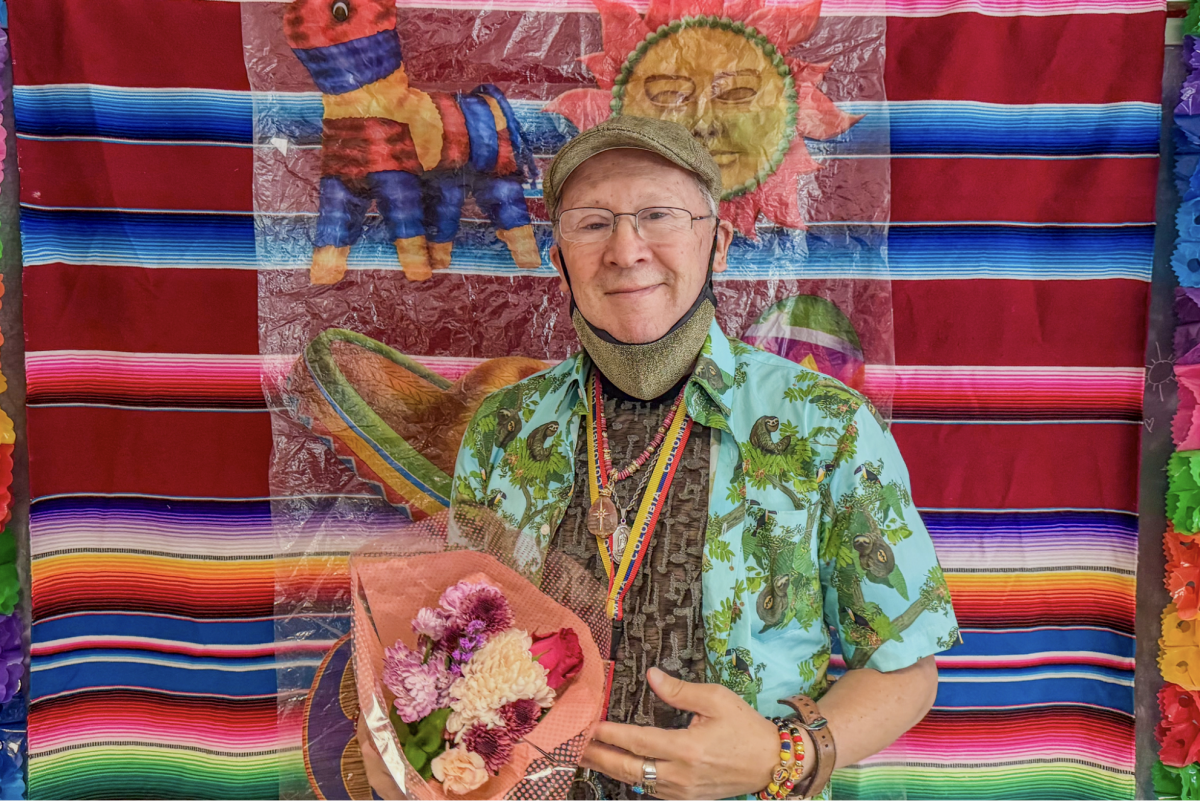


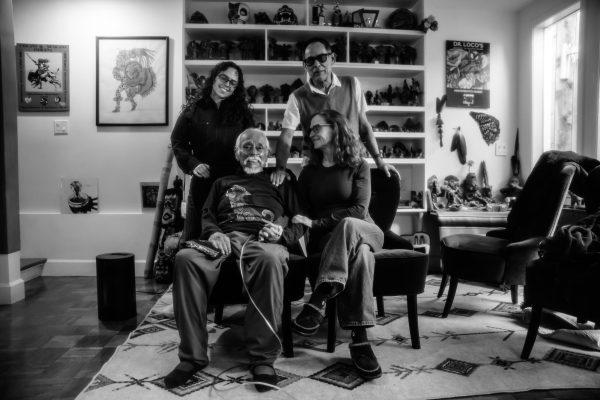
Dr. José Bernardo Cuéllar, a Chicano activist, celebrated musician under the alias of ‘Dr. Loco’ and former San Francisco State University professor, died last Wednesday after a battle with lung cancer. He was 84.
Cuéllar was an esteemed professor and devout scholar of Chicano studies who taught in SFSU’s department of Latina/Latino Studies. He earned a doctorate in anthropology at University of California, Los Angeles in 1977.
During his time as a professor and chair of the Latina/Latino studies department, Cuéllar emphasized the importance of community building.
“We went through a very big development of our major and minor programs, and it became much more community-based,” said Dr. Teresa Carrillo, a professor in the Latina/Latino studies department. “We added a mandatory element of community service to both our majors and our minors.”
Hafez Modirzadeh, a professor in SFSU’s School of Music, was a colleague of Cuéllar’s. They connected through their shared love for the saxophone and academia.
“He would come to my class, and he would just sit in, and he would listen, then he would offer feedback, always with a generous spirit and a smile, and his distinctive laugh,” Modirzadeh said. “He helped my students and I to see our own inner authenticity, as human beings, each one of us, beyond the outward identity, the inner and authentic self.”
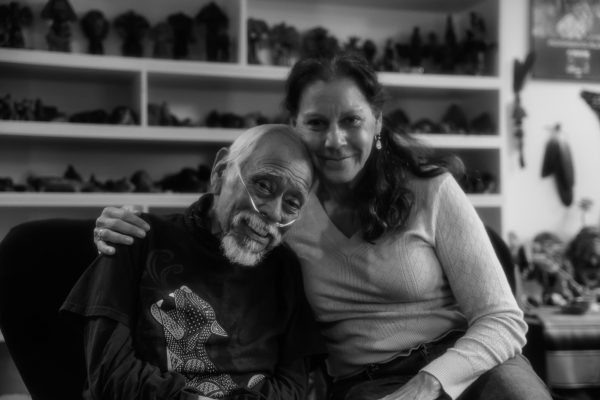
Cuéllar’s emphasis on community building expanded beyond his department. Collaborative efforts with other departments, such as routinely attending events held by SFSU’s School of Music and joining in with his array of wind instruments, further strengthened the academic environment around him and others.
“We had something called sound community events in the music department, and he would come and always join with flutes and so forth,” Modirzadeh said. “Over the years, he really helped bring validation, affirmation and courage to what we were doing as musical artists and academics.”
Modirzadeh performed a solo performance in honor of Cuéllar at his tribute concert in December. He recounted a story of the connection the two had, not only as peers, but as dear friends.
“When I was at his place the last couple of months and playing my horn at his house, I asked him to hold my horn, and he gave it back to me and it had some blood on it,” Modirzadeh said. “He anointed my horn, he baptized it in blood, this is my blood spirit horn now. I played the horn at his tribute and played ‘Besame Mucho,’ a song he played at our sound community events.”
Cuéllar served as a mentor to those around him, always providing help to those who needed it and connecting people to establish a more unified community. For Adolfo Velasquez, an academic advisor at SFSU and Cuéllar’s former student, their relationship was more than that of a student and teacher.
“My father was absent for my formative years, so I looked for father figures outside of the home,” Velasquez said. “José was one of them; by default, I gave him that respect as a father figure. I never got to tell him that unfortunately, but yes, just by behavior, I held him in the highest respect.”
After Velasquez graduated from SFSU and returned as an academic advisor, the two worked together in tandem to ensure students were on track to graduate college. At times, they would even drop their current task and drive long distances to help aid distressed and troubled students.
“I remember one time a student was in distress during the weekend, and Dr. Cuéllar called me to tell me that a student was in distress and that he needed assistance,” Velasquez said. “We dropped what we did and we drove to Concord and helped diffuse the situation. We sat down and talked him down. It was just an example of Cuéllar’s energy. He wanted to see students climb up the ladder.”
Cuéllar’s academically-focused personality helped lead Carrillo through her journey of becoming a professor. The moment that best epitomized who Cuéllar was for Carrillo was when he became Dr. Loco, the on-stage musical performer.
“I think the moment that best encapsulates who [Cuéllar] was was when he was on stage, making everyone so happy and proud to be Chicano,” Carrillo said. “He could move and motivate large audiences. The audiences just adored him, and they would get up and dance, and you could see the problems that were weighing heavily on them when they came in. They would just melt away, and they would leave the events with a new sense of hope and joy.”
Dr. Loco’s Rockin’ Jalapeño Band followed no strict binary of music. The band adopted a key principle of Cuéllar’s, the idea of transculturalism, which allowed for a new sound to be born.
“He combined old style Chicano music and ‘transculturated’ it. There were vibes of Freddy Fender and the Cuban dashes were mixed in after the band spent three weeks visiting Cuba,” Carrillo said. “They wrote music and they would put it into different types of covered music. It was very varied and fluid with different bandmates that played different instruments, playing to each member’s strengths. Very varied, but very danceable and happy.”
Cuéllar’s love for music and Latino culture were blended together in his collection of ocarinas from various Latin American countries. He would use each ocarina in his private library when celebrating graduating students.
“Every year we would have the graduation of the Latina/Latino Studies department at Brava theatre center, until the pandemic,” Carrillo said. “He would choose a flute to play and kind of open with a blessing and the flute song and that’s what the ocarinas were about.”
Katynka Martinez, the current chair of SFSU’s department of Latina/Latino studies, attended one of Cuéllar’s concerts and also got to share the world of academia alongside him.
“ As an undergrad, I grooved to the tunes of José Cuéllar’s band, Dr. Loco & the Rockin’ Jalapeño Band when they performed at UC Santa Cruz’s quarry,” Martinez said. “About 15 years later, I joined the Latina/Latino studies department as an assistant professor and had the opportunity to get to know José as a colleague. He often opened our department’s end-of-year ceremonies by playing various Latin American wind instruments.”
Cuéllar is survived by his partner Anastacia, his two children, Benny and Ixchel, and his music.